

More news on this day
Thousands of air travelers across Europe are facing fresh disruption this weekend as winter storms force widespread flight cancellations and delays in Norway, France, the United Kingdom, Ireland, Spain and beyond, snarling operations for major carriers and leaving passengers stranded at key hubs from Bergen and Paris to London, Dublin and Madrid.
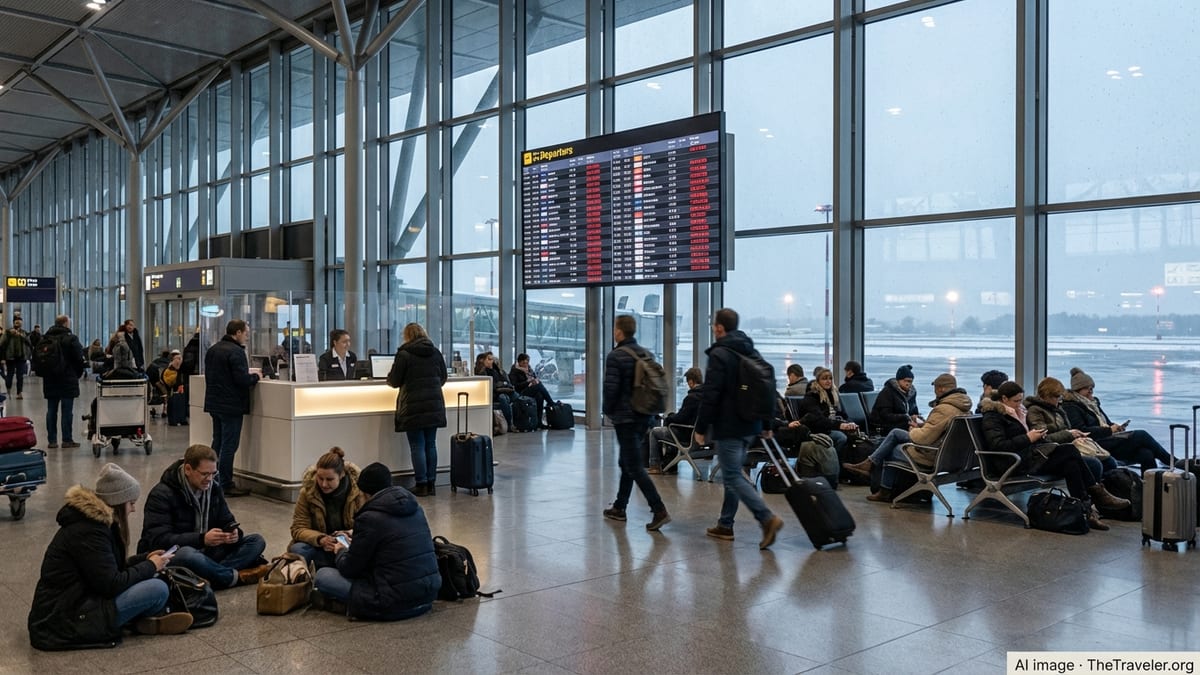
New Wave of Cancellations Ripples Across European Hubs
Airlines and airports across Europe spent Sunday grappling with a new wave of disruption as snow, freezing rain and high winds swept across large parts of the continent. Aviation data monitored by industry analysts showed more than 200 newly cancelled flights and around 1,200 delays concentrated in Western and Northern Europe, with the worst conditions affecting the UK, France, Spain, Norway and Ireland.
The latest numbers add to several days of weather-related turbulence for the sector, compounding earlier backlogs and stretched crew rosters. While some airports managed to keep runways open with round-the-clock de-icing and snow clearing, tight safety margins meant many services were preemptively cut from schedules to avoid aircraft and crews becoming stranded out of position.
Industry experts said the disruption illustrates how vulnerable tightly timed European networks remain to winter weather, particularly when simultaneous storms hit multiple regions and hub airports, severely limiting options for rerouting aircraft and passengers.
Major Airports Struggle to Maintain Operations
Key European hubs reported some of the heaviest operational strain. London’s main airports, including Heathrow and Gatwick, dealt with a mix of snow showers and strong crosswinds that forced airlines to trim schedules and operate at reduced capacity. At Heathrow, knock-on effects from earlier cancellations left terminals crowded as airlines attempted to rebook long-haul passengers bound for North America and Asia.
Paris Charles de Gaulle and Orly also reported clusters of cancellations and hours-long delays as storms tracked across northern France, periodically degrading visibility and runway conditions. Air traffic control imposed temporary flow restrictions at several points during the day, slowing the rate at which aircraft could depart and arrive and pushing punctuality well below seasonal averages.
Further north, airports in Norway, including Bergen and Oslo, faced recurring bursts of heavy snow and icy conditions. In Spain, Madrid Barajas contended with intermittent snowfall and gusty winds that required runway checks and de-icing holds, while secondary airports along the Atlantic façade and in northern inland regions saw a series of short-notice cancellations as conditions deteriorated.
Flag Carriers and Low-Cost Airlines Hit Alike
The disruption cut across the airline spectrum, affecting national flag carriers, low-cost operators and long-haul transatlantic services. British Airways, Air France and KLM all reported programme reductions and delays on key intra-European routes, while also battling wider impacts on long-haul flights that rely on punctual feeder traffic from across the continent.
Low-cost giant easyJet saw scattered cancellations and extensive delays at London, Paris and Amsterdam as tight turnaround times clashed with longer de-icing procedures and slot restrictions. In Scandinavia and Northern Europe, regional and hybrid carriers working dense short-haul schedules were particularly exposed, with some forced to cancel multiple rotations when morning departures failed to get away on time.
On transatlantic routes, US carriers including United and Delta reported cancellations and diversions where European weather complications overlapped with severe winter conditions on the North American side of the Atlantic. Several services linking London, Dublin and continental hubs with major US East Coast cities were withdrawn or rescheduled, leaving passengers facing extended layovers and unplanned overnight stays.
Storm Systems and Winter Patterns Drive the Chaos
Meteorologists attributed the latest round of travel disruption to a succession of vigorous low-pressure systems moving in from the North Atlantic. These systems have delivered a volatile mixture of heavy snow, freezing rain and gale-force winds to large swathes of Western and Northern Europe, creating rapidly changing conditions that are especially challenging for airport operations.
Even when snowfall totals are moderate, the combination of sub-zero temperatures and gusty winds can force repeated runway inspections and de-icing cycles. Each additional step in the departure process adds minutes to turnarounds; multiplied across dozens of flights and several key hubs, those delays quickly cascade through the network. When storms strike multiple regions at once, airlines lose the flexibility to recover by swapping aircraft and crews from unaffected bases.
Aviation planners note that European winter weather patterns have shown increasing volatility in recent seasons, with more frequent episodes of intense, short-lived storms. For airlines and airports, that translates into a need for more dynamic contingency planning, larger buffers in schedules and enhanced readiness of snow-clearing and de-icing resources.
Passengers Stranded, Rebooked and Re-Routed
For passengers, the statistics translated into missed holidays, broken business itineraries and long waits in crowded terminals. At London airports, travelers bound for transatlantic and Mediterranean destinations queued at service desks for rebooking options, with some being routed through alternative European hubs or placed on flights one or two days later than planned.
In Paris and Madrid, scenes were similar, with families and tour groups camping out in seating areas and along concourse walls as they waited for fresh departure information. At Bergen and other Norwegian airports, local authorities encouraged travelers to delay journeys to the airport until flights were confirmed as operating, in order to reduce pressure on terminal facilities and ground transport networks already burdened by snow and ice.
Consumer advocates reminded passengers that under European air passenger regulations, travelers on qualifying flights may be entitled to care, assistance and potentially compensation, depending on the nature of the disruption and whether it is deemed beyond the airline’s control. However, the immediate priority for most stranded travelers remained securing a confirmed seat and, where necessary, emergency accommodation.
Knock-On Effects Across Trains, Roads and Crews
The aviation turmoil unfolded against a backdrop of wider transport disruption. Rail operators in the UK, France, Ireland and Spain reported weather-related delays, frozen points and reduced frequencies on key intercity and regional routes, limiting alternatives for passengers hoping to switch from air to rail. In several regions, authorities warned of treacherous driving conditions on motorways and approach roads to major airports.
Within the aviation system, operational challenges went beyond airframes and runways. Crew availability emerged as a critical bottleneck as pilots and cabin crew reached the limits of regulated duty hours after days of irregular schedules and rolling delays. In some cases, flights that were technically possible from a weather and aircraft perspective had to be cancelled or retimed because no legal crew pairing was available.
Ground handling teams and airport staff also worked under strain, with some airports drafting in additional personnel and extending shifts to keep pace with the surge in disrupted passengers. Baggage systems came under pressure as misrouted and delayed luggage accumulated, prompting airlines to prioritize reuniting passengers with their bags once flight schedules began to stabilize.
How Airlines and Airports Are Responding
Airlines responded to the evolving situation with a mix of schedule cuts, flexible customer policies and operational workarounds. Several carriers, including major European and US airlines, issued travel waivers allowing passengers on affected routes to rebook without change fees within specified date ranges. Some also relaxed rules on route changes to give travelers more options for reaching their destinations via alternative airports.
At the airport level, managers activated winter operations plans, mobilizing fleets of plows, sweepers and de-icing trucks. Priority was typically given to maintaining at least one operational runway at large hubs, followed by taxiways and stands critical for moving aircraft into and out of terminal areas. In air traffic control centers, flow management specialists coordinated slot allocations to balance safety margins with the need to keep traffic moving where possible.
Industry bodies have long urged governments and regulators to invest in more resilient infrastructure and technology to manage increasingly volatile weather. The latest storm-related chaos is likely to reenergize those calls, especially where older airports face mounting demands to handle higher passenger volumes with limited room to expand physical capacity.
Advice for Travelers Facing Ongoing Disruptions
With forecasts indicating that unsettled winter conditions may persist across parts of Europe in the coming days, travel experts urged passengers to plan cautiously and build extra time into itineraries. They recommended that travelers check their flight status repeatedly in the 24 hours before departure, use airline apps and text alerts where available, and ensure that contact details are up to date in booking records so carriers can push notifications about changes.
Passengers with essential or time-sensitive travel were advised to consider earlier departures where possible, or to look at alternative routings that avoid the worst-affected hubs. Those already stranded at airports were encouraged to prioritize securing confirmed rebookings before arranging accommodation, as capacity on subsequent services is likely to remain tight until backlogs clear.
For many travelers caught up in the latest wave of cancellations and delays, the episode served as a reminder of how quickly winter weather can upend even the best-planned journeys in Europe’s dense and interconnected air travel system. As airlines, airports and regulators review the fallout, a key question will be how to build greater resilience into networks that are increasingly tested by the extremes of the season.