

More news on this day
As Japan’s inbound tourism smashes record after record, the WiT Japan & North Asia conference is set to return to Tokyo with a JAPOW themed program that links the country’s legendary powder snow to deeper conversations about power, sustainability and the next 20 years of travel.
Get the latest news straight to your inbox!
A Summit Framed by a Historic Inbound Boom
The latest data from Japan’s national tourism authorities shows that the country welcomed about 42.7 million international visitors in 2025, surpassing the previous all time high of 36.87 million set just a year earlier. A weak yen, pent up demand and renewed airline capacity have all contributed to making inbound tourism one of Japan’s most dynamic growth engines.
Monthly arrivals have repeatedly crossed the three million mark, with new highs recorded in peak months such as January and April. Industry analysis notes that spending by international travelers has climbed to record levels as well, elevating inbound tourism to one of Japan’s largest export oriented sectors by value.
This backdrop sets the stage for the return of WiT Japan & North Asia to Tokyo, where travel and technology leaders will gather to examine what sustained double digit growth means for infrastructure, digital innovation and community resilience. The focus is not only on how to ride the boom, but how to shape it responsibly over the next two decades.
The JAPOW theme, playing on Japan’s famed powder snow, underscores how a once niche winter product has become a symbol of the country’s global appeal. The conference is expected to probe how similar passion segments from skiing to pop culture can be harnessed to spread visitor flows beyond the classic Tokyo Kyoto Osaka triangle.
JAPOW as a Lens on Regional Revitalisation
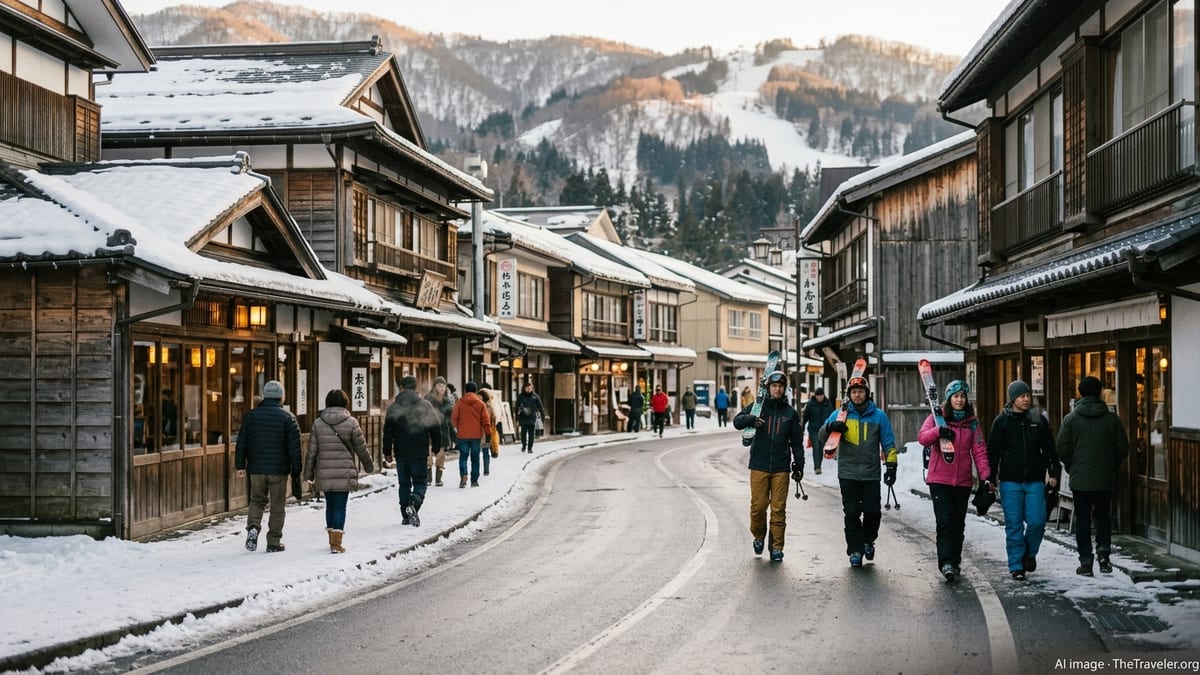
Japan’s northern and mountainous regions have seen some of the most visible impacts of the inbound surge, especially in winter. Resorts from Hokkaido to Nagano report that foreign guests now make up a significant share of lift tickets and overnight stays, with some ski villages estimating that close to half of winter visitors are from overseas markets.
The popularity of JAPOW has brought new life to areas wrestling with depopulation and aging workforces. Empty pensions have been converted into boutique lodges, disused farmhouses into long stay chalets, and local restaurants have adapted menus and opening hours to capture international demand. At the same time, there are mounting concerns around housing affordability, crowding and pressure on fragile alpine environments.
By centering JAPOW in this year’s program, WiT Japan is expected to highlight how targeted niche demand can catalyze regional revitalisation while also exposing fault lines. Sessions are likely to explore how destinations can manage seasonality, balance short term rental growth and build public services that scale with visitor peaks without overwhelming residents.
Another emerging theme is diversification. While traditional feeder markets in East Asia remain central, interest from North America, Europe and Southeast Asia in winter sports and snow culture is rapidly expanding. The conference agenda is anticipated to address how regional airports, rail operators and digital platforms can collaborate to capture and distribute this demand more evenly.
Digital Power, Payments and the Next 20 Years
Beyond the snow, “Power & The Next 20 Years” speaks to the technological and financial infrastructure that underpins Japan’s tourism boom. The rapid adoption of digital payments, booking platforms and data driven marketing has helped visitors navigate a country once seen as cash heavy and complex for first timers.
Industry reports indicate that the share of bookings made on mobile has surged, as global online travel agencies, Japanese super apps and direct channels compete for travelers’ attention. WiT Japan brings together many of these players, positioning the event as a barometer for how distribution, loyalty and advertising models are likely to evolve.
Cross border payments and currency trends are also poised to feature prominently. The weak yen has been a tailwind for inbound arrivals and spending, but panel discussions are expected to examine how sustainable this advantage is and what happens if exchange rates shift. There is growing interest in how fintech, dynamic pricing and real time inventory management can smooth demand and protect margins in more volatile currency environments.
Looking ahead two decades, the conference is likely to consider how artificial intelligence, predictive analytics and automation can ease labour shortages while improving the visitor experience. From multilingual chat support to smart routing on public transport, digital power is increasingly seen as essential to handling visitor volumes that already surpass pre pandemic peaks.
Sustainability, Capacity and Community Sentiment
With inbound numbers scaling new heights, questions around sustainability and local sentiment are moving to the foreground. Surveys of residents in popular districts such as Kyoto, central Tokyo and major ski hubs reveal growing worries over congestion, noise and changes to neighbourhood character.
National and local authorities have started to experiment with measures such as crowd management at heritage sites, tourism taxes, time based ticketing and incentives to visit less frequented regions. WiT Japan’s return to Tokyo provides a platform for operators, destination marketers and civic groups to compare approaches and examine what is working on the ground.
The JAPOW narrative illustrates these tensions vividly. Powder seekers are often willing to travel far off the beaten path, bringing valuable spend to remote communities, but they can also strain transport links, rescue services and environmental protections in high alpine zones. Industry discussions are expected to address how to reinforce safety standards, invest in resilient infrastructure and promote visitor education on mountain etiquette and climate impacts.
Over a 20 year horizon, climate change itself looms as a strategic concern. Warmer winters and variable snowfall patterns could reshape the map of Japan’s ski industry, pushing some resorts to diversify into four season adventure products or wellness and cultural offerings. The conference’s long term lens encourages participants to factor these shifts into investment and destination planning decisions made today.
From Record Numbers to Quality Growth
Japan’s ambition to sustain tens of millions of annual visitors while preserving cultural integrity and quality of life is driving a shift in focus from volume to value. Government targets already place emphasis on spending per visitor, length of stay and dispersal to regional areas, rather than headline arrival figures alone.
WiT Japan’s Tokyo gathering arrives at a moment when the country is repositioning itself as a mature tourism nation. The JAPOW themed conversations offer a concrete case study of how to upgrade experiences, build year round loyalty and deepen traveler engagement without relying purely on ever higher numbers.
Participants are expected to examine how storytelling, content creation and community partnerships can move visitors beyond checklist sightseeing toward slower, more immersive travel. In winter destinations, that may mean combining powder days with food, craft, wellness and cultural encounters that spread economic benefits and encourage repeat visits.
With inbound tourism already reshaping local economies and national policy, the questions raised under the banner of JAPOW, power and the next 20 years extend far beyond the ski slopes. They cut to the heart of how Japan will define success as one of the world’s most sought after destinations in the decades ahead.