

More news on this day
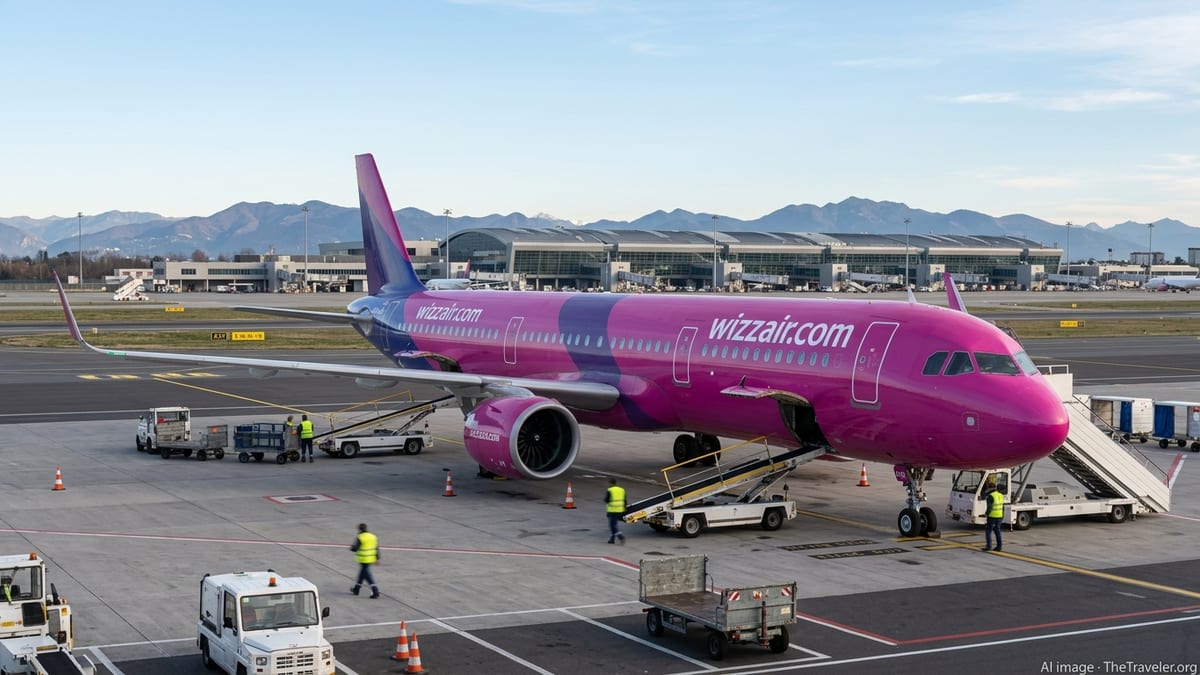
Wizz Air is reinforcing its position in northern Italy with a significant expansion at Milan Malpensa Airport, deploying a tenth based aircraft, adding new routes and increasing capacity on key leisure and visiting-friends-and-relatives markets across Europe.
Get the latest news straight to your inbox!
Strategic Growth Hub in Northern Italy
The latest expansion confirms Milan Malpensa as one of Wizz Air’s primary growth engines in Italy, with publicly available airport data indicating a portfolio of more than 40 routes and rising passenger volumes. The tenth based aircraft, part of the carrier’s Airbus A321neo-dominated fleet, allows additional frequencies on existing high-demand destinations while freeing capacity for new links that strengthen Malpensa’s role as a low-cost gateway for northern Italy.
According to recent coverage of the airport’s traffic figures, Malpensa handled tens of millions of passengers in 2024 and remains the country’s second-busiest airport, making it a natural focus for network expansion. Wizz Air’s growing share of that market positions the airline as a key competitor to established low-cost and legacy carriers already operating dense short and medium-haul schedules from the Milan area.
The tenth aircraft at Malpensa also aligns with Wizz Air’s wider Italian strategy, which includes new or reinforced bases in cities such as Palermo and Catania and an enlarged schedule from Venice and Rome. By anchoring more capacity in Italy’s main population and industrial corridor, the airline is seeking to capture both outbound leisure flows and inbound tourism to the country’s northern regions.
New Routes and Added Frequencies from Milan Malpensa
Recent route announcements highlight Wizz Air’s focus on sun and city-break destinations reachable within a few hours from Milan. Published schedules show a steady build-out of services from Malpensa to Spain, with new links such as the Milan Malpensa to Bilbao route due to begin in May 2026, joining existing services to Madrid, Barcelona, Valencia and other Iberian gateways. This strengthens the airline’s footprint in one of Italy’s most popular outbound leisure markets.
In addition to Spain, the expanded Malpensa operation supports services to Central and Eastern Europe, including destinations in Romania, Hungary and Moldova, which serve large communities of workers and students living in northern Italy. Increased aircraft availability at the base enables higher weekly frequencies on these routes, making short trips and weekend visits more practical and appealing.
Capacity is also being adjusted on Mediterranean summer routes that feed Italy’s coastal tourism and island resorts. Seasonal additions to markets such as Palma de Mallorca and other holiday hotspots reflect a broader trend among low-cost carriers of concentrating growth on high-volume beach and city destinations that perform strongly during the peak travel period.
Knock-On Benefits for Italian Travel and Tourism
The deployment of a tenth aircraft at Malpensa is expected to translate directly into more seats on the market, lower average fares and improved connectivity for both Italian residents and visitors. Industry analyses of low-cost expansion in Italy indicate that additional capacity typically stimulates demand, encouraging price-sensitive travelers to book trips that might otherwise have been postponed or cancelled.
Tourism stakeholders in Lombardy and neighboring regions are likely to benefit from additional direct connections from cities in Spain, Eastern Europe and the Balkans, which are among the fastest-growing source markets for arrivals. Easier access to Milan provides an entry point for onward travel to lakes, Alpine resorts and historic cities throughout northern Italy, distributing tourism spending beyond the metropolitan area.
Expanded flight options also support business travel between Milan, one of Europe’s main financial and fashion centers, and partner cities across the continent. While Wizz Air is primarily leisure-focused, higher frequencies and better timing on certain routes can appeal to small and medium-sized enterprises seeking cost-effective access to European partners, trade fairs and supply-chain hubs.
Integration with Wider Wizz Air Expansion in Italy
The Malpensa growth is part of a wider Italian build-up that has seen Wizz Air reopen or enlarge bases in key regional markets. Recent announcements have detailed new based aircraft and expanded networks in Palermo and Catania, creating a denser domestic and international web of routes that interlinks Sicily, northern Italy and key European cities. Increased frequencies on links such as Catania to Milan Malpensa and the planned Palermo to Malpensa service illustrate how capacity in the north underpins growth in the south.
From Venice and Rome, the airline is similarly adding routes to northern Europe and the United Kingdom, reinforcing Italy’s connectivity for inbound city-break and cultural tourism. These moves collectively raise Wizz Air’s profile as a major carrier in the country, with Malpensa acting as a central pillar of a multi-base strategy that spreads risk and taps into diverse demand segments.
Fleet developments support this network strategy. The continued delivery of high-capacity, fuel-efficient Airbus A321neo aircraft, and the planned introduction of longer-range variants based in Milan for services such as the upcoming nonstop to Abu Dhabi, allow the airline to pursue longer stage lengths while maintaining unit cost advantages. This combination strengthens the economic case for further Malpensa expansion over the medium term.
Competitive Landscape at Milan Malpensa
Wizz Air’s decision to position a tenth aircraft at Malpensa comes amid intense competition among low-cost and full-service carriers vying for market share in northern Italy. Rival airlines have also announced additional based aircraft and new routes from Milan’s airports, underscoring the strategic importance of the catchment area and its strong underlying demand.
For travelers, this competitive dynamic is likely to result in a broader choice of destinations and potentially lower fares, particularly on overlapping leisure routes to Spain, the Greek islands and major European capitals. Airlines are using schedule improvements, ancillary services and promotional pricing to differentiate themselves in a market where capacity is growing faster than the wider economy.
Airport authorities and regional tourism organizations, observing this trend, are positioning Malpensa as a key entry point for Italy, highlighting convenient onward rail and road links as an advantage for visitors planning multi-stop itineraries. As Wizz Air and its competitors rotate more aircraft and routes through the airport, Malpensa’s role as a hub for affordable European travel is expected to continue strengthening in the coming seasons.