

More news on this day
Budget carrier Wizz Air has secured long-awaited approval to operate limited charter flights between the United Kingdom and the United States ahead of the FIFA World Cup 2026, unlocking a new low cost option for football fans and tour operators planning transatlantic trips.
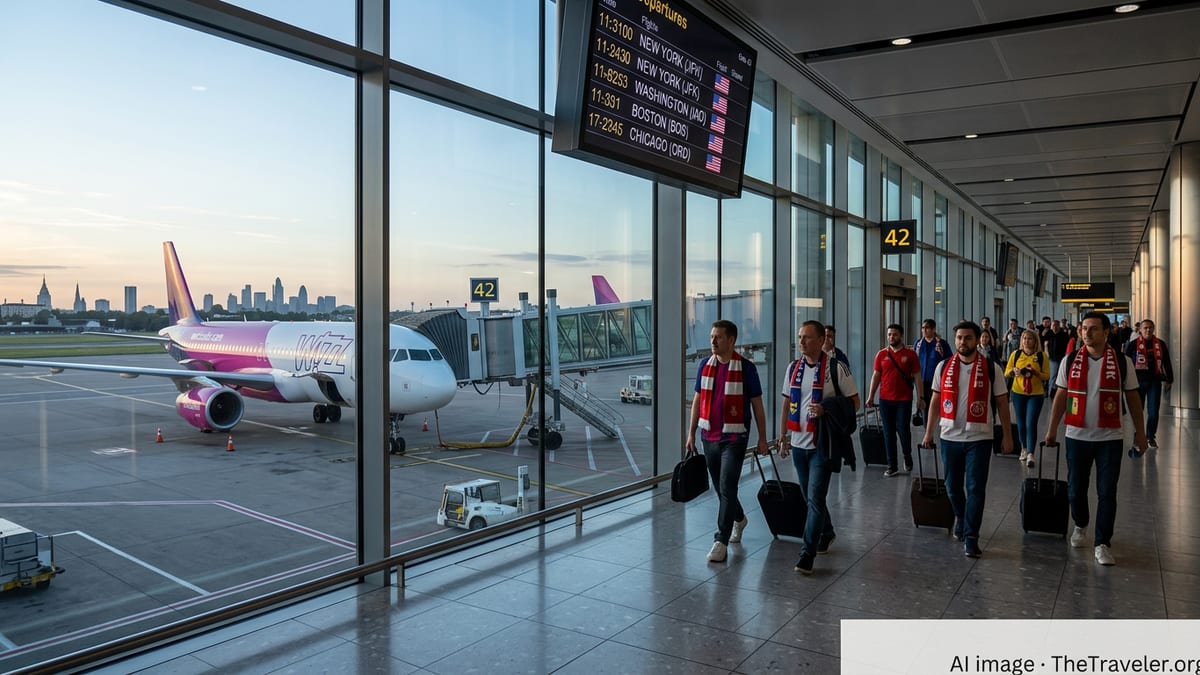
Regulatory Green Light Ahead of a Record World Cup
The United States Department of Transportation has granted Wizz Air UK tentative clearance to operate flights between the UK and the US, a milestone that marks the airline’s first move into transatlantic operations. The decision comes with the 2026 FIFA World Cup on the horizon, with matches to be staged across host cities in the United States, as well as in Canada and Mexico.
Under the approval, Wizz Air UK is permitted to run both charter and scheduled services, but the airline has made clear that its near term focus will be on ad hoc charter operations rather than a full network of regular transatlantic routes. In practical terms, that means a controlled number of flights tailored around specific events and group travel, rather than daily low cost connections between London and major US gateways.
The timing is strategic. The World Cup, due to take place from June to July 2026, is expected to generate unprecedented demand for seats into key US hubs from football markets across Europe. Wizz Air, which has built its brand on ultra low fares within Europe, is positioning itself to tap that demand while limiting exposure to the operational and financial risks of launching full scale long haul operations.
What “Limited” UK US Flights Really Mean
Despite headlines about new UK US flights, Wizz Air is not opening a conventional transatlantic schedule that travelers can book year round. Instead, the airline’s approval allows it to operate a series of charter services, many of them arranged on behalf of football federations, clubs, corporate clients and specialist tour operators organizing World Cup packages.
For individual fans, that distinction matters. Seats on Wizz Air’s World Cup services will often be sold as part of bundled trips that include match tickets, hotels and ground transport, rather than as stand alone point to point fares. Only a small portion of capacity, if any, is likely to appear as publicly bookable flights in the airline’s regular sales channels.
The carrier has also indicated that capacity will concentrate on a handful of high demand city pairs, such as London area airports to major US World Cup hubs where European fan interest is strongest. That focus, coupled with the airline’s relatively small long haul footprint, means availability is expected to be tight around key match days, particularly for knockout rounds.
Who Will Be Able to Book These Flights
Early indications suggest that sports tour operators and official travel partners will be the primary customers for Wizz Air’s new World Cup charter permissions. These intermediaries typically contract whole aircraft or large blocks of seats, then resell them within package tours that comply with local consumer protection rules.
National football associations and professional clubs are also expected to lean on Wizz Air for team and delegation transport. Charter flights allow squads to travel on bespoke schedules, fly directly to secondary airports closer to training bases and adjust timings quickly as tournament progress becomes clear.
Independent supporters hoping to fly Wizz Air to the World Cup will need to watch carefully for any seats released to the general public, either via the airline’s own website or through package operators that sell flight inclusive trips from the UK and wider Europe. Given the limited nature of the program, travelers should be prepared with alternative carriers and routings if Wizz Air capacity does not match their preferred dates or host cities.
What Fans Need to Know Before Booking
Travelers considering Wizz Air for World Cup 2026 should understand both the opportunities and the constraints of using a low cost carrier on long haul charter operations. Fares marketed as budget friendly may come with additional charges for checked baggage, seat selection and itinerary changes, which can add up quickly for long trips that span multiple weeks and cities.
Because many flights will be charters tied to specific match schedules, flexibility may be limited once a booking is made. Fans whose national teams exit earlier than expected may find it difficult or expensive to adjust their return dates, particularly if flights are controlled by third party tour operators rather than sold directly by the airline.
Travel experts also advise paying close attention to departure and arrival airports. Wizz Air’s UK operations are centered on London Luton and London Gatwick, which involve different ground transport options and transfer times than Heathrow. On the US side, charter flights may use a mix of major hubs and secondary airports depending on aircraft availability, airport slots and the location of training camps or fan bases.
Given the scale of the World Cup and the likelihood of congested airspace around popular host cities, supporters are being urged to build in buffers between arrival times and their first match, and to ensure that accommodation bookings and ground transport can be adjusted if flights are retimed.
How Wizz Air’s Move Fits into the Wider World Cup Travel Picture
Wizz Air’s entry into the UK US market for World Cup 2026 sits within a broader reshaping of transatlantic capacity ahead of the tournament. Established US and European carriers are already adjusting schedules, with additional flights being added to key hubs and new seasonal routes announced to connect football heartlands with host cities.
In that context, Wizz Air’s limited charter program will not transform the overall supply of seats to the World Cup, but it does inject additional lower cost options at the margins, particularly for organized groups willing to travel on less conventional routings or off peak days. The airline’s reputation for aggressive pricing inside Europe suggests that tour operators may be able to construct competitively priced packages built around its services.
Industry analysts say that the World Cup charters could also serve as a live test of Wizz Air’s ability to handle long haul operations out of the UK. If the flights perform well and operational reliability is maintained, the airline will have a real world data set to support any future decision to scale up scheduled services between London and major US cities once the tournament ends.
For now, however, travelers should treat Wizz Air’s UK US flights as a niche but potentially valuable part of their World Cup planning toolkit, rather than a comprehensive new transatlantic network. With demand set to surge as the 2026 tournament approaches, the message from travel advisers is simple: monitor announcements closely, secure seats early where possible and keep backup options open.