

More news on this day
Wizz Air is expanding its Central and Southern European network with a new seasonal route from Warsaw Chopin Airport to Zadar on Croatia’s Adriatic coast, adding fresh low-cost capacity on one of Poland’s most sought-after summer corridors.
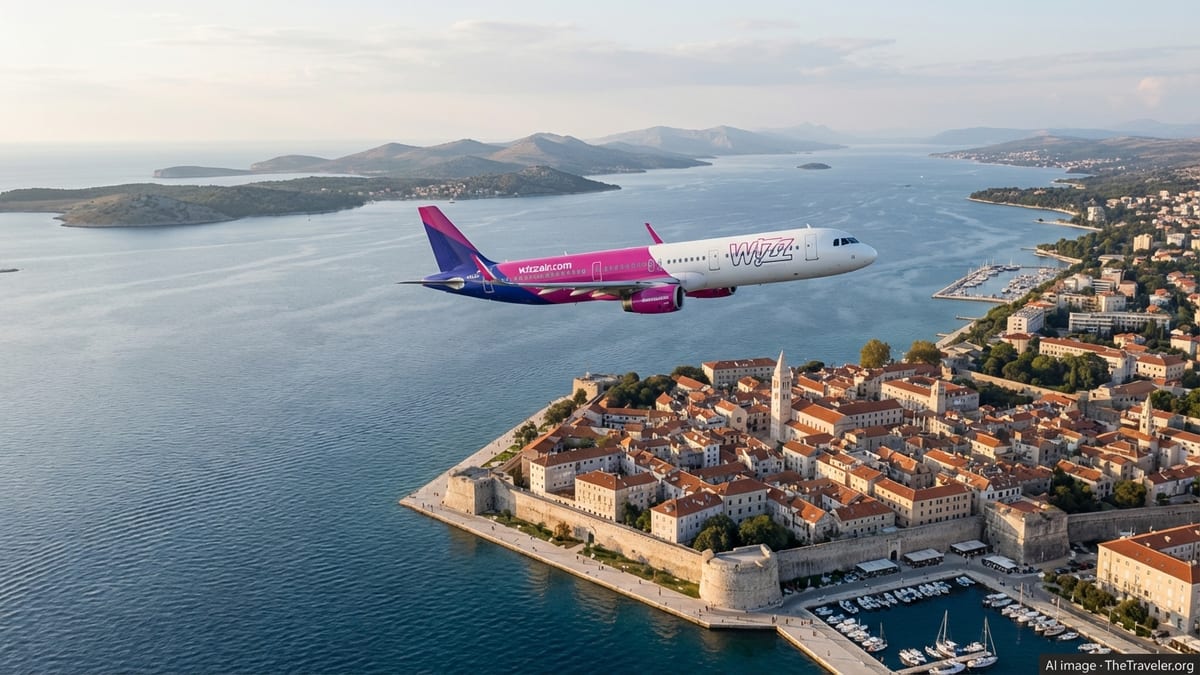
Details of the New Warsaw–Zadar Service
The Hungarian low-cost carrier will inaugurate nonstop flights between Warsaw Chopin and Zadar on 9 June 2026, operating the route four times weekly during the peak summer season. Services are scheduled on Tuesdays, Thursdays, Saturdays and Sundays, with operations planned to continue until 19 September 2026, aligning closely with the main holiday period for Polish travelers.
Wizz Air will deploy its Airbus A321neo aircraft on the new route, increasing available seat capacity while keeping unit costs low. The airline has indicated that one-way fares will start from around 159 Polish zloty, with lower promotional prices available for members of its discount program, positioning the connection as a budget-friendly alternative for families and leisure travelers heading to the Adriatic.
Tickets for the Warsaw–Zadar flights are already on sale via the carrier’s usual booking channels, and early demand is expected to be driven by Poland’s strong appetite for Croatia as a summer destination. With four weekly frequencies, the schedule is designed to accommodate both week-long holidays and extended weekend escapes.
Zadar Becomes a New Station in Wizz Air’s Network
The launch of the Warsaw–Zadar route also signals a strategic step for Wizz Air in Croatia, as Zadar joins Split, Dubrovnik and Rijeka in the airline’s growing Adriatic portfolio. The coastal city will debut as a new station in the carrier’s network, meaning a more permanent presence and the potential for further route development in future seasons.
Zadar Airport officials have hailed the arrival of Wizz Air as a significant expansion of their international network, which already includes a dense schedule of summer routes operated largely by other low-cost brands. The addition of a major Central European carrier is expected to improve competition, widen choice for passengers and support efforts to spread tourist arrivals more evenly across the season.
For Wizz Air, Zadar strengthens the airline’s leisure-focused map in the Mediterranean basin and adds another point in Croatia that can be linked to its bases in Central and Eastern Europe. The move also diversifies the carrier’s Croatian offering beyond the better-known hubs of Split and Dubrovnik, tapping into demand for smaller, more relaxed coastal cities.
Boost for Polish Demand to Croatia’s Adriatic Coast
The new connection comes as Croatia continues to rank among the most popular summer destinations for Polish tourists, thanks to its warm climate, clear Adriatic waters and relatively short flight times from Central Europe. In recent years, the route network between Poland and Croatia has expanded steadily, with airlines adding capacity to coastal airports to keep pace with demand for beach holidays and island-hopping itineraries.
By flying directly into Zadar, Wizz Air is providing Polish travelers with a convenient gateway to northern Dalmatia, an area known for historic town centers, national parks and a mix of family resorts and quieter seaside towns. The city’s compact size and access to the coastal highway make it a natural starting point for trips along the Adriatic, including to nearby islands and coastal resorts.
The additional capacity from Warsaw Chopin is expected to support not only outbound leisure travel from Poland, but also inbound tourism to the Polish capital. With a growing share of Croatian and wider European travelers using low-cost flights to explore city-break options, Warsaw stands to benefit from increased visibility on the Adriatic market.
Strengthening Wizz Air’s Position in the Polish Market
The Warsaw–Zadar launch reinforces Wizz Air’s strategy in Poland, where the airline has become one of the country’s leading carriers in terms of market share and passenger volumes. In 2025, the company operated more than 26,000 flights from Warsaw Chopin and carried close to 6 million passengers on routes to and from the Polish capital, underpinning its role as a key low-cost operator in the market.
From Warsaw alone, Wizz Air now offers dozens of routes across Europe, with a strong emphasis on sun and city-break destinations in southern Europe and around the Mediterranean. The addition of Zadar fits into a broader pattern of summer expansion, complementing existing services to Croatian and other Adriatic cities while offering more choice to Polish holidaymakers.
The airline has also highlighted recent improvements in its operational performance at Warsaw, including a marked increase in on-time performance. By pairing reliability gains with new leisure routes such as Zadar, Wizz Air aims to consolidate its reputation among Polish passengers who are increasingly using low-cost carriers for both short getaways and longer family holidays.
What the Route Means for Zadar and the Region
For Zadar and the surrounding Dalmatian region, the new Warsaw service adds another strong source market at the start of what local tourism authorities expect to be a solid 2026 season. Airport representatives in Zadar are forecasting passenger growth of around 3 to 4 percent this year, with fresh capacity from Wizz Air and other carriers seen as a key driver of that increase.
Local officials and tourism stakeholders anticipate that regular flights from Warsaw will encourage more visitors to explore lesser-known parts of northern Dalmatia, from historic coastal towns to nearby national parks. The frequency of the service, with four flights per week, allows for flexible trip planning and could help smooth out peaks in visitor numbers over the course of the summer.
As Wizz Air prepares to touch down in Zadar for the first time in June, both ends of the new route are positioning themselves to capture the benefits. For Polish travelers, it represents another direct, low-fare link to the Adriatic. For Zadar, it is a chance to deepen ties with one of Central Europe’s fastest-growing outbound tourism markets and to further establish itself on the region’s summer flight map.