

More news on this day
Wizz Air has begun phasing out its Airbus A321ceo jets, marking a new stage in the carrier’s transition toward an all‑neo Airbus narrowbody fleet by the late 2020s.
Get the latest news straight to your inbox!
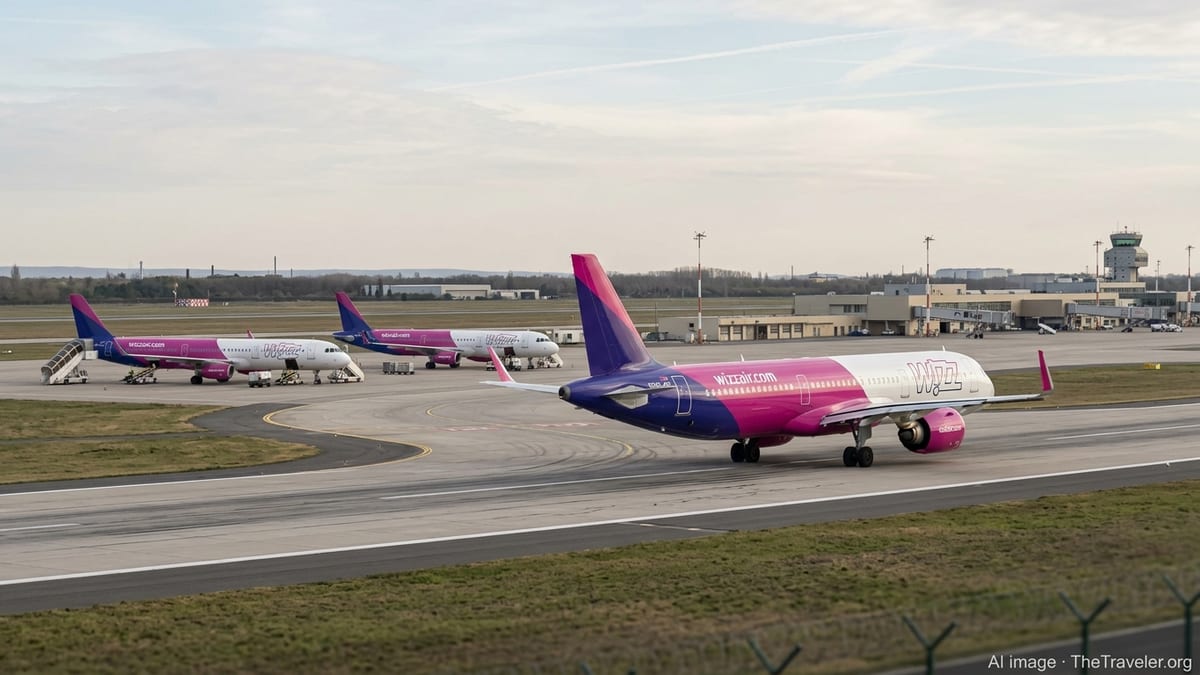
From ceo to neo as fleet strategy matures
Publicly available fleet data and recent analyst coverage indicate that Wizz Air has started to withdraw Airbus A321ceo aircraft from service, following several years of gradual reductions in its older ceo family jets. The move reflects a strategic shift that has already seen dozens of A320ceo aircraft leave the fleet while A321neo deliveries continued at pace.
The airline has repeatedly signaled that its long term goal is to operate a single type, all‑neo fleet built around the A321neo and A321XLR. Industry reports describe a steady increase in the share of new generation aircraft in Wizz Air’s operation over the past few financial years, supported by one of the largest A321neo order books in Europe.
According to recent fleet tallies, Wizz Air and its subsidiaries now operate well over one hundred A321neo aircraft, while the number of A321ceo jets has fallen to a few dozen and is trending lower. The latest phase out steps suggest that the airline is beginning to target the larger ceo variant in addition to the smaller A320ceo as leases expire and replacements become available.
Analysts note that the shift is happening despite a complex operating environment that includes Pratt & Whitney GTF engine inspections affecting parts of the neo fleet. Even with those headwinds, the cost advantages of the A321neo are strong enough that Wizz Air is continuing to prioritize the transition away from older A321ceo airframes.
Economic drivers behind the A321ceo withdrawal
The economics of the A321neo compared with the A321ceo are a key factor behind Wizz Air’s latest fleet moves. Industry assessments suggest that the neo offers double digit improvements in fuel burn per seat, supported by newer engines and aerodynamic refinements, while also enabling denser seating configurations that match the carrier’s ultra low cost model.
For a price sensitive airline focused on keeping unit costs among the lowest in Europe, the gap between ceo and neo operating economics is significant. Aviation analysts point out that Wizz Air has consistently framed fleet renewal as one of its primary levers for offsetting higher fuel prices, labor costs and airport charges, particularly in the post pandemic environment.
Reports on the company’s recent financial performance show that the share of neo technology aircraft in the fleet has climbed steadily over the past three fiscal years, with management targeting further increases toward the end of the decade. As more A321neo aircraft arrive and additional leasing opportunities emerge, the remaining A321ceo jets become increasingly expensive to operate relative to the rest of the fleet.
By starting a more active phase out of the A321ceo, Wizz Air also simplifies maintenance and training requirements over the medium term. A more homogeneous neo fleet reduces complexity in spare parts provisioning and pilot qualifications, which is particularly valuable for a carrier growing across multiple bases and regulatory jurisdictions.
Impact on network, capacity and passengers
The retirement of A321ceo aircraft is not expected to reduce Wizz Air’s overall capacity in the near term, as each departing ceo is being offset by one or more incoming A321neo or A321XLR deliveries. Available information on fleet planning suggests that the airline still aims for high single digit to low double digit capacity growth in the second half of the decade, albeit at a slower pace than envisioned before recent engine groundings and demand shifts.
For passengers, the phase out of the A321ceo may be largely invisible, since both generations share similar cabin layouts and high density seating. However, travelers can expect newer interiors to appear more frequently as neos replace older aircraft on busy leisure routes across Central and Eastern Europe, the Mediterranean and the Middle East.
Some network adjustments are likely as Wizz Air balances grounded neo capacity with the withdrawal of ceo aircraft. Aviation industry coverage indicates that the carrier has been fine tuning frequencies and seasonal routes to make better use of its most efficient jets, while reducing exposure on thinner or more volatile markets.
Nevertheless, the underlying direction is clear: the A321ceo is shifting from being a core workhorse to a bridging asset whose remaining service life will help cover today’s schedule while the neo fleet continues to scale up.
Timeline toward an all‑neo single aisle fleet
External analyses of Wizz Air’s Airbus order book and traffic forecasts suggest that the carrier is aiming for an almost entirely neo powered single aisle fleet by around 2029. This aligns with previous statements that projected a 500 aircraft operation by the end of the decade, primarily based on A321neo variants.
The decision to begin a more visible phase out of A321ceo jets fits within that long horizon. Industry reports note that Wizz Air has already deferred some Airbus deliveries and reshaped its commitments, but the broad direction remains a gradual replacement of all remaining ceo aircraft, first A320ceo and then A321ceo, as contractual windows allow.
The start of A321ceo withdrawals also interacts with the airline’s evolving plans for the long range A321XLR. Recent commentary from aviation analysts and enthusiasts indicates that Wizz Air is reassessing the pace and scope of its previously ambitious long thin route strategy, which could influence how many XLRs ultimately join the fleet and how standard A321neo capacity is deployed.
Even with these adjustments, fleet data and published financial disclosures depict a clear trend. Each quarter brings more A321neo deliveries and reports of additional ceo redeliveries to lessors, reinforcing the view that the A321ceo’s role at Wizz Air is entering its final chapter as the carrier doubles down on a modernized, fuel efficient narrowbody fleet.