

More news on this day
Wizz Air is accelerating its push to become a “deeply digital” ultra-low-cost carrier, building a new cabin ecosystem that uses apps, automation and data to reshape how passengers book, board, spend and discover destinations across its European and Middle Eastern network.
Get the latest news straight to your inbox!
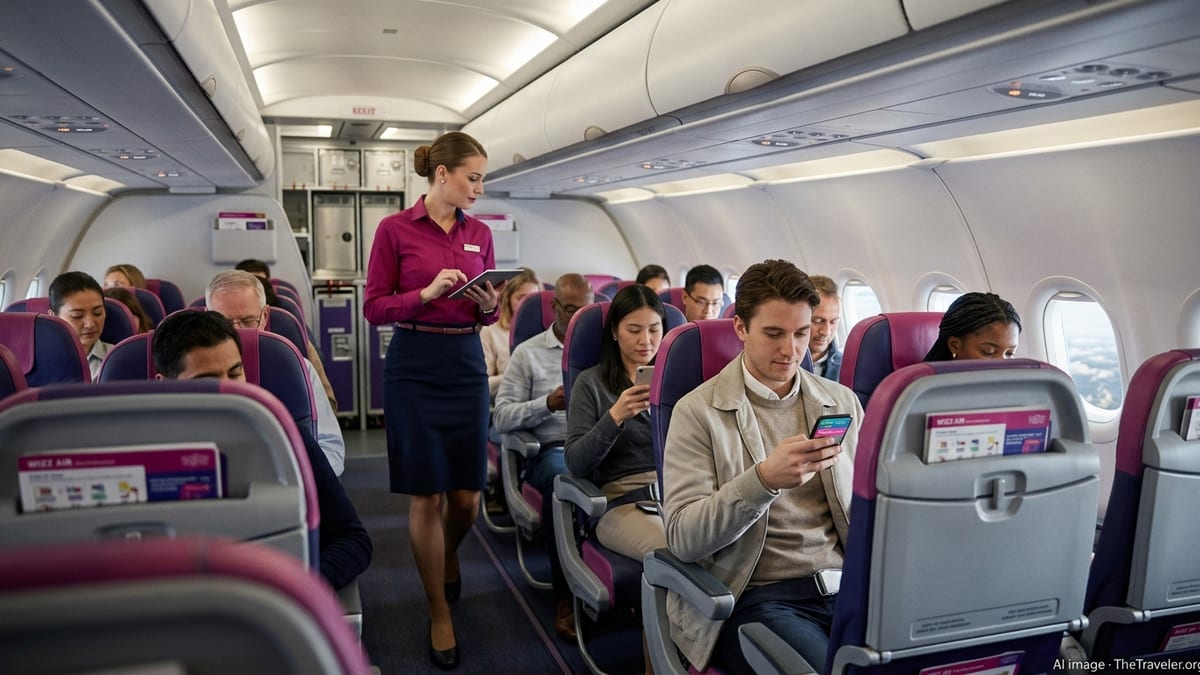
A Low-Cost Carrier Goes Deeply Digital
Publicly available corporate presentations show that Wizz Air sees digitalization as central to its growth strategy, describing the future leading ultra-low-cost carrier as one that is “deeply digital.” The airline has already automated many core processes on the ground and in back-office operations, and is now extending that mindset into the cabin environment.
In practice, this has meant rethinking the journey around a smartphone-centric model. Booking management, ancillary purchases, check-in and boarding are increasingly designed to run through the Wizz app and web platform, reducing manual work and aligning with the carrier’s low-cost structure. The same digital backbone is now being positioned to support new in-flight services as connectivity and cabin hardware evolve.
Analyst materials indicate that Wizz Air has invested in modern cloud-based data platforms and automation tools, enabling near real-time access to operational and customer data. This infrastructure underpins the emerging digital cabin ecosystem, allowing the airline to tailor offers, streamline crew workflows and test new retail and engagement concepts at scale.
The carrier’s focus on automation and self-service also responds to rising passenger volumes and tight margins across the European short-haul market. By shifting more interactions to digital channels before and during the flight, Wizz Air aims to handle growth with lean staffing while still improving the perceived quality of the experience.
From IFEC Trends to a Wizz Air Cabin Ecosystem
The global in-flight entertainment and connectivity market is expanding quickly as passengers expect at-home levels of streaming, shopping and messaging in the air. Industry research points to robust double-digit growth in IFEC spending, led by narrow-body aircraft that dominate low-cost and regional fleets. This broader trend is shaping the direction of Wizz Air’s own digital cabin ambitions.
While the carrier has traditionally prioritized low fares over seatback screens, it is now drawing on developments in wireless entertainment, edge content delivery and digital retail platforms showcased at recent interiors and IFEC trade events. Solutions such as lightweight onboard servers, browser-based entertainment portals and integrated payment systems are enabling low-cost carriers to offer richer cabin services without the weight and complexity of legacy hardware.
Within this context, Wizz Air’s ecosystem concept sits at the intersection of three pillars: pre-flight digital engagement, in-flight connectivity and entertainment, and integrated ancillary retail. Rather than treating these as separate projects, the airline is working toward a unified platform where passengers move seamlessly from mobile check-in to in-flight browsing, ordering and destination discovery.
Industry coverage of IFEC suppliers and digital agencies suggests that airlines partnering with specialized content, advertising and connectivity providers are increasingly turning cabins into addressable digital media and retail spaces. Wizz Air already collaborates with advertising partners that monetize digital and physical cabin real estate, and a more sophisticated digital cabin environment would allow it to deepen those revenue streams.
Enhancing Passenger Experience While Protecting Costs
At the heart of Wizz Air’s digital cabin strategy is a familiar challenge for low-cost carriers: enhancing the journey without eroding the cost advantage. The airline’s public documents emphasize that automation, self-service and data analytics are critical to delivering a better experience while keeping unit costs under control.
For passengers, this translates into a growing set of app-based features across the journey. Mobile boarding passes, digital self-service tools, real-time disruption information and more intuitive help-center flows are designed to limit queuing, reduce uncertainty and give travelers more control over their own trip. The same platform can be used in-flight to push tailored offers on luggage upgrades, seat selection or onboard food and drink.
For crew, the digital cabin ecosystem promises to simplify workflows. Wizz Air has rolled out integrated training systems and e-learning tools, and is investing in crew-focused digital applications that centralize schedules, safety information and operational updates. As in-flight systems become more connected, these tools can be extended with live sales dashboards, digital manifests and instant access to passenger preferences, improving both efficiency and service consistency.
Customer experience teams are also leaning on automation in claim handling, case allocation and fraud detection. By reducing manual back-office tasks, the airline can redirect resources to refining its in-flight offer and resolving complex issues, reinforcing the broader objective of using technology to support a smoother, more transparent passenger journey.
Digital Retail, Data and Tourism Discovery
One of the most significant shifts enabled by a digital cabin ecosystem is the move from traditional trolley sales to data-driven retail and destination services. Industry examples show airlines experimenting with marketplace-style platforms that aggregate duty-free, food and beverage, third-party services and tourism products into a single digital storefront accessible via passenger devices.
Wizz Air’s ancillary-driven model is well positioned to tap into this trend. A connected cabin allows the airline to present passengers with dynamic menus, limited-time offers and partner deals that reflect route characteristics, time of day and individual behavior. On flights into city-break destinations or emerging leisure markets, that could include advance booking of local tours, attractions, airport transfers or events, effectively turning the cabin into the first touchpoint of the trip.
Data analytics sit at the core of this approach. By consolidating information from bookings, app interactions and in-flight purchases, Wizz Air can refine its offer mix, test personalized bundles and identify which routes respond best to tourism-related products. Published corporate material highlights the airline’s efforts to de-silo digital solutions and deploy real-time dashboards, providing the analytical backbone for this kind of experimentation.
For tourism boards and local partners, integration into such a digital cabin environment offers a way to reach cost-conscious travelers in a highly targeted context. As Wizz Air continues to expand into secondary airports and niche leisure markets, the ability to promote local experiences before landing could help spread visitor spending beyond traditional hotspots, supporting broader tourism development goals.
What Wizz Air’s Strategy Signals for Regional Tourism
The evolution of Wizz Air’s digital cabin ecosystem carries implications that extend beyond the airline’s own network. As one of Europe’s largest ultra-low-cost carriers, its technology choices can influence expectations across price-sensitive segments and set benchmarks for rival operators.
If passengers come to associate low fares with robust app functionality, reliable onboard connectivity and meaningful destination content, tourism flows could become more responsive to targeted digital campaigns and curated in-flight discovery. Smaller cities and regions served by Wizz Air may benefit from more direct promotion of local events, seasonal attractions and off-peak travel offers, presented at the precise moment travelers are most focused on their trip.
At the same time, the success of such a model will depend on execution. Reports of uneven digital experiences across the industry, from check-in hurdles to customer-service bottlenecks, show how quickly traveler goodwill can erode when tools fail at critical moments. For Wizz Air, the challenge is to align its ambitious digital strategy with reliable operations and clear communication, particularly when disruptions occur.
As airlines worldwide race to modernize cabins and monetize connectivity, Wizz Air’s push for a unified digital ecosystem illustrates how low-cost operators are trying to balance tight cost controls with rising expectations. The outcome will help shape not only the future of budget flying in Europe but also how millions of travelers first encounter the destinations they visit.