

More news on this day
Wizz Air is accelerating its expansion at Milan Malpensa Airport, unveiling new routes and additional capacity that strengthen the airport’s status as a fast-growing low cost hub for northern Italy and southern Europe.
Get the latest news straight to your inbox!
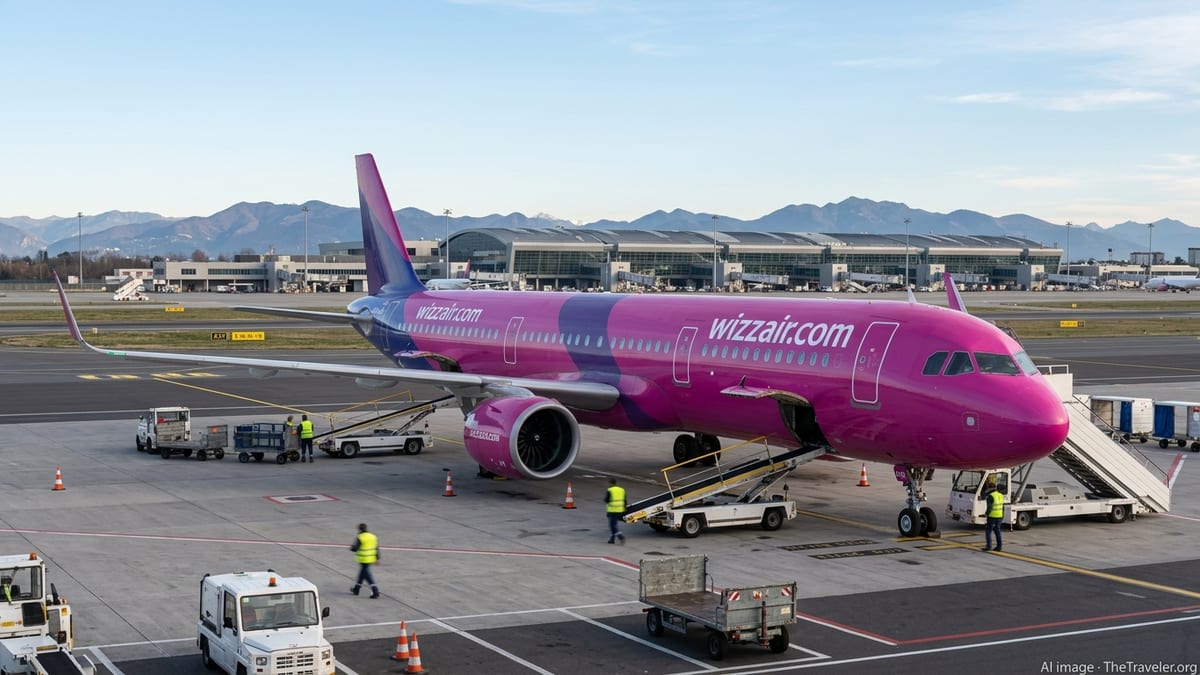
New Routes Put Milan Malpensa at the Center of Wizz Air’s Network
Recent schedule announcements indicate that Wizz Air is layering fresh point-to-point connections onto its Milan Malpensa base, reinforcing the airport’s role as a gateway for both leisure and visiting-friends-and-relatives traffic. A new route to Bilbao is among the latest additions, linking Lombardy with Spain’s Basque Country and broadening Wizz Air’s Spanish offering from northern Italy.
Published timetables also show further network growth from Malpensa over the next two seasons, including new links to Palma de Mallorca and additional destinations in Central and Eastern Europe. Industry coverage highlights that Wizz Air now serves a mix of established sun and city-break destinations and emerging markets from the airport, giving Milan-based travelers and inbound visitors more non stop options without transiting traditional hubs.
Airport overviews list Wizz Air alongside legacy and other low cost competitors at Malpensa, but capacity data underline that its growth is particularly robust on short and medium haul routes. The carrier’s strategy focuses on high-density Airbus A321neo operations, allowing it to add seats on popular routes while preserving a low unit cost structure that is central to its ultra low cost model.
Capacity Boosts on Key Domestic and Intra-European Routes
Beyond headline route launches, Wizz Air is increasing weekly frequencies on several high-demand corridors that touch Milan Malpensa. Published schedules for summer 2026 show a marked uplift on the Catania to Milan Malpensa route, where weekly flights are due to rise significantly, reflecting strong demand between Sicily and northern Italy. This additional capacity is enabled by the deployment of a third Airbus A321neo at Wizz Air’s Catania base.
Growth plans at Tirana International Airport also feed into Malpensa’s expansion story. Official airport communications for summer 2026 indicate extra weekly frequencies on the Tirana to Milan Malpensa route as part of a broader build-up in the Albanian market. The added seats further consolidate Malpensa’s role as a key access point for the Albanian diaspora living and working in northern Italy and neighboring countries.
On top of these increases, a new daily service from Abu Dhabi to Milan Malpensa is scheduled in the coming months, extending Wizz-branded connectivity between Italy and the Gulf region. While operated by the group’s Abu Dhabi affiliate, the route adds another stream of inbound capacity into Malpensa and creates more one-stop opportunities for passengers connecting onward on Wizz Air’s European network.
Milan Malpensa Emerges as a Strategic Low Cost Hub
Milan Malpensa has been steadily climbing the ranks of European airports, with traffic data showing that, together with Milan’s other airports, it forms Italy’s largest airport system by passenger numbers. Publicly available figures indicate that Malpensa handles a particularly high share of Italy’s air cargo, underpinned by the industrial strength of Lombardy, while also expanding its passenger footprint as carriers such as Wizz Air scale up operations.
Wizz Air’s base at Malpensa, which opened in 2020, has grown from an initial foothold into a sizable operation. Company reports and investor materials detail how the airline has added aircraft and routes over successive seasons, with Milan highlighted as one of the key growth markets where additional capacity is being allocated. The combination of strong outbound demand, inbound tourism to northern Italy and a large migrant population has created attractive year-round traffic flows that support high aircraft utilization.
Airport management statements in industry coverage have described Wizz Air’s trajectory at Malpensa as one of the airport’s standout success stories in recent years, particularly through the latest winter season. Published analyses note the carrier’s contribution to overall capacity growth at the airport and its role in diversifying the route map, especially toward Central and Eastern Europe and secondary Mediterranean leisure destinations that were previously underserved.
Network Coherence Across Italy Strengthens the Malpensa Platform
Wizz Air’s investments at Milan Malpensa are closely linked to broader growth across Italy, which the airline has identified as a strategic market. Traffic statistics for 2025 show that Wizz Air carried more than 20 million passengers in Italy, and the airline has publicly celebrated achieving a market share that places it among the country’s leading carriers. This scale allows it to create dense domestic and international patterns that feed into Malpensa from multiple sides.
The expansion of bases such as Catania, the ramp-up at Tirana with more flights to Milan, and the planned increase in services from other Italian cities to Malpensa all contribute to a more coherent network. Industry observers point out that, by synchronizing schedules and increasing frequencies, Wizz Air can appeal both to price-sensitive leisure travelers and to commuters who value flexibility and multiple daily options on core routes such as Sicily to northern Italy.
At the same time, the group’s longer sector from Abu Dhabi into Malpensa complements these short-haul flows, adding an additional layer of demand from the Middle East and beyond. Even without traditional interline agreements, a portion of passengers uses Malpensa as an informal connection point between Wizz-operated flights, further reinforcing the importance of the airport within the airline’s European network design.
What the Expansion Means for Travelers and the Region
For travelers in northern Italy, Wizz Air’s expansion at Milan Malpensa translates into more choice, particularly on routes where competition was previously limited or capacity constrained. Additional frequencies on domestic and regional routes can support more competitive fares and provide greater flexibility for weekend getaways, business trips and visits to friends and relatives.
For destinations linked to Malpensa, the increase in low cost capacity offers an opportunity to tap into a larger catchment area that stretches well beyond Milan itself into much of northern Italy and parts of neighboring Switzerland. Regional tourism boards and hospitality businesses are likely to view new and expanded Wizz Air services as a lever to attract more independent travelers who favor point-to-point flights and self-arranged itineraries.
For Milan Malpensa Airport, Wizz Air’s decisions signal confidence in the long-term demand outlook. The airport benefits from a more diversified airline mix and a broader network of direct connections, while the airline gains deeper penetration into one of Europe’s most economically dynamic regions. As schedules for 2026 continue to take shape, further adjustments to frequencies and new route announcements are expected to refine this expansion and cement Malpensa’s status as a central pillar of Wizz Air’s Italian growth strategy.