

More news on this day
Budget carrier Wizz Air is entering 2026 still grappling with a long-running Pratt & Whitney engine crisis, and travelers across the Balkans are now feeling the impact as routes to Cyprus and other popular leisure destinations face sudden suspensions, thinning schedules and wave after wave of cancellations.
Get the latest news straight to your inbox!
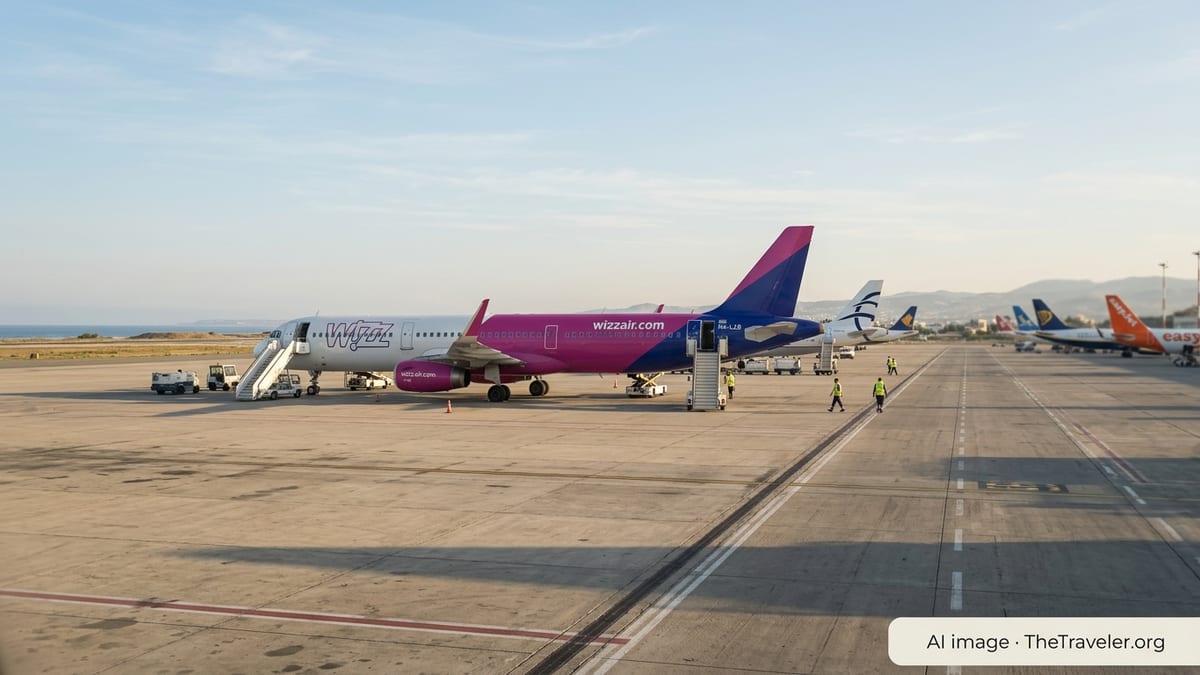
Engine Groundings Still Weigh on Wizz Air in 2026
Publicly available financial reports and industry analysis show that Wizz Air continues to operate with a significant share of its Airbus A320neo-family fleet grounded for inspections and repairs of Pratt & Whitney PW1100G geared turbofan engines. Aviation trade coverage indicates that around 20 percent of the carrier’s neo fleet has at times been parked, with the airline expecting an average of roughly three dozen aircraft to remain out of service through the 2026 financial year as the inspection program continues.
Wizz Air has previously disclosed that a commercial support package with Pratt & Whitney runs through 2026, providing compensation and spare-engine access but not eliminating the operational squeeze. Forecasts published by aviation outlets suggest the airline does not expect all affected aircraft to be back in service before 2027, creating a multi-year capacity crunch that is now colliding with strong demand for leisure travel from Central and Eastern Europe.
As a result, the low-cost group is being forced to juggle aircraft across its network, prioritizing high-yield markets and large bases while trimming or pausing thinner routes. The impact is increasingly visible on connections linking Balkan cities with Mediterranean holiday destinations such as Cyprus, where even modest schedule changes can leave regions with few or no non-stop options.
Balkan Hubs Squeezed as Capacity Is Pulled
Network data and airport announcements across the region indicate that Wizz Air has been selectively cutting or suspending routes from smaller Balkan markets as it copes with the engine-related shortfall. Past seasons already saw the airline walk away from several secondary destinations, and the latest adjustments suggest a renewed emphasis on consolidating capacity in the largest and most profitable hubs.
Tuzla in Bosnia and Herzegovina, for example, was relaunched as a Wizz Air base in late 2025 with A321neo aircraft and an initial slate of routes to Cyprus and Western Europe. However, recent schedule changes referenced by local passengers and reflected in booking systems show that summer 2026 flights from Tuzla to Larnaca have been withdrawn, with bookings either halted or existing departures cancelled and refunded. Without alternative operators on the route, this effectively cuts a direct leisure corridor between northeastern Bosnia and Cyprus at the height of the holiday season.
Similar uncertainty has been reported around other Balkan points where Wizz Air has been a dominant or sole low-cost carrier. Travelers monitoring flights from cities such as Skopje, Tirana and regional airports in the former Yugoslavia have noted periods in which future departures to Cyprus and other Mediterranean destinations appear as “sold out” or vanish entirely from timetables, a pattern that often precedes formal route cancellations or deep timetable revisions.
Cyprus Links Become a Flashpoint for Travelers
For Cyprus in particular, the fallout has been keenly felt among price-sensitive travelers who rely on Wizz Air’s non-stop services from smaller Balkan airports. Posts on traveler forums and social media in March 2026 describe passengers receiving short emails informing them that both outbound and return legs on Tuzla–Larnaca rotations in June have been cancelled, with no rebooking option on comparable dates and only basic refunds or limited credit on offer.
These abrupt cancellations are especially disruptive because many affected travelers have already booked accommodation and onward transport around peak-season dates. In several reported cases, passengers attempting to search for alternative Wizz Air services to Larnaca in the same period found no available flights from nearby cities, suggesting that capacity on Cyprus routes has tightened broadly rather than simply shifting to a different Balkan gateway.
The situation is complicated further by the fact that Cyprus serves as both a destination and a stepping-stone for regional travelers heading onward to other parts of Europe and the Middle East. While Wizz Air operates on a point-to-point model and does not offer protected connections, many passengers self-connect through Larnaca or Paphos to combine low fares with separate tickets. When a leg is removed entirely, those informal itineraries quickly unravel.
Strategic Rebalancing and Deferred Growth Plans
At the corporate level, Wizz Air is attempting to manage the engine crisis through a combination of network pruning, delivery deferrals and aircraft sourcing strategies. Industry and investor reporting during 2025 highlighted that the airline has negotiated to delay a large block of Airbus A320neo-family deliveries into the next decade and has signalled a more cautious growth trajectory than it promoted before the engine inspections began.
The carrier has also leaned on wet-lease arrangements and the intensified use of its most efficient aircraft on longer routes to preserve overall seat capacity, but these measures can only partially offset the loss of dozens of grounded jets. Analysts note that newer, higher-capacity A321neo aircraft are being concentrated at stronger bases, including in Central Europe and at fast-growing hubs such as Tirana, while smaller or more seasonal routes in the Balkans are shouldering a disproportionate share of the cuts.
This strategic rebalancing leaves markets like Bosnia and Herzegovina, North Macedonia and parts of the Western Balkans vulnerable to further pullbacks whenever operational disruption or new inspection requirements emerge. For travelers, that translates into a higher risk that seemingly firm bookings, especially on thinner leisure routes to islands and resort destinations, may change or disappear as the summer season approaches.
What Passengers Can Expect Through the 2026 Season
Travel industry observers expect the strain on Wizz Air’s schedule to persist across much of 2026 as the Pratt & Whitney inspection and repair programme continues. While the airline has publicly expressed confidence in a gradual recovery, the combination of constrained aircraft availability and strong demand for seats suggests that ad-hoc cancellations and timetable reshuffles will remain a feature of its operation.
For Balkan routes to Cyprus and other Mediterranean destinations, recent booking patterns and publicly reported cancellations indicate that travelers may face shorter operating seasons, reduced weekly frequencies and the possibility that marginal routes are suspended entirely if load factors fall short of expectations or if additional aircraft are temporarily grounded. The experience of Tuzla–Larnaca passengers in early 2026 points to a model in which affected customers are offered refunds or limited rebooking windows rather than seamless transfers on partner airlines.
Consumer advocates generally advise passengers using low-cost carriers under such conditions to monitor bookings closely, check schedules frequently in the months before departure and consider flexible accommodation or insurance options that account for potential flight changes. With Wizz Air’s engine challenges unlikely to be fully resolved before 2027, Balkan travelers looking to reach Cyprus and similar leisure hotspots in 2026 may need to plan around a more fragile route network and factor in the possibility of last-minute disruptions.