

More news on this day
Thousands of passengers across Europe and the Middle East face sudden disruption after budget carrier Wizz Air suspended all flights to Israel, Dubai, Abu Dhabi and Amman for a week, citing escalating regional security risks and rapidly changing airspace restrictions.
Week-Long Suspension Hits Key Middle East Gateways
In a statement issued on Saturday 28 February, Wizz Air confirmed it is halting all services to and from Israel, Dubai, Abu Dhabi and Amman with immediate effect until 7 March. The move affects one of the busiest travel corridors linking Europe with the Middle East, and comes at the height of the winter getaway period for holidaymakers, business travellers and diaspora communities.
The airline said it is closely monitoring developments and remains in contact with local and international authorities and aviation safety agencies as it reviews its network. Schedules beyond 7 March remain under assessment, leaving many travellers uncertain about near-term plans and onward connections through the region’s major hubs.
Flights to Tel Aviv’s Ben Gurion Airport, Dubai International, Abu Dhabi International and Amman’s Queen Alia International Airport are among the carrier’s most prominent routes in the Middle East, used heavily by cost-conscious leisure passengers and workers commuting between Europe and the Gulf.
While other global airlines have announced selective suspensions and reroutings, Wizz Air’s decision to pause all flights on these city pairs for an entire week marks one of the most sweeping single-carrier responses to the latest flare-up in regional tensions.
Escalating Tensions and Airspace Closures Ripple Across the Region
The suspension follows coordinated strikes by the United States and Israel on targets in Iran, a development that has led several countries, including Iran and Iraq, to close their airspace and prompted precautionary restrictions elsewhere in the Gulf. Aviation tracking data on Saturday showed wide swathes of normally busy skies over parts of the Middle East temporarily devoid of commercial traffic.
Authorities in the United Arab Emirates have announced a partial and temporary closure of national airspace, affecting movements into and out of Dubai and Abu Dhabi. Although airports remain technically open, airlines have been forced to cancel, reroute or delay flights as they work around newly restricted corridors and evaluate the evolving security picture.
Industry observers note that the dense web of routes crossing the Middle East makes the region a critical crossroads for long-haul services between Europe, Asia and Africa. Even a short-lived restriction in key airspaces can trigger global knock-on effects, lengthening flight times, increasing fuel costs and straining aircraft and crew schedules.
On Saturday, a growing list of international carriers, including European and Gulf airlines, reported cancellations to destinations such as Tel Aviv, Beirut, Oman and Dubai, or announced plans to avoid Iraqi and Iranian airspace for the coming days as a precaution.
Passengers Stranded and Rebooking Systems Under Strain
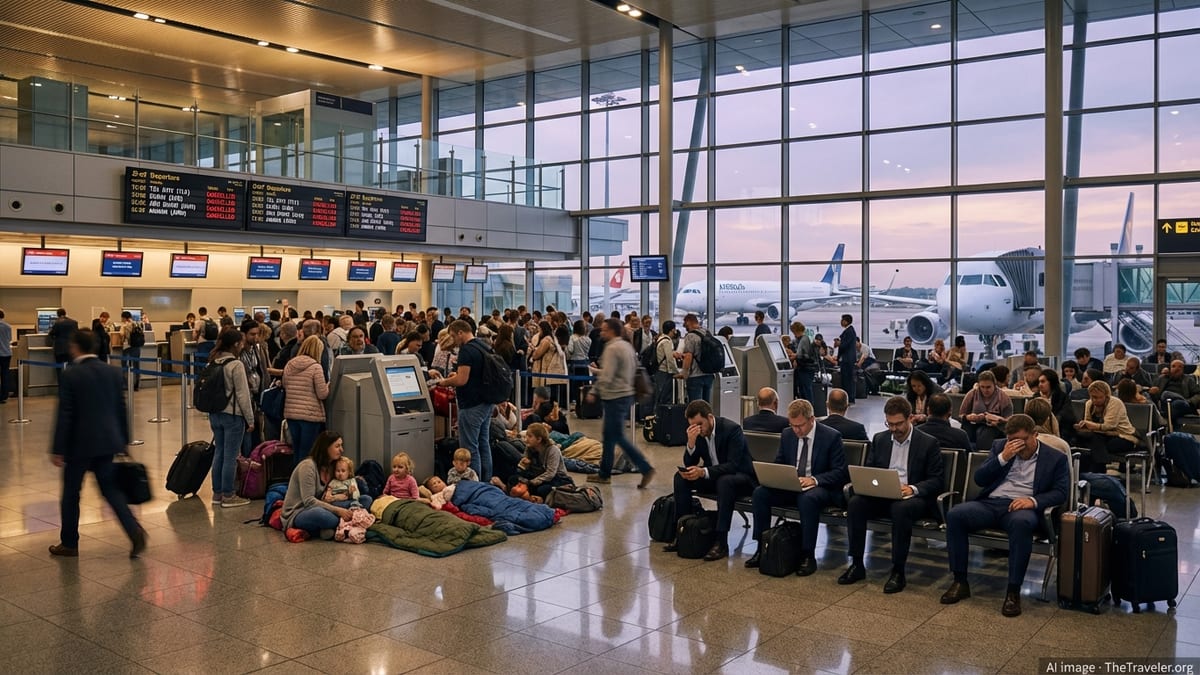
For travellers, the impact has been immediate and deeply disruptive. Passengers bound for holidays in Dubai, pilgrimages and business trips to Israel, or family visits in Jordan have found themselves stranded at departure airports across Europe or marooned in transit hubs without clear guidance on when they can complete their journeys.
Wizz Air has advised affected customers to monitor official channels and has begun offering options such as rebooking on later dates, alternative routes where available, or refunds. However, with multiple airlines trimming capacity at the same time, spare seats on remaining services are limited, and some travellers are reporting wait times of several days for viable alternatives.
At airports in Central and Eastern Europe, where Wizz Air has a strong presence, lines have formed at customer service desks as travellers attempt to rearrange trips, adjust hotel bookings and secure new onward connections. Tourism operators serving Israel, the Gulf and Jordan say they are fielding a surge of calls from clients seeking clarity on whether tours and packages can proceed.
Travel agents warn that many passengers who booked nonrefundable accommodation or separate onward flights may face additional costs, depending on the flexibility of their providers. Travel insurance policies may help in some cases, but coverage varies by insurer and by the specific security advisories in force at the time of booking.
Airlines Balance Safety, Commercial Pressures and Uncertainty
Aviation safety experts stress that route suspensions of this scale reflect a cautious approach in a highly fluid situation. Airlines must weigh the security assessments provided by national regulators and international bodies against their own risk models and operational constraints, often with incomplete real-time information.
For low-cost carriers like Wizz Air, which operate tight schedules with high aircraft utilisation, the sudden closure of critical air corridors can make short-term suspensions more practical than complex reroutings that add hours to flight times and disrupt crew duty limits. In parallel, full-service airlines are selectively cancelling services or diverting around closed airspace in ways that add significant cost but preserve some connectivity.
While most carriers emphasise that passenger and crew safety is the overriding priority, the financial implications are substantial. Extended disruptions in a region that serves as a hub for global transit can affect airline revenues, freight operations and tourism economies across multiple countries.
Industry analysts say the coming days will be pivotal. If airspace closures ease and security assessments stabilise, carriers could gradually restore services ahead of the busy spring travel period. If tensions deepen or incidents occur closer to major airports, airlines may be forced into longer suspensions and more extensive network reshaping.
What Travellers Should Do If They Are Affected
With the situation changing quickly, travel advisers recommend that passengers due to fly to or through Israel, Dubai, Abu Dhabi or Amman over the next week check their flight status repeatedly rather than relying on information from the time of booking. Airline apps and direct email or SMS alerts tend to be the fastest way to receive updates on cancellations and schedule changes.
Travellers whose flights have been suspended should contact their carrier before heading to the airport to discuss rebooking or refund options, and avoid making nonrefundable ground arrangements until new tickets are confirmed. Those who booked through online travel agencies or tour operators may need to work through those intermediaries to alter itineraries.
Experts also advise reviewing travel insurance policies closely to understand what is covered under security-related disruptions and airspace closures. Some policies allow for trip cancellation or interruption claims when official advisories or airline decisions make travel impossible, while others exclude conflict-related events.
With uncertainty likely to persist in the short term, seasoned travellers suggest building extra flexibility into plans, including longer connection times, fully flexible hotel bookings and contingency routes that do not rely on a single regional hub. For now, thousands of passengers across multiple continents remain in limbo as airlines, regulators and governments weigh the trade-offs between mobility and security in one of the world’s most strategically sensitive air corridors.