

More news on this day
Wizz Air’s decision to launch a new London Luton to Bilbao route in 2026 is set to tighten the web of air links between the UK and Spain’s dynamic Basque city, reinforcing an emerging network that already includes services from Heathrow, Manchester and Bristol.
Get the latest news straight to your inbox!
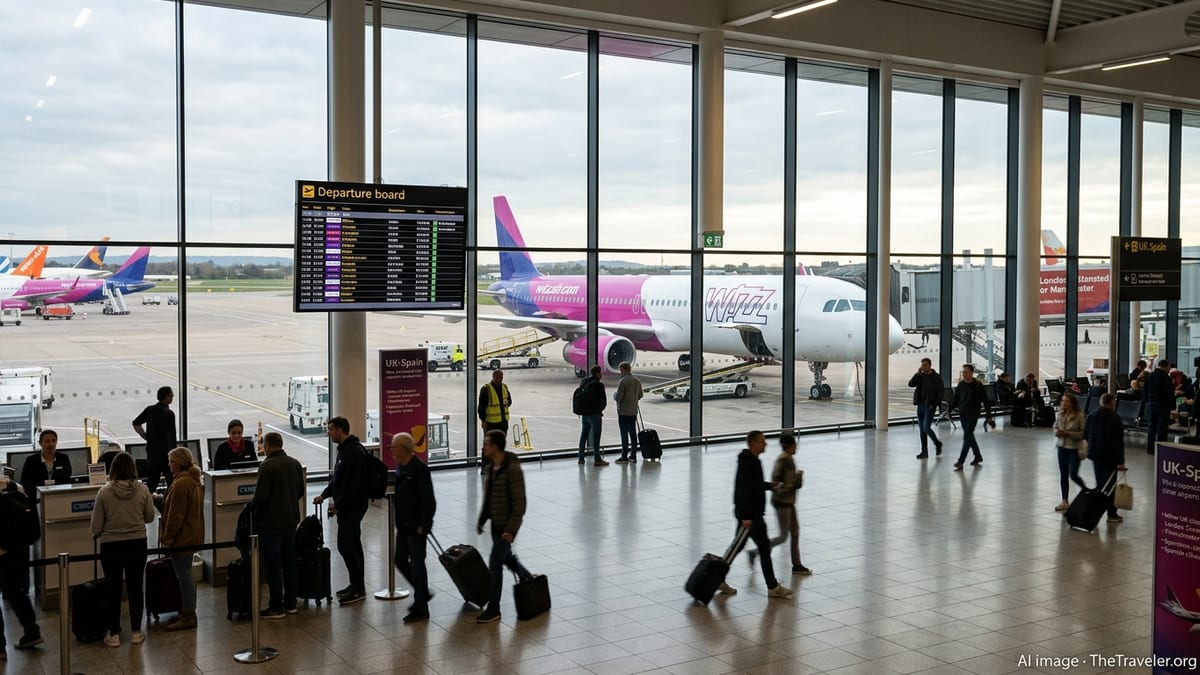
Luton joins a growing UK–Bilbao network
The new Wizz Air service from London Luton positions the airport alongside Heathrow, Manchester and Bristol in offering direct flights to Bilbao, according to route listings and recent airline announcements. Industry trackers show that Luton will become the fifth UK airport with a direct connection to the Basque hub, underlining how the city has moved beyond its traditional role as a niche regional gateway to become a mainstream Spanish destination for UK travellers.
Publicly available schedules indicate that the Luton–Bilbao route is part of a wider Wizz Air expansion from its primary UK base, supported by the deployment of additional Airbus A321neo aircraft. The move comes as the carrier grows its short-haul European network and leverages new slot allocations at Luton, allowing it to increase capacity on leisure-focused routes.
Reports in trade and consumer travel media highlight that the Luton–Bilbao link is one of several Spanish connections being introduced from the airport from late March 2026. These include services to major cities such as Barcelona, Madrid, Seville and Valencia, positioning Luton as a competitive alternative to Heathrow and Gatwick for price-sensitive holidaymakers heading to Spain.
For Bilbao, the addition of Luton adds another London-area gateway to existing services from Heathrow, creating more choice for travellers who may prefer a low-cost carrier at a secondary airport over a full-service airline operating from a global hub.
Supercharging UK–Spain leisure and city-break demand
Analysts tracking UK outbound travel expect the expanded connectivity to Bilbao to feed into a broader rebound in UK–Spain tourism. After several years of volatile demand patterns, seat growth on short-haul European routes has increasingly focused on city-break markets, where travellers combine culture, gastronomy and short stays rather than traditional beach holidays alone.
Bilbao’s positioning as a gateway to both an urban cultural scene and the wider Basque coast is seen as a strong fit for that trend. Travel industry coverage points to rising interest in the city’s museums, architecture and food culture, from the Guggenheim Museum to the city’s old town and modern waterfront developments. Low-fare capacity from Luton, combined with existing options from Heathrow, Manchester and Bristol, is expected to make short, frequent trips more feasible for UK visitors.
Tourism data for Spain in recent years shows that UK travellers remain one of the country’s largest source markets, with demand increasingly spreading beyond the classic Mediterranean resorts. The strengthening of air links to secondary Spanish cities such as Bilbao aligns with that shift, giving airlines opportunities to deploy capacity on routes with a mix of leisure and visiting-friends-and-relatives traffic.
Market observers also note that competitive fares from ultra-low-cost carriers can stimulate entirely new demand rather than simply diverting passengers from other airports. With starting prices on Wizz Air’s new Spanish routes from Luton reported in the sub-£20 one-way range during promotional periods, the cost barrier to spontaneous European trips is likely to fall further.
Heathrow, Manchester and Bristol provide complementary access
While Wizz Air’s Luton launch has drawn attention, Bilbao’s UK connectivity has been building steadily through other carriers and airports. According to route maps and airline announcements, Vueling has grown its presence at Heathrow with flights to Bilbao, while low-cost competitors operate links from Manchester and seasonal services from Bristol.
This means UK travellers will be able to reach Bilbao from a spread of airports that cater to different segments of the market. Heathrow offers high-frequency connections and easy long-haul onward links, attracting business travellers and premium leisure passengers. Manchester and Bristol serve large regional catchment areas in northern England and the southwest, respectively, while Luton focuses heavily on price-driven point-to-point leisure demand from the wider London region and Midlands.
Industry commentary suggests that this multi-airport approach tends to deepen rather than cannibalise demand on established routes, as passengers choose the departure point that best matches their location, schedule and budget. In practice, the four airports act as complementary gateways into northern Spain, broadening access for travellers who might otherwise have to connect via Madrid, Barcelona or another European hub.
Observers highlight that the Basque Country’s strategic focus on attracting international visitors also benefits from diversified UK access. Direct flights from multiple British airports shorten journey times and simplify logistics for travellers planning itineraries that combine Bilbao with surrounding coastal towns and inland wine regions.
Strategic shift at Luton underpins Wizz Air’s expansion
Wizz Air’s growing footprint at London Luton is an important part of the story behind the new Bilbao route. Company disclosures and aviation industry reports show that the airline has steadily increased the number of aircraft based at Luton, helped by additional slot access and a fleet renewal programme centred on fuel-efficient A321neo jets.
This strategy allows the carrier to operate high-density configurations on short- and medium-haul routes, keeping unit costs low and supporting the ultra-low-fare model that has become its hallmark. Deploying these aircraft on routes such as Luton–Bilbao means that even a relatively niche city-pair can be profitable if load factors are robust and ancillary revenue from baggage, seat selection and onboard sales remains strong.
Market analysis also indicates that Wizz Air is recalibrating parts of its network away from some longer-haul operations in favour of its core European point-to-point routes. By concentrating capacity on high-demand leisure and city-break markets, the airline seeks to stabilise yields and capitalise on resilient demand from cost-conscious travellers.
The timing of the new Spanish routes from Luton, coinciding with the start of the 2026 summer schedule, reflects this focus. Launching ahead of the Easter and peak summer periods gives the airline time to build awareness, secure group and tour-operator bookings, and fine-tune schedules based on early demand trends.
Opportunities and challenges for UK–Spain connectivity
The strengthened web of flights linking Bilbao with Luton, Heathrow, Manchester and Bristol creates new opportunities for both the UK and Spain’s tourism sectors, but it also brings familiar challenges. Airlines expanding aggressively on leisure routes must contend with fuel price volatility, shifting consumer confidence and the risk of overcapacity on popular city-pairs.
Commentary from aviation analysts often points out that rapid growth in low-cost capacity can lead to intense price competition, which benefits passengers but can pressure airline margins. In periods of economic uncertainty, some carriers have responded by trimming underperforming routes or adjusting frequencies, and observers will be watching closely to see how new services such as Luton–Bilbao perform beyond their first summer season.
On the destination side, tourism planners in northern Spain face the twin task of harnessing increased visitor numbers while managing sustainability concerns. Bilbao has invested heavily in public transport, urban regeneration and cultural infrastructure, and more direct flights from the UK are likely to accelerate visitor flows, particularly for short stays. Industry discussion increasingly centres on spreading demand across seasons and encouraging longer visits that support local businesses beyond the city’s most famous attractions.
For travellers, the immediate impact is straightforward: more choice of airports, schedules and fare levels when planning trips between the UK and Spain’s Basque Country. With Luton now joining Heathrow, Manchester and Bristol in providing direct access to Bilbao, the route map illustrates how post-pandemic European aviation is reorienting around flexible, multi-airport networks that prioritise frequency and value on short-haul corridors.