

More news on this day
Wizz Air marked International Women’s Day 2026 on March 8 by deploying all-female operated flights across key European routes, turning ordinary low-cost services into high-visibility showcases for women’s growing role in aviation.
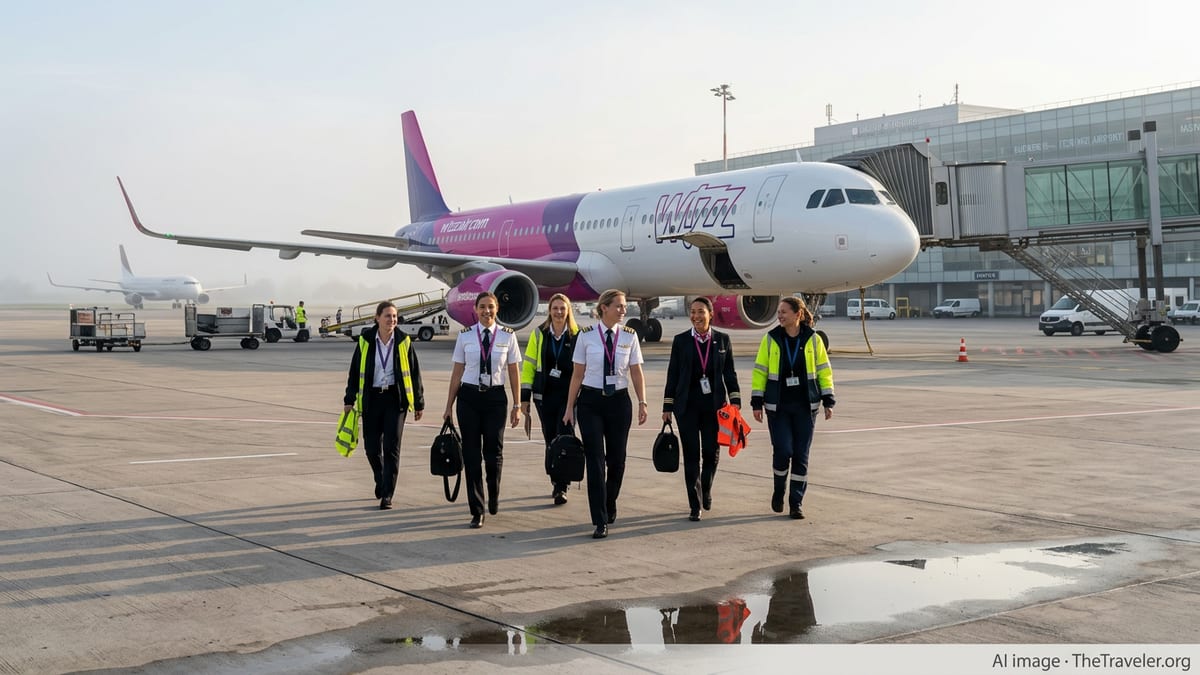
Symbolic Departures Across the Wizz Air Network
From Budapest and Warsaw to London and Vienna, Wizz Air scheduled a series of flights on March 8 to be operated entirely by women, including pilots, cabin crew and key ground staff. The selected routes connected major European hubs and popular leisure destinations, ensuring maximum visibility at busy terminals where passengers were greeted and briefed by women at every stage of their journey.
Passengers boarding these flights found announcements highlighting International Women’s Day and the airline’s commitment to advancing gender balance in the cockpit and beyond. Onboard messages, specially branded napkins and subtle cabin touches underscored the theme without disrupting the low-cost carrier’s fast-turnaround model.
Airport spotters noted that the all-female flights were spread throughout the day, with early-morning departures catering to business travelers and afternoon services targeting leisure flows. By weaving the initiative into its standard schedule, Wizz Air signaled that women-led operations are not a novelty event but integral to everyday flying.
Showcasing Women in Every Aviation Role
Wizz Air’s International Women’s Day operation extended past the flight deck to spotlight the breadth of jobs that keep its Airbus fleet moving. Female dispatchers handled flight plans, load sheets were prepared by women in operations centers, and check-in desks and gates on selected services were staffed predominantly by women, reflecting an end-to-end emphasis on representation.
In several bases, female engineers and technicians took part in pre-flight walk-arounds and maintenance checks, standing alongside crew for group photos on the apron as taxiing aircraft paused nearby. The images, shared widely on social media, gave travelers a glimpse of the complex, largely unseen work that underpins modern low-cost aviation.
Cabin crews used the public address system to briefly acknowledge colleagues on the ground, drawing attention to air traffic controllers, security personnel and turnaround coordinators whose efforts often go unnoticed by passengers. The result was a portrait of aviation as a network of interlocking roles in which women have an expanding presence.
Responding to Industry-Wide Calls for Diversity
The initiative comes as airlines and industry bodies across Europe confront the long-standing imbalance in pilot and technical roles, where women still account for a small minority of licensed professionals. Training organizations and regulators have intensified calls for targeted scholarships, mentorship schemes and early outreach to girls considering technical careers.
By putting women front and center on high-profile flights, Wizz Air aligned itself with that broader campaign, signaling to prospective recruits that there is space for them in the cockpit as well as in corporate offices. Company representatives emphasized that the all-female services were a public expression of policies already in place, including leadership development programs and flexible scheduling designed to retain skilled staff.
Aviation analysts noted that such campaigns also serve a competitive purpose. In a market where low-cost carriers fight to differentiate largely similar products, a visible commitment to inclusion and opportunity can bolster brand loyalty among younger travelers who increasingly weigh corporate values when choosing how to fly.
Passengers Welcome a Different Kind of Inflight Announcement
For many passengers, the first sign that they were part of a special flight came at the boarding gate, where ground staff explained the International Women’s Day project and invited travelers to share their experience online. Families with children, in particular, lingered near windows to watch the all-female crews conduct final walk-arounds and engine checks before departure.
Onboard, inflight announcements briefly outlined the backgrounds of some crew members, from first officers who had transitioned from gliding clubs to captains who previously flew regional turboprops before joining Wizz Air’s Airbus fleet. The tone remained firmly operational, but the personal details humanized the professionals at the front of the aircraft.
Several flights reported spontaneous applause after landing as passengers recognized the crews’ role in the day’s celebrations. For many younger travelers, seeing women in command of the aircraft and leading safety briefings provided a tangible counterpoint to lingering stereotypes about who flies commercial jets.
Looking Beyond a Single Day of Celebration
While the all-female flights were designed around a single date, Wizz Air framed the effort as part of a longer journey to bring more women into aviation careers. Recruitment campaigns around its network have increasingly featured female pilots, engineers and operations managers, and the airline has been working with training partners to highlight financing options and career pathways for young women.
Industry observers point out that sustained progress will depend on more than symbolic flights, requiring data-driven hiring targets, transparent promotion criteria and support systems that make long-haul and irregular schedules compatible with family life. Wizz Air’s initiative, they say, will be judged in the coming years by whether it coincides with a measurable rise in the share of women in senior technical and operational roles.
For now, the sight of all-female crews taxiing to European runways on March 8 sent a clear signal to travelers and competitors alike. In an industry facing both staffing shortages and intense scrutiny of corporate culture, Wizz Air used the global spotlight of International Women’s Day to stake out a position that blends operational efficiency with a visible commitment to gender inclusion.