

More news on this day
Wizz Air has marked International Women’s Day 2026 with a network of all-female operated flights across Europe, turning routine services into high-profile showcases for women in the cockpit and throughout the airline’s operations.
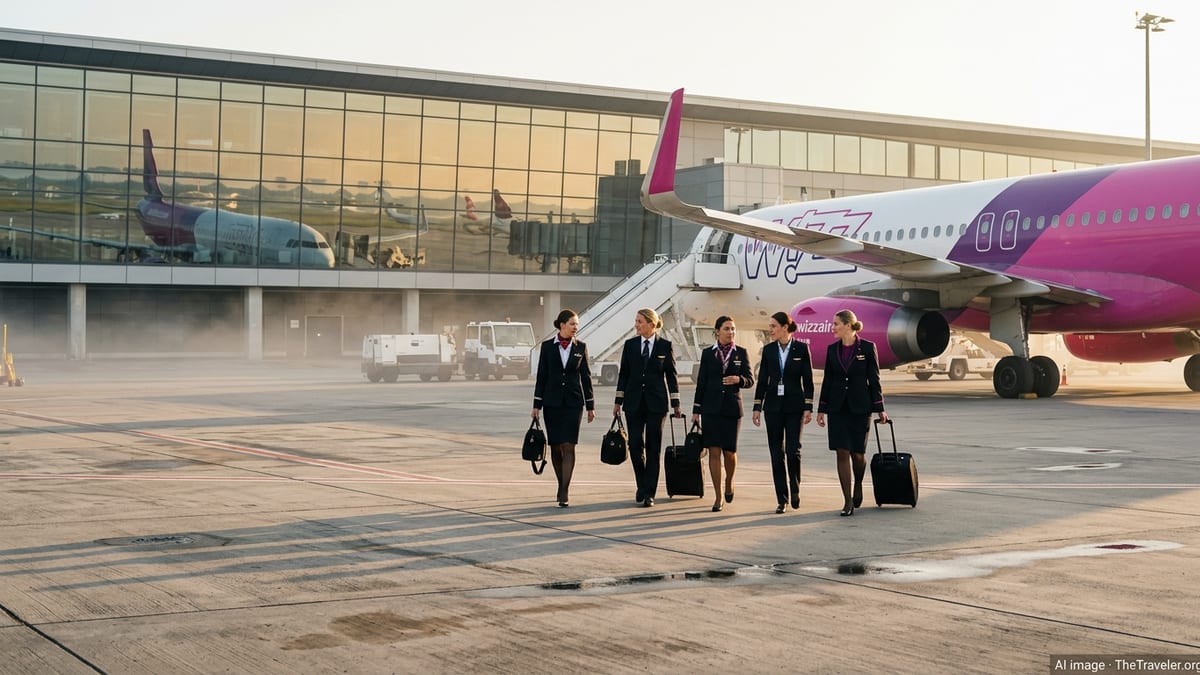
All-Female Flights Take Off Across 10 European Countries
The Budapest-based low cost carrier coordinated a series of flights on and around 8 March operated entirely by women in key operational roles, from the flight deck and cabin to ground handling and dispatch. Services departed from major Wizz Air bases including Budapest, London Luton, Warsaw, Bucharest and Cyprus, reaching destinations across Central and Western Europe.
According to the airline, the initiative covered routes in 10 countries, creating a visible statement that women are increasingly present in roles traditionally dominated by men. Passengers on selected flights were welcomed on board by female captains and first officers, supported by all-female cabin crews and backed by predominantly female teams at check in and in operations control.
In markets such as Hungary, Romania and Cyprus, the special services were promoted in advance through local media and airport partners, encouraging young women and girls with an interest in aviation to travel on the flights or meet the crews at the gate. Onboard announcements highlighted International Women’s Day and invited passengers to share their experiences on social channels, giving the campaign additional visibility beyond the airports involved.
The carrier framed the operation as both a celebration and a recruitment message, underlining that the all-female flights were not a one off publicity stunt but a reflection of a growing pipeline of women entering the profession through its cadet and training programmes.
Why These Flights Matter for Gender Diversity in the Cockpit
Women remain significantly underrepresented in pilot roles worldwide, and Europe is no exception. Wizz Air has acknowledged that, while progress has been made, women still account for only a small share of its total pilot community. As of March 2026, the airline reports that women make up around 5.6 per cent of its flight crew, up from roughly 3 per cent a decade ago, placing it among the more progressive carriers in the region on this metric.
Industry groups say that visibility and role models are critical to closing that gap. By putting female captains and first officers front and centre on regular commercial services, the airline aims to challenge outdated perceptions about who can fly an aircraft and to reassure potential recruits that aviation careers are open to them. The International Women’s Day flights tie into broader efforts across the sector to boost female representation in technical and leadership roles.
Aviation analysts note that initiatives like these also serve a practical purpose. At a time when airlines are forecasting long term pilot shortages, tapping into a more diverse talent pool is seen as essential to sustaining growth. Encouraging women into the cockpit and into engineering and operations roles is not only about fairness but also about securing the workforce airlines will need over the next decade.
For passengers, the impact is often immediate and personal. Social media posts from travellers on the Women’s Day flights described pride and surprise at seeing an all-female crew, with some parents commenting that the experience made a lasting impression on their daughters.
Routes, Bases and What Passengers Experienced Onboard
The 2026 programme built on earlier International Women’s Day operations by the airline in 2024 and 2025. This year’s edition expanded to include more bases and a wider mix of routes, from short domestic hops to cross border city pairs in Central and Western Europe. Services highlighted in local reports included flights linking Budapest with Western European hubs, Bucharest with Eindhoven, and a Cyprus service operated with an all-female flight and cabin crew.
On the ground, some airports organised special send offs and arrivals, with announcements at the gate introducing the crew and briefly explaining the initiative. In select locations, ground handling and check in teams were staffed predominantly by women, visually extending the theme from the aircraft door back through the terminal.
Onboard, most flights retained the airline’s standard service, avoiding a heavily branded or promotional feel. Crews instead used brief announcements to mark International Women’s Day, share their own career paths in a few words and encourage passengers to consider aviation as a possible profession for themselves or their children. In some cases, young passengers were invited to take photos with the crew after landing when operationally feasible.
While the flights took place on a single day, the airline signalled that it sees them as part of a longer term narrative. The carrier has been gradually increasing the proportion of women in its flying ranks through targeted recruitment and scholarship schemes, and it presents the Women’s Day operation as an annual milestone to measure progress.
Scholarships, Training and Wizz Air’s Wider Inclusion Strategy
Beyond a single calendar date, Wizz Air has woven gender diversity into its sustainability and corporate responsibility plans. Company reports highlight that women already represent close to half of its overall workforce across corporate and frontline functions, even though the cockpit lags behind. The airline participates in industry initiatives to raise the share of women in aviation and has set internal goals to keep improving representation in technical and leadership positions.
Key measures include cadet programmes that actively encourage female applicants, partnerships with flight schools and aviation academies, and mentoring arrangements that pair aspiring pilots and engineers with experienced professionals. Some bases have hosted visits for school groups and university students during Women of Aviation Worldwide Week, giving young women hands on exposure to the work that goes into running an airline.
Internally, the carrier has promoted flexible career paths and leadership training aimed at ensuring women are present in decision making roles, not only on the flight deck. Human resources policies have been updated over recent years to support return to work after parental leave, with the stated goal of retaining more women through the mid career stage when many leave the industry.
The airline argues that greater diversity leads to better decision making and closer alignment with its customer base, which spans a broad cross section of European society. Executives present the International Women’s Day flights as a visible symbol of that strategy, designed to resonate with passengers, employees and future recruits alike.
Planning a Trip on Future Women’s Day Flights
For travellers interested in experiencing similar operations in future years, the first step is to pay close attention to announcements in the run up to 8 March. The airline tends to confirm its International Women’s Day plans only a short time before the event, often through press releases and social channels, and may highlight particular routes and departures that will feature all-female crews.
Because the flights are regular scheduled services rather than special charters, they are bookable through the usual channels and are subject to normal pricing and conditions. Seats on some highlighted routes can sell quickly once the initiative becomes public, particularly among aviation enthusiasts and passengers keen to support the cause, so early booking is advisable when possible.
Passengers who find themselves on one of the special services can expect a standard low cost carrier experience with a few added touches. These may include brief announcements about the significance of the day, occasional small tokens or messages marking the occasion and, time and operations permitting, opportunities for photos or short conversations with crew members after landing.
More broadly, the initiative offers travellers a chance to reflect on how their choice of airline aligns with their values. As more carriers across Europe and beyond adopt similar programmes for International Women’s Day, competition on gender diversity credentials is likely to intensify, giving passengers additional factors to weigh alongside fares and schedules when planning their journeys.