

More news on this day
Passengers boarding selected Wizz Air services for International Women’s Day this year stepped into cabins where every visible face in uniform, from the flight deck to the turnaround team, belonged to a woman.
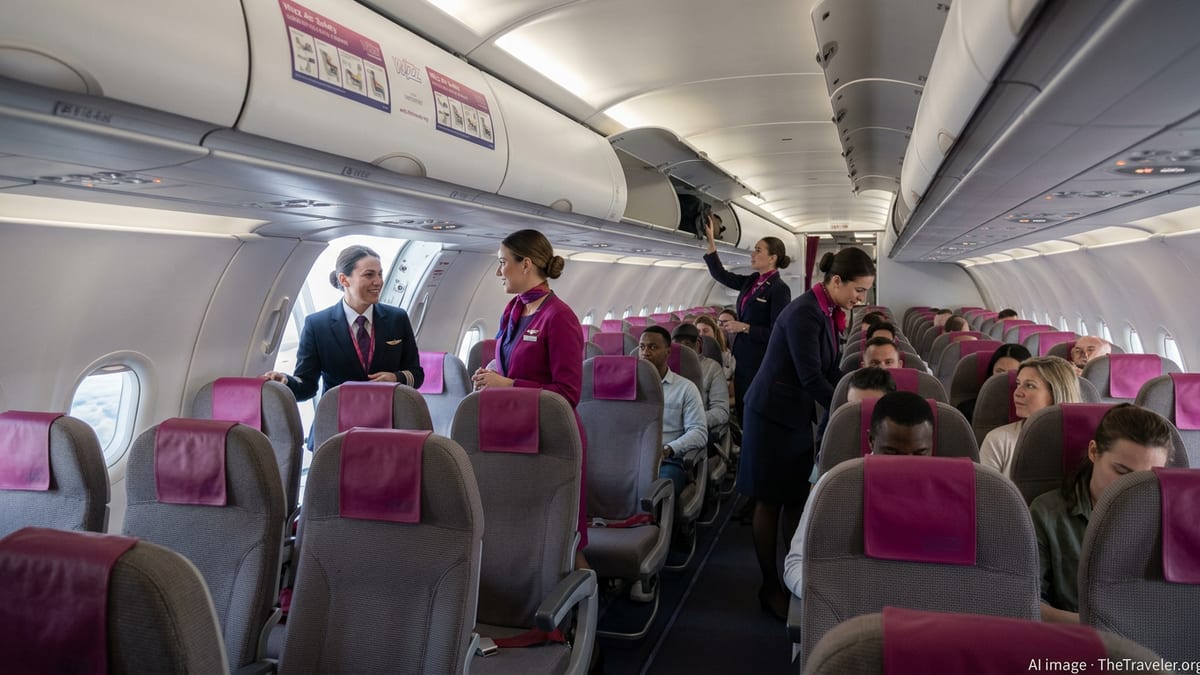
All-Female Crews Take Off Across Europe
Wizz Air marked International Women’s Day 2026 with a coordinated series of flights crewed entirely by women, underscoring the low-cost carrier’s growing focus on gender equality in aviation. Services operated on March 8 and 9 across 10 European countries, including Hungary, the United Kingdom, Italy, Romania, Germany, Spain and Cyprus, with female pilots, cabin crew and ground staff at the heart of the operation.
On these flights, women led every visible stage of the journey, from check-in and boarding to pushback and arrival. The airline highlighted flights such as its Cyprus rotation, where a female captain and first officer were joined by an all-female cabin crew and supported by women in ground operations during the busy turnaround window.
The initiative, now in its fifth consecutive year, has become a fixture in the carrier’s March schedule. What began in 2022 as a symbolic gesture has evolved into a network-wide showcase, with multiple bases participating and more routes added each year.
Wizz Air executives say the event is designed not only to celebrate existing staff, but also to show passengers and potential recruits that women have a place in every operational role, from line pilot to engineer and station manager.
From Symbolism to Structured Diversity Goals
Behind the high-visibility photo opportunities in the cabin sit more formal diversity targets. According to recent company disclosures, women now account for about 5.6 percent of Wizz Air’s flight crew, up from just over 3 percent a decade ago. While still a small share, the airline is among the industry leaders on female representation in the cockpit and has set out to lift that proportion further by 2030.
The carrier has also committed to increasing the number of women in leadership roles. Internal targets call for women to make up roughly 40 percent of management positions within the next few years, with hiring, promotion and mentoring programmes aligned to that goal. Senior executives frame these measures as business-critical in a tight labour market, not just as corporate social responsibility.
International Women’s Day has become a key annual milestone for reporting progress. The 2026 campaign was accompanied by updated figures on gender representation, reaffirming the company’s intention to widen the pipeline of female talent across technical and commercial departments.
Industry analysts note that such transparency is still relatively rare among airlines, particularly around cockpit diversity. Wizz Air’s decision to publicly share its metrics and targets places additional pressure on competitors in Europe’s low-cost segment to demonstrate similar commitments.
Career Pathways: From Cabin Crew to Cockpit
Central to Wizz Air’s empowerment message this year was the promotion of internal career pathways designed to make technical roles more accessible to women. Flagship programmes include “She Can Fly,” which supports aspiring female pilots with information sessions, assessments and financial assistance, and the long-running “Cabin Crew to Pilot” scheme that helps front-line crew retrain for the flight deck.
More recently, the airline introduced an “Office to Pilot” route, enabling staff in non-flying roles to transition into training if they meet aptitude and medical criteria. These initiatives were referenced throughout the Women’s Day campaign, with participants on the all-female flights sharing their own progression stories over onboard announcements and social channels.
Training managers say these schemes are aimed at dismantling practical barriers that often discourage women from pursuing pilot careers, including cost, lack of information and the perception that the cockpit is an exclusively male space. By recruiting from within its own workforce, Wizz Air is also attempting to retain experienced aviation professionals who already understand its operations and culture.
The airline’s sustainability and annual reports have repeatedly highlighted these programmes as key tools in addressing long-term pilot shortages. With demand for flight crew expected to rise in the coming decade, executives argue that tapping underrepresented talent pools is no longer optional.
In-Cabin Storytelling and Passenger Response
On board the Women’s Day services, the empowerment theme extended beyond staffing lists. Crew members used announcements and informal conversations to highlight their roles, training paths and years of experience, turning routine flights into live case studies of women’s careers in aviation.
Passengers on routes such as London to Central and Eastern European destinations were greeted by captains introducing themselves and their colleagues by name, explaining that the entire team operating the flight, from the cockpit to the ground engineers and gate agents, were women. Some flights also featured brief mentions of the airline’s scholarship and mentoring schemes for girls and young women considering technical studies.
Social media posts from travellers documented the atmosphere on board, with many commenting on the normality, rather than novelty, of seeing a fully female crew manage a busy sector. Aviation commentators noted that this sense of everyday professionalism is precisely what airlines hope to achieve as gender balance improves across the industry.
For Wizz Air, that reaction supports the argument that visibility can be a powerful recruitment tool. By putting women in front of passengers in highly skilled roles, the airline is betting that a new generation of travellers will see aviation careers as more open than previous cohorts did.
Competition, Criticism and the Road Ahead
Wizz Air’s Women’s Day initiative takes place in a competitive landscape where rival carriers are also promoting all-female flights and diversity programmes. Flag carriers and low-cost rivals alike have announced their own all-women operations around March 8, as well as pledges to raise the number of female pilots, engineers and executives.
Campaigners welcome the visibility but stress that one day of themed operations cannot substitute for year-round structural change. Industry unions and equality groups point to ongoing gaps in pay transparency, part-time opportunities and parental support as areas where airlines, including Wizz Air, are still being closely watched.
The company acknowledges that its Women’s Day flights are only one element of a broader equality strategy that includes mentoring, flexible work pilots and partnerships with educational institutions. Executives say the focus now is on sustaining year-on-year increases in female representation rather than relying on headline-grabbing events.
As this year’s all-female crews taxied back to their stands across Europe, the airline framed the operation as both a celebration and a challenge to its own future performance. The true measure, observers say, will be whether the proportion of women in Wizz Air uniforms on ordinary days in March looks more and more like those seen on its special Women’s Day flights.