

More news on this day
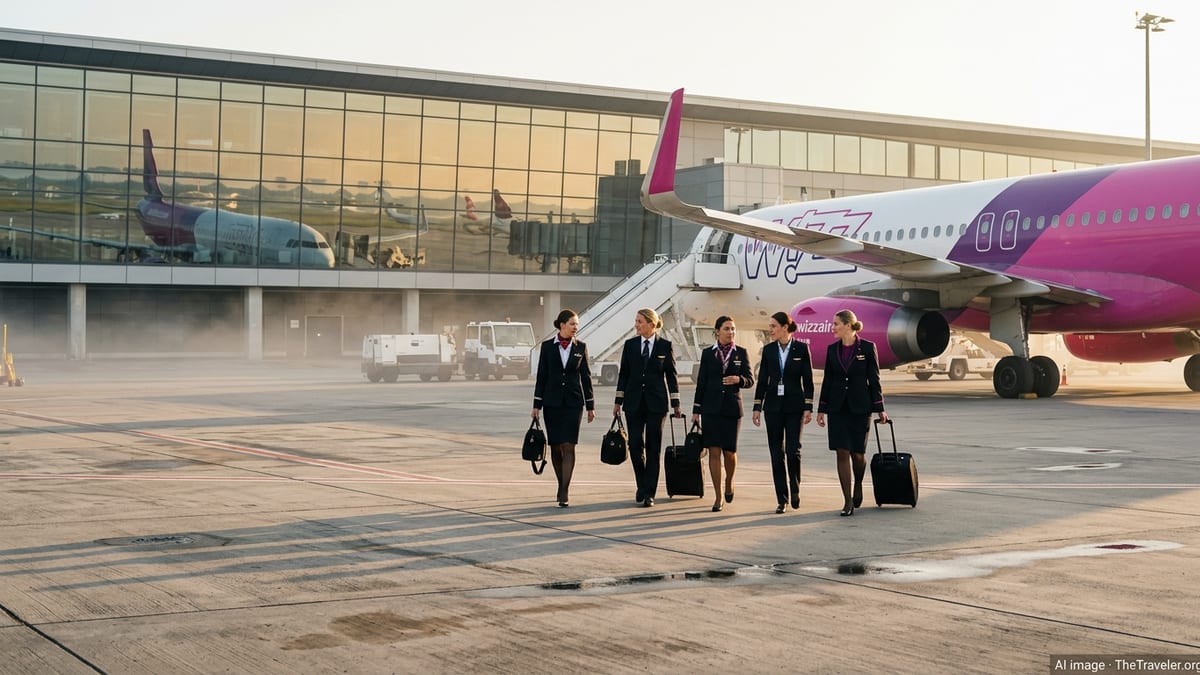
Wizz Air has marked International Women’s Day 2026 with ten all-female operated flights across Europe, showcasing women in every key onboard role and signaling the carrier’s ambition to help reshape the future of aviation.
Ten All-Female Flights Take Off Across Europe
The ultra-low-cost carrier scheduled ten special services on 8 March, each operated entirely by women on the flight deck and in the cabin. The flights linked a series of core cities in Wizz Air’s network, including Budapest, London, Warsaw, Vienna and other major European destinations where the airline continues to expand.
On board, passengers were greeted by women at every step of the journey, from check-in and boarding to in-flight service and arrival gate announcements. While the aircraft, routes and schedules were part of Wizz Air’s regular operations, the staffing was intentionally curated to underline how women are increasingly present in roles that have historically been dominated by men, particularly in the cockpit.
According to industry reports, the ten services collectively involved around 70 women in cabin and flight crew positions, giving additional visibility to female captains and first officers already flying regularly for the airline. For many travelers, it was their first time realizing just how many women now serve in technical and leadership roles in commercial aviation.
The March 8 operation builds on Wizz Air’s previous Women’s Day activations, but this year’s expanded program of ten flights marked the largest all-female initiative the airline has run to date. It comes as carriers across Europe search for new ways to address both pilot shortages and persistent gender gaps in aviation careers.
From London to Budapest, Symbolic Routes Highlight Progress
Among the most high-profile Women’s Day services was a flight between London Luton and Budapest, a route that connects one of Wizz Air’s key UK bases with its central European hub. Commanded by Captain Iren Cserto, with First Officer Szabina Nyers, the flight placed an all-female cockpit team at the forefront of the campaign.
The pair were supported by an all-women cabin crew who handled safety briefings, inflight service and communications with passengers throughout the journey. The service became a focal point for the airline’s messaging around inclusion and career pathways, illustrating that women can and do occupy the most technically demanding positions in commercial flying.
Similar all-female crew compositions were rostered on other routes across Central and Western Europe, spanning both leisure and business markets. While the flights operated as standard commercial services, Wizz Air used onboard announcements and social media channels to draw attention to the initiative and to the women leading the operation.
By pairing symbolic routes with everyday flying, the airline aimed to reinforce that female pilots and cabin crew are not a novelty, but an increasingly visible part of its core workforce. The Women’s Day flights served as a heightened moment of recognition rather than an isolated exception.
Women Still Underrepresented in Aviation’s Technical Roles
Despite such high-profile initiatives, women remain underrepresented in many technical and operational areas of aviation. Global data from industry associations show that fewer than 5 percent of commercial pilots are women, and similar gaps persist among aircraft engineers and senior operational managers. Air traffic control and maintenance roles also trail broader labor-market averages when it comes to gender balance.
Wizz Air has publicly acknowledged these gaps and in recent years has introduced targeted recruitment and mentoring programs designed to attract more women into flight crew and engineering positions. Company sustainability and ESG updates have described near gender parity across the overall workforce, while also highlighting a concerted push to lift the proportion of female pilots and to expand professional development pipelines.
The Women’s Day all-female flights are positioned by the airline as both a celebration and a form of visual advocacy. By ensuring that passengers encounter female captains, first officers and senior cabin crew on mainstream European routes, Wizz Air aims to normalize the presence of women in roles that younger generations may still instinctively associate with men.
Industry observers note that such initiatives, while symbolic, can play a valuable role in shifting perceptions and encouraging girls and young women to consider aviation careers. When passengers see diverse crews in highly skilled positions, the barrier of imagination is lowered, which is often a first step toward closing structural gaps in training, recruitment and promotion.
Inspiring the Next Generation of Female Aviators
Alongside the flights themselves, Wizz Air used International Women’s Day to promote stories of female pilots, cabin supervisors and managers who have advanced through the company’s ranks. Profiles circulating in European media and company channels highlighted women who transitioned from cabin crew to cockpit roles, or who now hold leadership positions in operations and safety teams.
The airline’s leadership has framed these role models as central to its long-term strategy. By spotlighting career trajectories and the training support available, Wizz Air is seeking to reassure aspiring pilots and engineers that there are clear pathways into the industry, even for those without a traditional aviation background.
Scholarship programs, partnerships with aviation academies and outreach to schools and universities are increasingly part of the airline’s wider recruitment toolkit. While the ten all-female flights served as a highly visible focal point on 8 March, executives emphasize that year-round efforts to broaden the talent pool are essential to deliver lasting change.
Travel and tourism stakeholders also have a vested interest in that change. As Europe’s aviation sector grapples with long-term workforce shortages, particularly in the cockpit, drawing more women into flying and technical roles is widely seen as both a social priority and an operational necessity.
Tourism Destinations Feel the Impact of Wizz Air’s Initiative
The Women’s Day flights were not only a milestone for the airline’s internal diversity agenda, but also a boost for destinations across its European network. Travel industry reports indicate that routes involved in the all-female operations contributed to a noticeable uptick in visitor numbers to popular holiday markets such as France, Spain and Italy around the International Women’s Day period.
Hotels, restaurants and local transport providers in these countries reported stronger weekend demand linked to short-break travel, including group trips organized specifically to coincide with the Women’s Day celebrations. For some tourism boards, the Wizz Air initiative provided an opportunity to highlight women-led businesses and cultural attractions, adding a gender equality narrative to their usual marketing messages.
Airport operators also welcomed the visibility generated by the ten flights, noting that such themed operations can stimulate media interest and inspire collaborative campaigns that tie together airlines, tourism bodies and local communities. At several airports, female ground handlers, dispatchers and security staff joined the spotlight, reinforcing the message that women play crucial roles throughout the aviation ecosystem.
As Europe’s travel sector continues to rebuild and diversify, Wizz Air’s latest Women’s Day initiative underscores how targeted equality campaigns can resonate far beyond the cabin. By aligning operations, workforce strategy and destination marketing around a shared message of empowerment, the airline is attempting not only to celebrate women in aviation today, but also to help shape who will be flying its aircraft in the years ahead.