

More news on this day
European low cost carrier Wizz Air is positioning itself to capture a wave of football fans heading to North America for the FIFA World Cup 2026, outlining plans for new long haul charter services that could significantly lower the cost of reaching United States host cities.
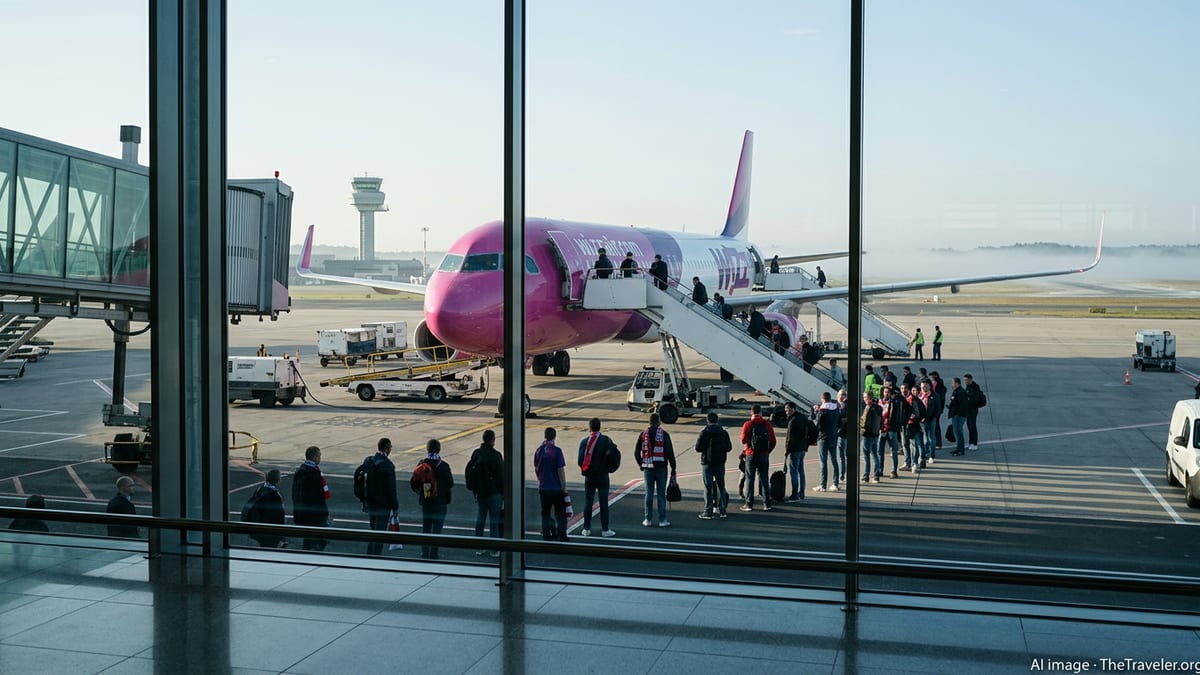
New Transatlantic Ambitions for a Short Haul Specialist
Wizz Air, best known for connecting secondary airports across Europe and parts of the Middle East, has until now stayed clear of scheduled transatlantic competition with larger network airlines. That stance is shifting as the countdown accelerates to the expanded 48 team FIFA World Cup, which will run from 11 June to 19 July 2026 across the United States, Canada and Mexico. Industry filings and company statements indicate that Wizz Air wants a role in moving fans to the biggest sporting event ever staged in North America.
According to regulatory documents in the United States, Wizz Air UK submitted a formal application in January 2026 for permission to operate passenger, cargo and mail flights between the United Kingdom and the US. The carrier frames the request as part of a broader expansion of its international footprint, but highlights short term, event driven charter opportunities rather than an immediate build up of permanent scheduled routes.
For a carrier whose model is built on dense, point to point networks served by single aisle Airbus aircraft, the World Cup offers an unusually concentrated pool of leisure demand on routes that are typically dominated by full service rivals. With millions of match tickets already sold and host cities stretching from Vancouver to Miami and from Guadalajara to New York, the appetite for additional low fare capacity is clear.
Wizz Air executives have also pointed to the flexibility offered by their growing fleet of Airbus A321neo and future A321XLR aircraft, capable of serving thinner long haul markets at lower cost than traditional widebodies. While the company has adjusted parts of its long range order book, management continues to describe the XLR as a tool for selective expansion on routes of up to eight or nine hours, which would bring parts of the eastern United States within range of its European bases.
World Cup 2026 Drives Demand for Affordable US Access
The 2026 edition of the World Cup will be the first to feature 48 teams and 104 matches, multiplying the number of traveling players, officials, media and supporters compared with recent tournaments. The United States will host the majority of games across 11 cities, including New York New Jersey, Los Angeles, Dallas, Kansas City, Houston, Atlanta, Miami, Seattle, San Francisco Bay Area, Boston and Philadelphia, while Mexico and Canada share the remaining fixtures. For many European fans, that means long multi segment journeys and rising costs just to reach the group stage.
Ticket prices and accommodation costs in some host cities have already drawn criticism, putting pressure on travel budgets. In that context, additional low fare capacity into major US gateways could be a critical factor for supporters trying to keep overall trip costs manageable. If approved, Wizz Air’s charter operations would likely focus on routes linking large European catchment areas with key US hubs close to stadiums, giving fan groups and tour operators a new bargaining chip when negotiating packages.
Airports expected to be at the heart of World Cup operations, such as New York area gateways for the final and Dallas, Houston or Los Angeles for major group and knockout ties, are already preparing for spikes in international arrivals. The potential arrival of ultra low cost charter flights from Central and Eastern Europe would further diversify the mix of inbound carriers and could help smooth peak demand around specific match days.
Travel analysts note that charter operations around mega events often prove pivotal in keeping average fares in check. Although Wizz Air stresses that its current focus is on temporary services rather than a large scale US market entry, the additional capacity would still inject competition on heavily trafficked dates when legacy carriers traditionally enjoy strong pricing power.
Regulatory Hurdles and Fleet Strategy Shape Wizz Air’s Plans
Before any World Cup bound flights can be marketed in Europe, Wizz Air must secure the necessary approvals from US regulators. Its application for a foreign air carrier permit and exemptions is working its way through the Department of Transportation process, where officials will assess safety oversight, ownership structure and reciprocity with European Union carriers. While such approvals are usually routine for established airlines from partner jurisdictions, the timelines are still crucial for coordinating aircraft, crews and airport slots.
At the same time, Wizz Air is fine tuning its fleet plan. The airline has previously announced adjustments to its Airbus order book, reducing the number of long range A321XLRs while maintaining a substantial pipeline of A321neo aircraft. Those decisions reflect a broader focus on high utilization, high density flying in core European markets, but they do not rule out targeted long haul missions when demand and pricing justify the deployment.
For World Cup 2026, the airline is expected to lean heavily on existing or near term aircraft rather than wait for a large wave of new deliveries. Single aisle jets configured in an all economy layout may operate at the limits of their range on some transatlantic sectors, yet they allow Wizz Air to stick closely to its low cost fundamentals: simplified fleets, quick turnarounds and ancillary rich revenue streams.
Industry observers suggest that the carrier could also partner with tour operators or national football associations to secure block bookings, reducing commercial risk and ensuring high load factors on charter rotations. Such arrangements are common around major tournaments and would align with Wizz Air’s stated view that its push into the US is tied first to event driven traffic rather than a wholesale strategic pivot.
Opportunities and Risks for Fans and the Wider Market
For European supporters, the prospect of Wizz Air operated flights to the United States in 2026 raises hopes of more affordable itineraries, especially from countries that currently have limited direct service to US World Cup host cities. Fans based in Central and Eastern Europe often face either long overland trips to major hubs or costly through tickets on network carriers. Supplementary charters from cities such as Budapest, Warsaw or Bucharest to major US gateways could shave hundreds of euros off the cost of a World Cup trip.
There are, however, trade offs inherent in the ultra low cost model. Charter flights may operate on tight schedules, with limited flexibility to change dates or times, and ancillary charges for baggage, seat selection and onboard services can quickly add up. Travelers considering these services will need to weigh base fare savings against potential extras, as well as the risk of disruption during a period when global aviation infrastructure will be under heavy strain.
For the broader transatlantic market, Wizz Air’s World Cup focused move is another sign of how single aisle aircraft and opportunistic event driven strategies are reshaping long haul competition. Even if the airline’s US presence remains temporary or seasonal, its entry could pressure incumbents to sharpen their pricing or capacity plans for peak tournament windows. Other low cost and leisure carriers are likely to monitor the regulatory process closely and may seek similar approvals.
With fewer than 18 months to go before the opening match kicks off in Mexico City and fans begin to stream into stadiums from Toronto to Los Angeles, the race is on for airlines to lock in capacity, secure airport infrastructure and capture a share of the lucrative travel demand. Wizz Air’s long haul ambitions around World Cup 2026 underline how deeply the tournament is influencing aviation strategy on both sides of the Atlantic.