

More news on this day
Low cost carrier Wizz Air UK has secured US approval for a series of bespoke charter flights between the United Kingdom and World Cup 2026 host cities, positioning itself as a budget-friendly transport option for European teams, tour operators and thousands of travelling football fans.
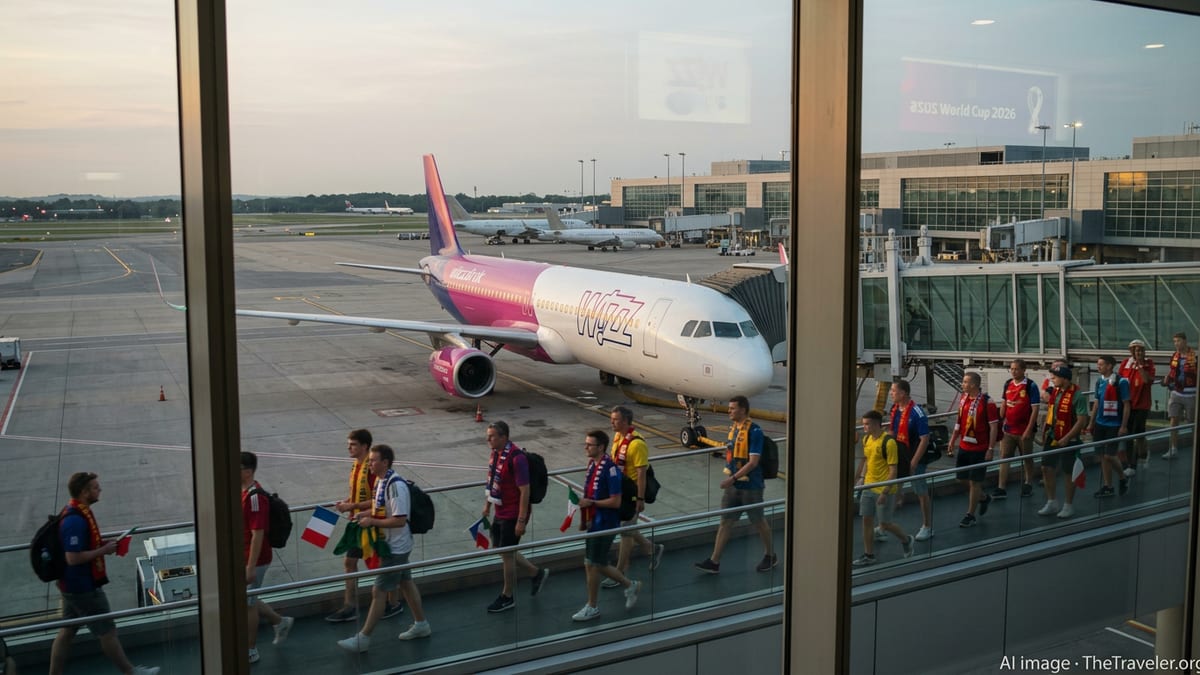
Regulatory Green Light Opens New Transatlantic Route
Wizz Air UK has received a Foreign Air Carrier Permit and exemption from US authorities, allowing it to operate charter flights between the UK and the United States under the terms of the UK–US open skies agreement. The approval, granted by the US Department of Transportation in early March, clears the way for the airline to serve demand linked directly to the 2026 FIFA World Cup, which will be staged across venues in the US, Canada and Mexico.
The carrier has told industry outlets that it does not intend to launch regular scheduled services across the Atlantic for now, instead concentrating on high-demand event traffic. That means flights will be organised on a charter basis for football delegations, corporate groups and organised fan travel, coordinated through tour operators and sports travel specialists rather than sold as everyday point-to-point tickets.
The green light marks a strategic milestone for the Budapest-based group, which has long focused on short and medium haul markets in Europe and surrounding regions. With the World Cup expected to generate unprecedented transatlantic travel from Europe to host cities in the US, the new authority gives Wizz Air UK a foothold in one of aviation’s most competitive corridors.
Tailored Charters for Teams, Fans and Tour Operators
Wizz Air UK has signalled that its initial priority will be football-related charter operations, moving national teams, support staff and official delegations between the UK and US hubs before and during the tournament. Industry reports indicate that the airline is in discussions with European football associations and specialist agencies about block charters timed around pre-tournament training camps and group-stage fixtures.
Alongside team travel, the airline plans to offer capacity to tour operators assembling inclusive World Cup packages for supporters. These charters are expected to run from major UK departure points to US cities within reach of tournament venues, allowing operators to align flight schedules with match days, fan festival programming and domestic connecting services inside North America.
Wizz Air UK has also flagged that the same charter authority could be used for corporate groups, sponsors and incentive trips built around the World Cup. The airline’s model allows entire aircraft to be contracted on a bespoke basis, with departure times, routings and onboard services negotiated to match the requirements and budgets of each client.
Low Cost Model Meets World Cup Demand Surge
By targeting the 2026 World Cup with charters rather than scheduled flights, Wizz Air UK is seeking to apply its familiar low cost template to one of the world’s most lucrative sports events. The airline’s dense single-aisle Airbus fleet, high-density seating and tight cost controls could enable competitively priced packages at a time when traditional long haul fares are expected to spike around key tournament dates.
For fans, the proposition is likely to be straightforward: basic, no-frills transatlantic travel in return for lower overall trip costs, especially when flights are bundled with accommodation and ground arrangements by tour operators. While comfort levels on narrowbody aircraft over long sectors may divide opinion, price-sensitive supporters chasing multiple group-stage matches could find the trade-off appealing.
Analysts note that tournament-driven demand will concentrate around certain corridors and dates, particularly for European nations with large travelling followings. By tailoring charter capacity to those peaks, Wizz Air UK can avoid the risk of underwriting year-round transatlantic schedules while still tapping into the World Cup’s revenue potential.
Strategic Positioning Beyond 2026
Industry observers point out that the World Cup approval may serve a longer-term purpose for Wizz Air UK. By securing US permits now and operating charters at scale, the airline will gain operational experience, regulatory familiarity and brand visibility in the transatlantic market without committing to a full scheduled network.
The US charter authority also aligns with the airline’s broader interest in special event flying, including prospective services linked to future global tournaments and major international fixtures. Should Wizz Air Group ever opt to pursue scheduled UK–US services, much of the groundwork in terms of permitting and route planning will already have been completed.
For now, the company is stressing that its focus remains on event-linked operations and that any wider move into long haul markets would depend on aircraft availability, economic conditions and competitive dynamics. Nonetheless, the World Cup 2026 programme is being viewed within the sector as a testbed for how far a European ultra-low-cost carrier can stretch its model on transatlantic services.
What Travellers Can Expect
With details of specific routes, aircraft allocations and departure dates still to be finalised, prospective travellers are being advised that Wizz Air UK’s World Cup flights will primarily be accessible through sports tour operators, corporate travel organisers and official team arrangements rather than direct public sales. Packages are likely to include charter seats paired with hotel stays and local transfers around host cities.
As with the airline’s European operations, passengers can expect a pay-as-you-go structure for extras such as checked baggage, seat selection and onboard catering. The ability to keep base fares low while charging for optional services is central to the Wizz Air model and is expected to carry over to its World Cup charters.
Operationally, the airline will be coordinating with US and UK aviation authorities as well as airport operators in key gateway cities to manage peak flows of charter traffic. With the Federal Aviation Administration already outlining special procedures for the tournament period, carriers such as Wizz Air UK are preparing for a tightly managed airspace environment around World Cup venues and nearby airports.