

More news on this day
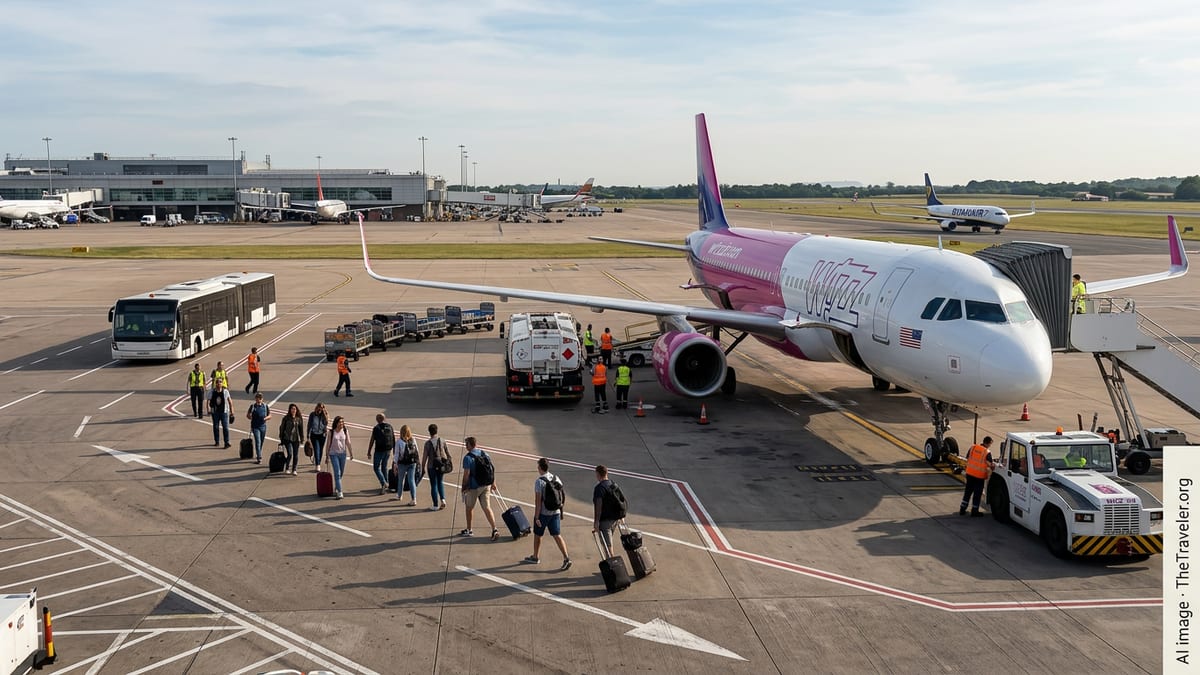
Wizz Air UK has secured long awaited clearance from the US Department of Transportation to operate flights between the United Kingdom and the United States, opening a new chapter for ultra low cost transatlantic travel and raising fresh questions about how budget carriers might reshape tourism flows ahead of the 2026 World Cup and beyond.
What the US DOT Approval Actually Covers
The newly granted foreign air carrier permit gives Wizz Air UK the legal authority to fly between the UK and US under the existing EU US and UK US open skies framework. In practical terms, it allows the airline to mount ad hoc charter flights across the Atlantic, primarily serving pre arranged groups rather than selling seats on regular scheduled services to the general public.
For now, the airline has stressed that its approval is focused on charter operations. That means flights arranged for entities such as sports teams, official delegations, corporate groups or tour operators packaging air travel with accommodation and event tickets. Individual travellers will typically access these flights through group bookings or as part of organised trips, not through a standard low fare search on the airline’s booking engine.
The distinction is important. While headlines highlight a breakthrough for low cost transatlantic access, the step is more evolutionary than revolutionary. The permit lays regulatory groundwork and proves the concept for the carrier in the US market, but it does not instantly create a new network of daily point to point budget routes between secondary UK cities and major US gateways.
At the same time, regulators have signalled that Wizz Air UK has met the required safety, operational and ownership criteria to enter the US market under its own flag. That creates a platform the airline could leverage in the future if it decides conditions are right for expanding beyond charters into scheduled services.
World Cup Charters First, Wider Tourism Later
Initial operations are expected to be closely tied to the 2026 World Cup, which will be staged across multiple US, Canadian and Mexican host cities. Wizz Air UK has flagged plans to operate tailored flights for European football teams, fan groups and tour operators needing flexible capacity for tournament travel, particularly to US venues.
These flights are likely to operate from the airline’s UK bases, including London Luton and London Gatwick, to major US gateways with good onward connectivity to host cities. Charter arrangements will allow schedules to be timed around match days and training camps, and aircraft can be configured to accommodate team delegations, media groups and blocks of fans travelling together.
For American and European tourism stakeholders, this surge of targeted charter capacity could translate into more competitively priced group packages. Tour operators may be able to undercut traditional carriers on inclusive fares, particularly for supporters willing to fly from secondary UK airports or accept less frills in exchange for lower ticket prices.
Beyond the World Cup, Wizz Air UK has indicated that charter services could remain available for corporate travel, sports organisations and private groups seeking cost conscious transatlantic lift. If the model proves commercially successful, that demand could justify a more permanent presence in the market, supporting seasonal tourism flows such as city breaks, theme park travel or student exchanges.
How This Could Reshape the Budget Transatlantic Landscape
Wizz Air UK’s entry into the US market marks the first serious move by an ultra low cost carrier focused on Central and Eastern Europe to test transatlantic waters from a UK base. The airline’s business model is built around high density seating, ancillary revenues and point to point routes, all aimed at stripping out costs and bringing base fares down to levels legacy carriers struggle to match.
If even a portion of that formula can be successfully exported to longer haul charters, it could put pressure on existing leisure focused transatlantic operators. Traditional airlines and hybrid low cost brands may face new competition for group business, particularly from football clubs, universities, music tours and package holiday companies that are highly price sensitive.
For travellers, the most immediate impact is likely to be indirect. Even if they never set foot on a Wizz Air aircraft to the US, the mere presence of an additional low cost competitor can influence pricing and capacity decisions by incumbents. Airlines often adjust promotional fares, add seasonal flights or tweak schedules when a new player appears on a route or in a key market segment.
Over the longer term, industry analysts will be watching whether Wizz Air UK opts to deploy newer long range narrowbody aircraft, such as the Airbus A321neo family, more aggressively on transatlantic missions. These jets offer lower operating costs per seat and can make thinner leisure routes viable, potentially linking smaller UK or European cities with US destinations that have previously been underserved.
What Travellers Need to Know Right Now
Despite the fanfare, individual travellers should be aware that nothing about day to day transatlantic booking has changed overnight. At this stage, Wizz Air UK is not selling regular scheduled flights between the UK and US, and the airline has publicly played down any near term plans to launch such services. Those hoping to book a personal weekend trip to New York or Florida on Wizz style hand luggage only fares will have to wait.
Instead, access will mostly come via organised trips. Fans purchasing official World Cup packages, corporate employees joining incentive tours or students travelling on group exchanges may find that their air segment is operated by Wizz Air UK. In those cases, standard ultra low cost rules will likely apply, including strict cabin baggage limits, fees for checked bags, and charges for extras such as seat selection and priority boarding.
Passengers should also remember that US entry rules remain unchanged. Even on a charter specifically arranged for a sporting event, travellers must hold appropriate visas or electronic travel authorisations and comply with customs, security and health requirements. Airlines are fined if they carry passengers who are not correctly documented, so check in staff may be particularly vigilant on charter services with large groups.
Travel insurance and consumer protection considerations also matter. Because most flights will be sold as part of packages, customers should check how financial protection works in their home country, what happens in the event of cancellations or schedule changes, and whether their policy covers charter flights operated by low cost carriers on long haul sectors.
Signals for the Future of Low Cost Long Haul
For the wider industry, Wizz Air UK’s US approval is another data point in the ongoing evolution of low cost long haul flying. Previous attempts by budget carriers to crack the transatlantic market have had mixed results, with some operators expanding rapidly only to retrench when fuel prices rose or demand softened.
By starting with charters rather than an immediate launch of scheduled routes, Wizz Air UK is taking a more cautious path. Charter flying offers guaranteed blocks of demand and often involves long term contracts with tour operators, which can help smooth revenue and mitigate the risk of empty seats on shoulder season departures.
If the experiment works, the template could encourage other European ultra low cost carriers to explore similar models, using charter approvals to test new markets before committing to full schedules. It could also accelerate the trend toward leaner, more flexible aircraft being used on routes once dominated by widebody jets, especially where traffic is highly seasonal or event driven.
For now, the development is most significant as a signal. Regulators have opened the door, and one of Europe’s most aggressive budget brands has stepped through. How far Wizz Air UK chooses to walk into the transatlantic arena, and how quickly ordinary tourists feel the benefits in their fare search results, will be among the key aviation storylines to watch as the countdown to the 2026 World Cup gathers pace.