

More news on this day
Wizz Air UK has secured tentative approval from US regulators to operate flights between the United Kingdom and the United States, a move that paves the way for the ultra-low-cost carrier to challenge legacy rivals on some of the world’s most lucrative long-haul routes.
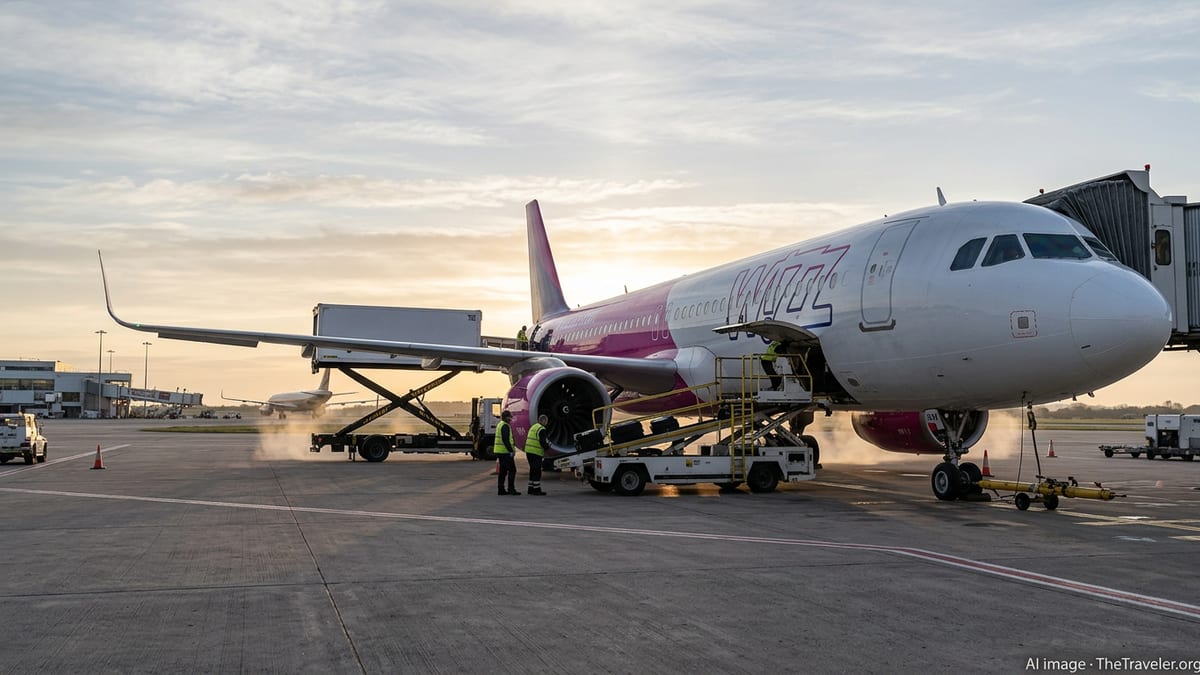
US Regulators Open the Door to Wizz Air UK
The US Department of Transportation has granted Wizz Air UK a tentative foreign air carrier permit and exemption authority, clearing a critical regulatory hurdle for the London-based subsidiary of the Central European budget airline. The decision allows the carrier to operate both passenger and cargo services between the UK and multiple US points, subject to final confirmation following a standard consultation period.
The approval follows a lengthy application process in which Wizz Air UK argued that its ultra-low-cost business model would increase competition, lower fares and expand travel options on transatlantic routes that have long been dominated by large joint ventures between European and US legacy airlines. US authorities said the move was in the public interest, highlighting the potential benefits to price-sensitive travelers and to tourism flows in both directions.
Industry analysts note that the permit does not oblige the carrier to begin immediate scheduled services, but it removes the main regulatory barrier to doing so. For now, Wizz Air UK is expected to begin by targeting leisure-heavy flows and event-driven traffic, using charter and potentially limited scheduled operations to test demand and fine-tune its long-haul strategy.
The timing aligns closely with a broader recovery in global air travel and rising transatlantic demand, particularly from younger and cost-conscious passengers who have already embraced low-cost models on short-haul routes across Europe.
From European Short-Haul Specialist to Long-Haul Contender
Wizz Air built its brand on dense, no-frills short and medium-haul networks across Central and Eastern Europe, later expanding into Western Europe with bases at London Luton and London Gatwick. The UK offshoot was created to safeguard post-Brexit flying rights, and until now its focus has largely mirrored the parent company’s formula of point-to-point flights and aggressive cost control.
The US regulatory breakthrough signals a strategic evolution. With demand growing for affordable long-distance travel, Wizz Air UK is positioning itself to replicate the low-cost disruption seen on intra-European routes, but now across the Atlantic. It joins a small but growing club of budget operators that see opportunity in linking major hubs and secondary cities at prices well below those of traditional transatlantic carriers.
The airline’s fleet of Airbus A321neo-family aircraft, with high-density cabins and fuel-efficient engines, is central to this ambition. These aircraft offer lower unit costs and can be configured to balance capacity with range on thinner, leisure-driven routes that might not sustain widebody operations by legacy airlines. Wizz executives have previously flagged the potential of narrowbody long-haul flying as a way to open up “long and thin” city pairs.
At the same time, the company has been reshaping its network strategy, exiting less profitable ventures and refocusing on core European markets where its low-cost model can be most effectively deployed. The new US access is widely seen as an extension of that Europe-first strategy, but projected across the Atlantic on carefully selected routes.
Charters, World Cup Demand and the Path to Scheduled Routes
While Wizz Air UK now has regulatory clearance for a full range of operations, the airline is initially expected to emphasize charter flying and special-event services. Aviation and tourism sources say the carrier has been in talks with tour operators and sports travel agencies exploring capacity for the 2026 FIFA World Cup, which will be hosted across the United States, Canada and Mexico.
Event-driven charter flying offers an attractive entry point into the US market, allowing Wizz Air UK to leverage spikes in demand without immediately committing to year-round schedules. It also enables the airline to test ground handling arrangements, airport partnerships and operational performance at key US gateways before ramping up regular services.
Market speculation has centered on potential origin points at London Gatwick and London Luton, where Wizz Air UK already maintains significant operations, as well as popular US leisure and city-break destinations. Any move to scheduled services would likely begin with a small number of high-demand routes, potentially linking major East Coast cities with strong inbound tourism demand from Europe.
Executives have publicly cautioned that there are currently no firm plans for daily scheduled transatlantic services, underscoring a measured approach. Nevertheless, the combination of regulatory approval, a cost-efficient fleet and surging demand for affordable long-haul travel suggests that regular UK US routes could follow once the airline has gathered sufficient operational and commercial data.
Ultra-Low Fares, High Ancillaries and Competitive Pressure
The prospect of Wizz Air UK entering the transatlantic arena is already sending signals through the competitive landscape. The airline’s ultra-low base fares, supported by an extensive menu of paid extras ranging from seat selection and cabin bags to priority boarding, have reshaped price expectations on intra-European routes. If applied to long-haul flying, the same model could significantly undercut the fare structure of full-service rivals.
For consumers, that could translate into rock-bottom ticket prices on certain dates, offset by higher ancillary spend for comfort and flexibility. On long-haul flights, where passengers are more sensitive to seat pitch, onboard catering and baggage allowance, Wizz Air UK will face the challenge of maintaining its low-cost DNA while offering a product acceptable for journeys of seven hours or more.
Legacy airlines on both sides of the Atlantic are likely to respond selectively, defending key routes with promotional fares and loyalty program incentives rather than engaging in across-the-board price wars. Some full-service groups have already invested in their own low-cost or leisure-focused subsidiaries, giving them more flexibility to match aggressive pricing on specific markets.
Airport operators and tourism boards, meanwhile, are watching closely. New low-cost long-haul capacity often stimulates first-time international travel and extends the season for city and resort destinations. If Wizz Air UK ultimately deploys regular services, secondary US cities with ambitions to attract European visitors could become prime candidates for partnership.
What It Means for Travelers and the Wider Industry
For travelers, the US regulatory green light for Wizz Air UK adds another potential option in a market that has historically offered limited genuine low-cost choice on long-haul routes. While details of inaugural routes, schedules and pricing are yet to be confirmed, the airline’s track record suggests that headline fares will be sharply competitive, especially outside peak holiday periods.
Industry observers caution, however, that ultra-low-cost long-haul travel is not without risks for consumers. The model typically relies on strict fare rules, limited customer service touchpoints and additional fees for changes or disruptions. Passengers considering long-haul journeys with any budget carrier are advised to pay close attention to total trip cost, including ancillaries, and to consider travel insurance that covers delays and cancellations.
From an industry perspective, the approval underscores the continued liberalization of transatlantic skies and the willingness of regulators to welcome new competitive forces as demand rebounds. It also highlights the growing role of narrowbody aircraft and highly efficient operations in redrawing the map of long-haul connectivity.
Whether Wizz Air UK ultimately becomes a major player on UK US routes will depend on execution, fleet deployment and the resilience of long-haul leisure demand. For now, its regulatory breakthrough has injected fresh competition into the market and raised the prospect that low-cost long-haul travel between Britain and the United States is entering a new chapter.