

More news on this day
Wizz Air is introducing an integrated digital cabin ecosystem developed with Immfly and gateretail, a move aimed at unifying onboard retail, crew workflows, and passenger services across its rapidly expanding fleet.
Get the latest news straight to your inbox!
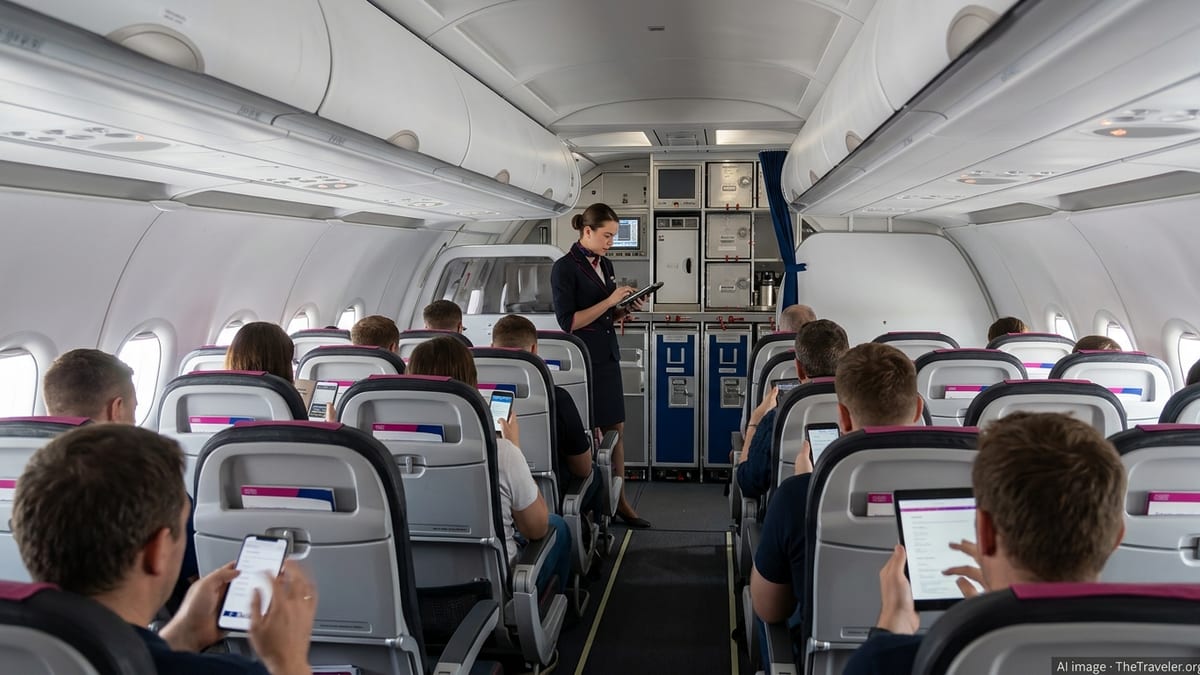
A New Phase in Wizz Air’s Digital Cabin Strategy
The launch of the integrated digital cabin ecosystem builds on several years of investment by Wizz Air in digitalization across its operations and customer journey. Publicly available information shows that the airline has been prioritizing data-driven tools and real-time connectivity to improve efficiency and unlock new ancillary revenue opportunities.
According to industry coverage, the new ecosystem with Immfly and gateretail is designed to bring previously separate in-cabin systems together into a single environment. Rather than treating entertainment, retail, and crew applications as standalone services, the combined platform aims to make them interoperable, giving airlines a clearer view of what is happening in the cabin at any moment.
Reports indicate that this approach is in line with a broader strategic alliance between gategroup’s gateretail brand and Immfly, which has focused on integrating digital retail technology with cabin services for airlines worldwide. The partnership with Wizz Air positions the carrier as an early adopter of this more unified model of onboard retail and passenger engagement.
For Wizz Air, which operates one of Europe’s fastest-growing fleets, an integrated cabin platform also supports its focus on keeping costs low while expanding ancillary sales. By connecting data from different touchpoints in the cabin, the airline can refine offers, adjust inventory, and streamline crew tasks in ways that are harder to achieve with fragmented systems.
How Immfly and gateretail Power the Digital Cabin
Immfly brings the cabin digital services backbone to the collaboration, providing the onboard platform that passengers access from their own devices and the underlying technology that links front-end experiences with airline systems. Industry reports on similar deployments describe features such as destination content, messaging services, and retail ordering interfaces that can be tailored to each carrier’s brand and commercial strategy.
Gateretail contributes its expertise in inflight retail management, including product curation, logistics, payment solutions, and data analytics. The company already manages Wizz Air’s onboard retail program under a renewed multi-year agreement, supplying what it describes as a connected galley and retail platform that uses digital tools to optimize stock and sales performance.
When combined, Immfly’s digital cabin capabilities and gateretail’s retail infrastructure are intended to create a more seamless experience for both passengers and crew. Passengers can browse and purchase products or services through a consistent interface, while crew members see synchronized information on dedicated devices, reducing manual reconciliation and paperwork.
Public descriptions of the alliance between gategroup and Immfly emphasize that the goal is to become one of the most technologically advanced retailers in the aviation sector. For Wizz Air, integrating these capabilities into a single ecosystem is expected to provide a modular platform that can support new services as the airline continues to evolve its inflight offering.
What Changes for Passengers Onboard Wizz Air
For travelers, the integrated digital cabin ecosystem is expected to be most visible through the way they discover and purchase services during the flight. Instead of relying only on traditional trolley service and printed menus, passengers are being directed toward a digital environment where food, beverages, and retail items are accessible from their personal devices throughout the journey.
Industry coverage suggests that this model can support features such as real-time product availability, targeted offers based on route or time of day, and simplified payment flows. By drawing on a unified data layer, the system can present more relevant options, help avoid disappointment from out-of-stock items, and reduce the need for crew to manually track sales and inventory.
The ecosystem also has the potential to tie inflight interactions more closely to Wizz Air’s broader digital strategy. Ancillary products such as seat selection, baggage, or destination services can be presented in a consistent way before, during, and after the flight, giving passengers a clearer view of what is available and how to manage their purchases.
While the exact feature set will vary by aircraft and route, the move aligns with Wizz Air’s emphasis on a largely app-based and mobile-first customer journey. The integrated cabin platform effectively extends that philosophy into the aircraft itself, turning the cabin into an extension of the airline’s digital storefront.
Operational Benefits and Data-Driven Retail
Behind the scenes, the integrated ecosystem is expected to deliver operational advantages that are particularly important for an ultra-low-cost carrier. By unifying cabin systems, Wizz Air can reduce the complexity of managing multiple disconnected tools for crew communication, inventory tracking, and payment processing.
Reports from the retail and airline technology sector indicate that gateretail’s connected galley solutions, combined with Immfly’s digital infrastructure, can give airlines near real-time insight into what sells, where, and when. This data can then be used to refine product selection by route, improve load planning, and adjust pricing strategies, all of which can support higher ancillary revenues per passenger.
The integrated approach also supports faster feedback loops for new products and campaigns. Rather than waiting for periodic reports, commercial teams can analyze performance more frequently, trial new offers, and quickly roll back or expand initiatives based on actual results. For a high-frequency operator like Wizz Air, this can translate into meaningful financial gains over time.
From a crew perspective, a single digital environment can help reduce training complexity and day-to-day workload. With unified applications covering ordering, payments, and reporting, cabin crew can focus more on service and less on administrative tasks, supporting both passenger satisfaction and turnaround efficiency.
Positioning Wizz Air in the Competitive European Market
The introduction of the integrated digital cabin ecosystem comes as competition intensifies among European low-cost and leisure carriers to capture ancillary revenue and differentiate onboard experiences. Airlines across the region have been investing in new cabin interiors, digital retail, and personalized services to maintain margins in an environment of cost-sensitive demand.
Public information on Wizz Air’s broader strategy highlights its ambition to grow its fleet significantly and deepen its presence across Central, Eastern, and Western Europe. Digital transformation, including partnerships in data, distribution, and retail technology, is framed as a key enabler of that expansion.
By aligning with Immfly and gateretail on an integrated cabin ecosystem, Wizz Air is positioning itself within a group of carriers that view onboard retail not just as a catalog of products, but as a connected digital marketplace. This perspective treats each flight as a platform for targeted offers, real-time engagement, and continuous optimization informed by data.
As the rollout progresses, the effectiveness of the ecosystem will likely be judged on both passenger response and financial performance. For now, the initiative underlines how digital cabin platforms have become central to airline strategies, and signals that Wizz Air intends to compete not only on fares and network, but also on the sophistication of its onboard digital experience.