

More news on this day
Wizz Air is introducing an integrated digital cabin ecosystem developed with onboard technology specialist Immfly and inflight retail expert gateretail, in a move that aligns the fast-growing low cost carrier with airline industry trends toward fully connected, data driven onboard services.
Get the latest news straight to your inbox!
A New Phase in Wizz Air’s Onboard Digital Strategy
Publicly available information indicates that Wizz Air has been upgrading its onboard retail and payment capabilities over the past several years, including a shift toward cashless transactions and app based prepayment options for passengers. The new integrated ecosystem with Immfly and gateretail is emerging as the next step in that digital roadmap, consolidating multiple cabin functions into a single connected environment.
The initiative builds on Wizz Air’s existing five year agreement with gateretail, renewed in early 2024, under which gateretail manages the airline’s onboard retail program and provides a connected galley and digital retail platform. Reports on that partnership describe a focus on profitability, scalable ancillary revenues and fully digitized logistics, laying the foundation for a more comprehensive cabin ecosystem across Wizz Air’s growing Airbus fleet.
Immfly’s role in the collaboration centers on its integrated onboard retail and connectivity platform, which combines crew applications, payment tools and passenger facing portals in a single architecture. Industry coverage of Immfly’s recent deployments for other carriers highlights capabilities such as in seat ordering from personal devices, advanced electronic point of sale and live or near live payment processing, all of which are designed to support a more seamless digital cabin.
By combining gateretail’s inflight retail expertise with Immfly’s software, data and connectivity layer, Wizz Air is positioning the cabin as a fully connected commercial space. The move is consistent with wider changes in airline retailing, where low cost and network carriers alike are investing in systems that bridge ground and inflight sales and enable continuous ancillary revenue opportunities.
How the Integrated Digital Cabin Will Work
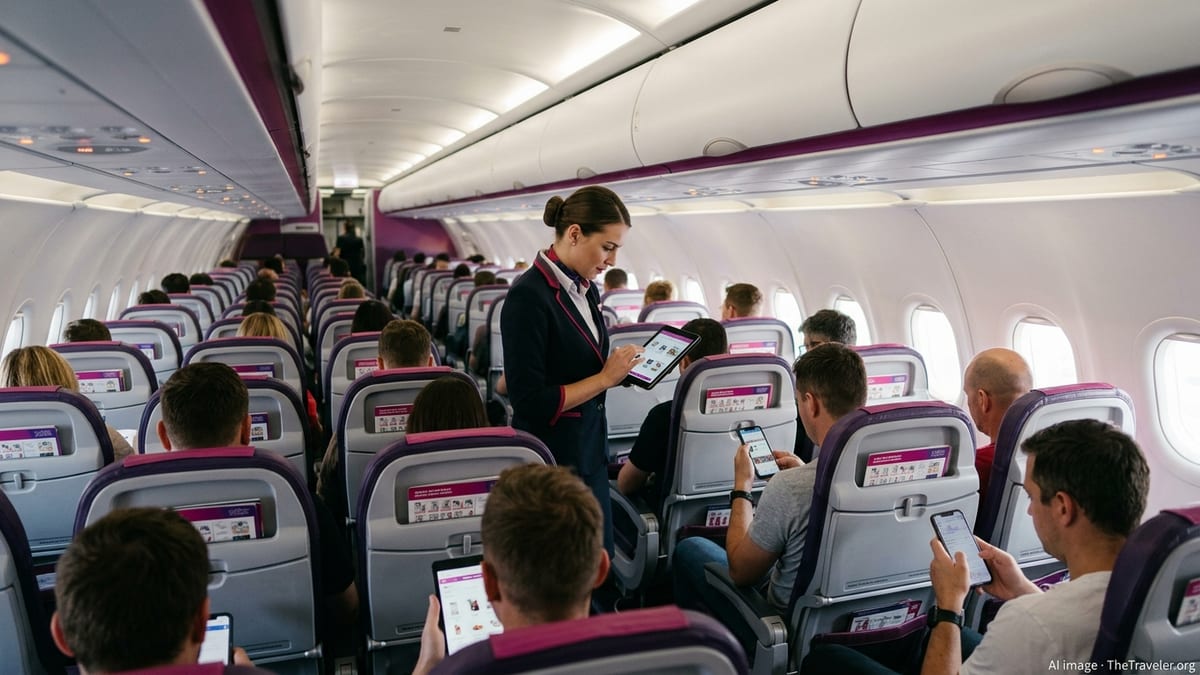
The emerging Wizz Air ecosystem centers on a connected stack that links the galley, point of sale, passenger devices and airline back office in near real time. Information from industry partners suggests that crew will use an intuitive application on tablets or dedicated devices to manage service flows, inventory and payments, while passengers access menus and retail offers through a wireless portal when onboard connectivity is available.
On the retail side, gateretail’s connected galley concept enables dynamic stock management, so that what is shown to passengers reflects what is actually on board. This approach reduces waste, supports targeted loading and helps ensure that popular items remain available on high demand routes. Data captured during flights is fed back into gateretail’s and Wizz Air’s planning systems, allowing continuous optimisation of assortments and pricing across the network.
Immfly’s technology adds a digital front end that can support pre order, in seat order and post flight engagement. For example, in other airline deployments the platform has enabled passengers to browse and purchase food, beverages and retail items from their own smartphones or tablets, either before boarding or once in the air. That same framework, integrated with Wizz Air’s existing retail program, is expected to underpin the low cost carrier’s next generation onboard sales strategy.
From a technical perspective, Immfly’s modular architecture is designed to work with different connectivity solutions and aircraft types, while gateretail’s systems are already embedded in Wizz Air’s operational processes. Together, the two providers aim to create a single, interoperable ecosystem rather than a collection of standalone tools, which is critical for airlines operating large, rapidly expanding fleets.
Enhancing Passenger Experience and Crew Efficiency
For passengers, the most visible change from the integrated cabin ecosystem is likely to be a more app driven, personalised experience. Industry material on Immfly’s platform describes interfaces that can be tailored to each airline’s branding and route structure, presenting targeted offers, multilingual content and context aware prompts that can guide travellers through ordering and payment with minimal friction.
Wizz Air has already moved toward cashless onboard payments, and the addition of Immfly’s payment engine is expected to further reduce declined transactions through smarter processing and, where available, live authorisation. In similar projects with other airlines, Immfly reports that optimised payment flows have significantly recovered previously declined card sales, directly contributing to onboard revenue performance.
Cabin crew are also set to benefit from greater automation and data access. Instead of manually reconciling sales and stock after each flight, crew devices can synchronise with the back office as soon as connectivity allows, shortening end of day processes and reducing errors. Inventory alerts and upsell prompts can guide crews during service, while transparent reporting helps Wizz Air track performance by route, aircraft or time of day.
For an ultra low cost carrier whose business model relies heavily on ancillary income, these incremental gains in efficiency and conversion are strategically important. A more intuitive digital toolkit can allow crew to spend more time interacting with passengers and less time dealing with paperwork or troubleshooting card terminals, supporting both customer satisfaction and cost control objectives.
Data Driven Ancillary Growth Across a Rapidly Expanding Network
Wizz Air continues to scale its operations across Europe and selected markets in the Middle East and Central Asia, with planning documents and reports indicating a large order book for new Airbus A321neo and A320neo aircraft. As the network grows, the airline faces rising complexity in managing catering logistics, product selection and pricing across hundreds of routes with differing demand profiles.
The integrated digital cabin ecosystem offers a pathway to manage that complexity through data rather than manual rules. Each flight becomes a source of granular information on what sells, when and to whom, which can support decisions on everything from supplier contracts to cabin layouts. Over time, this data can inform more sophisticated retail strategies, such as dynamic offers tied to specific routes, seasons or booking behavior.
Gateretail’s renewals and strategic plans with Wizz Air emphasize a shared focus on ancillary contribution and digital transformation, while Immfly promotes its solutions as a way to unlock new retail revenue at relatively low incremental cost. For Wizz Air, aligning with both partners offers access to specialised capabilities without having to develop complex software and retail infrastructures entirely in house.
The partnership also connects Wizz Air to a broader ecosystem of airlines using similar technology stacks, which may accelerate innovation and best practice sharing. As more carriers adopt connected cabin concepts and airline retailing continues to converge with mainstream e commerce, Wizz Air’s integrated digital cabin initiative positions the carrier to compete not only on low fares but also on the sophistication of its onboard offer.