

More news on this day
UK travellers chasing predictable airfares have been handed a rare shock: Wizz Air’s WIZZ MultiPass subscription, which lets passengers lock in fixed monthly prices on selected routes, has quietly returned to market just as ticket costs climb across Europe.
Get the latest news straight to your inbox!
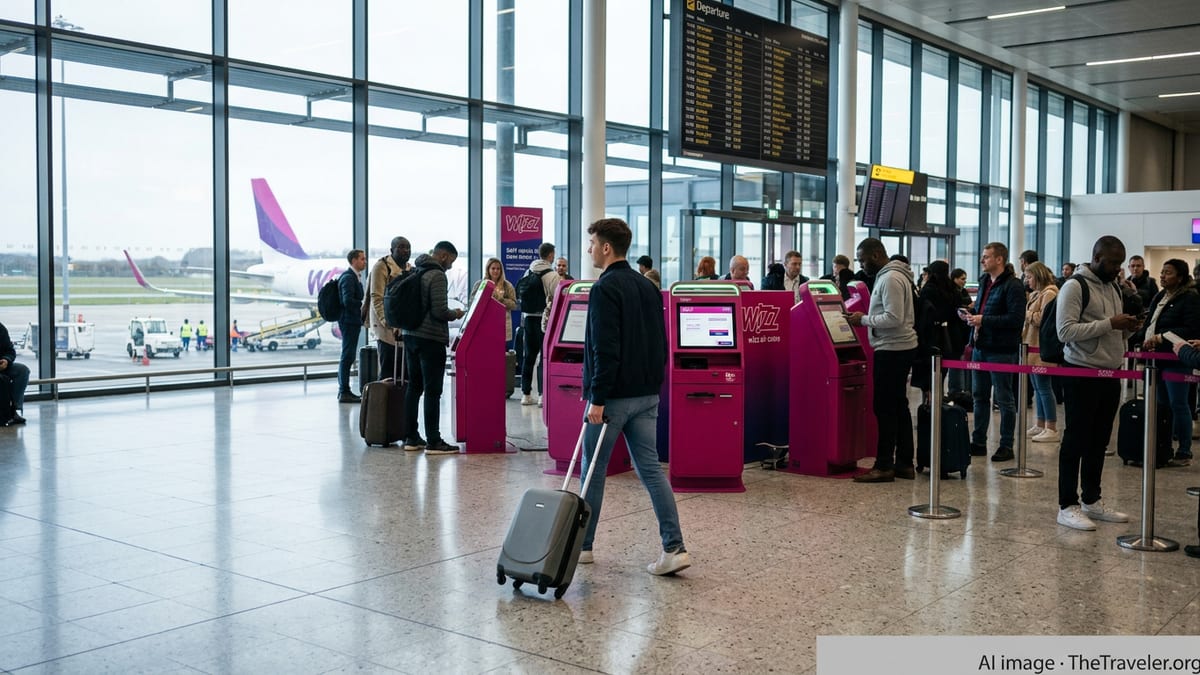
MultiPass Makes a Comeback for UK Flyers
Wizz Air’s subscription-style product, WIZZ MultiPass, is once again available to customers in the UK, giving regular travellers the option to pay a fixed monthly fee in exchange for one one way or one return flight per cycle on eligible routes. The relaunch comes after a period when new sign ups were paused and availability restricted to existing members, fuelling speculation that the product might be withdrawn altogether.
According to the latest terms circulated by the airline, MultiPass works as an 11 month paid subscription after an initial payment, with a set monthly fee that covers the fare component of each flight. Taxes, fees and extras such as baggage and seat selection remain separate, but the key appeal for subscribers is that the core ticket price does not fluctuate from month to month, regardless of seasonal demand or last minute fare spikes.
The UK is a critical market for the carrier, and the decision to re open MultiPass to British based customers appears timed to capitalise on a rebound in city break and migrant travel between the UK and Central and Eastern Europe. It also arrives as other low cost airlines move away from long term price guarantees, leaning more heavily on dynamic pricing and flash promotions.
Industry analysts say the return of MultiPass signals Wizz Air’s confidence in its network growth and load factors. With new aircraft and routes being added across Europe, the airline gains predictable recurring revenue from subscription holders while using inventory controls to manage how many seats are allocated to the scheme on each flight.
How the Fixed Price Subscription Works
Under the current structure, WIZZ MultiPass operates like a monthly travel retainer. Customers select a plan type typically one way or return and sometimes a bundle that includes checked baggage. They then pay an upfront charge followed by 11 further monthly payments, each unlocking the right to book a specific flight within defined booking rules and travel windows.
The product’s terms specify that each monthly entitlement can be used for either a one way leg or a complete return journey, depending on the plan selected at sign up. Once a flight is booked using that month’s entitlement, changes and cancellations are handled under a separate set of conditions, often more restrictive than standard tickets. If a monthly entitlement is not used, it usually cannot be carried over, meaning value is maximised only when the subscriber flies consistently.
While the fare component within MultiPass is fixed for the duration of the subscription, passengers still pay airport charges and government taxes, which can vary by route and season. Optional extras, from priority boarding to large cabin bags, are also outside the fixed fee, allowing Wizz Air to preserve important ancillary revenue even as it limits headline fare volatility for subscribers.
For frequent commuters between cities such as London and Budapest, Luton and Warsaw or other core Wizz Air corridors, the model can effectively smooth out the cost of regular trips across the year. For more occasional holidaymakers, however, the value proposition depends on careful planning and consistent usage.
Why the Return Matters in Today’s Price Climate
The timing of MultiPass’ return is notable. Across Europe, leisure fares remain sensitive to fuel costs, inflation and shifting demand, with many airlines warning that volatility could persist into 2026. Fixed price travel subscriptions offer one of the few ways passengers can build certainty into their budgets, trading some flexibility for predictability.
For Wizz Air, a carrier known for aggressively low entry fares and a stripped back service model, MultiPass offers a different type of pitch to the market. Instead of relying solely on one off headline deals, it encourages customer loyalty by tying travellers into a year long relationship where the airline can forecast demand and revenue more accurately.
UK based passengers are also facing their own pressures, from weaker disposable incomes to higher costs of living. Locking in a known monthly travel expense even if it requires a commitment can be attractive for those regularly flying to see family abroad or commuting for work between the UK and the rest of Europe. The structure resembles subscription models increasingly seen in rail and mobility sectors, where passes and memberships offer consistency over pure lowest price.
Travel experts warn, however, that the appeal of any fixed price scheme depends heavily on how many seats airlines are willing to release to subscribers on popular dates. School holidays, major events and peak summer weekends are precisely when travellers most want price protection, but also when carriers can earn the highest margins from standard tickets.
Opportunities and Pitfalls for UK Travellers
For disciplined travellers with predictable routines, WIZZ MultiPass can deliver tangible savings. Someone commuting monthly between London and a Central European hub, for instance, can benchmark the effective per trip cost of the subscription against typical fares for booking several weeks in advance. If the fixed monthly fee consistently undercuts the market rate, the model quickly pays for itself.
There are, however, clear risks for more spontaneous flyers. MultiPass requires committing to a year long arrangement, and missing multiple months of travel erodes its value quickly. Passengers also need to be comfortable with the product’s digital only administration, from booking to managing payments, with limited traditional customer service support compared with full service airlines.
Consumer advocates in several European markets have previously raised questions about availability and transparency in all you can fly style passes and subscriptions. They stress that buyers should read the fine print carefully, particularly around automatic renewal, cancellation rules, and the circumstances in which the airline can alter or withdraw the product in a specific country.
For UK customers considering signing up now that MultiPass is again visible on Wizz Air’s platforms, the safest approach is to treat it as a budgeting and convenience tool rather than a blank cheque for unlimited travel. The headline promise of locking in flights at fixed prices can be compelling, but real world value will depend on how often, and on which routes, those fixed prices can actually be used.
What the Move Signals for the Airline Industry
The reemergence of WIZZ MultiPass in the UK also highlights a broader trend in aviation: airlines are experimenting with subscription and membership products to supplement traditional fare models. With loyalty schemes alone no longer enough to secure repeat business, carriers are exploring ways to generate stable, recurring income from their most engaged customers.
For low cost operators in particular, subscriptions offer a way to deepen relationships without adding costly frills. Instead of bundling lounges or premium cabins, they focus on price certainty. Wizz Air’s decision to keep iterating on MultiPass despite past criticism suggests the airline sees long term strategic value in the concept, even if the exact terms and country coverage continue to evolve.
Competitors will be watching closely to see how UK travellers respond. If take up is strong and retention rates hold, similar products may spread across the continent, further blurring the line between traditional tickets and ongoing travel memberships. If, on the other hand, customers report persistent issues with seat availability or find better value in ad hoc sales and flash promotions, airlines could retreat from fixed price commitments.
For now, UK based Wizz Air customers have a fresh, if complex, option on the table. With MultiPass back in circulation and offering year round fixed prices on selected routes, travellers who understand the rules and fly often enough may find this is one travel deal worth locking in quickly, before any further changes arrive.