

More news on this day
The ICC Women’s T20 World Cup 2026, set for venues across England and Wales from 12 June to 5 July, is already positioning the UK for a major surge in sports tourism, with high-demand fixtures and iconic grounds expected to draw fans from across Europe, South Asia, Australasia, and beyond.
Get the latest news straight to your inbox!
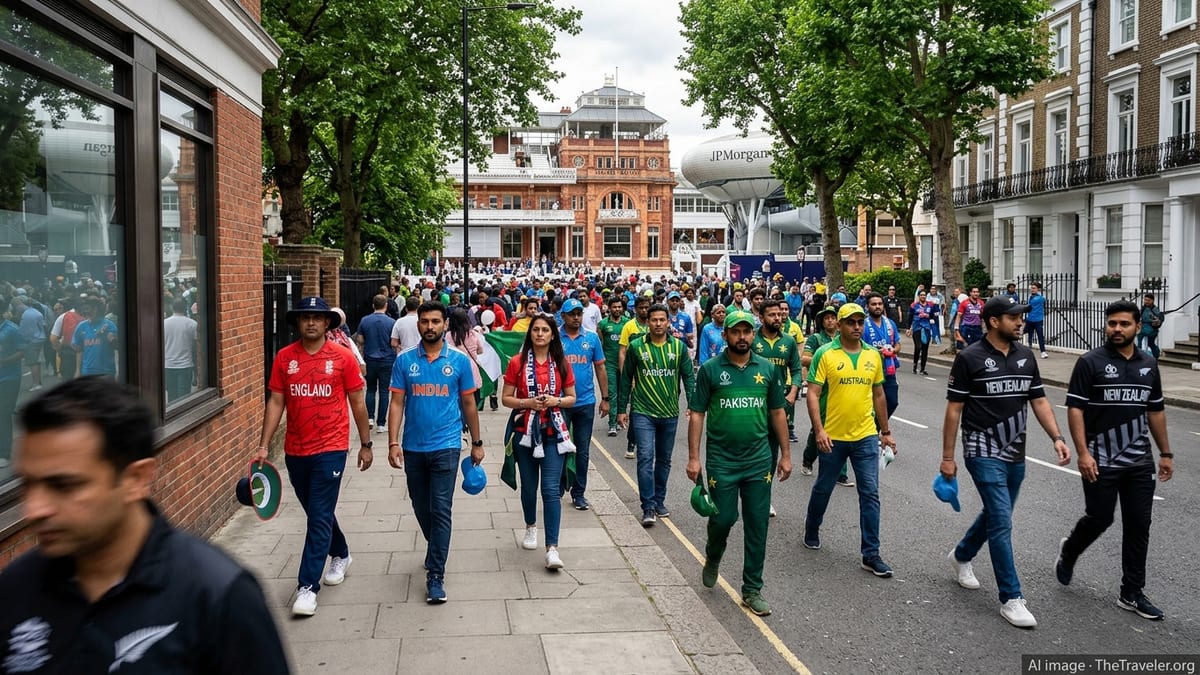
Expanded global tournament anchored at seven flagship UK venues
According to published information from the International Cricket Council, the 2026 edition of the ICC Women’s T20 World Cup will feature 12 teams playing 33 matches over 24 days, an expanded format that significantly increases both spectator days and travel demand compared with earlier tournaments. Matches will be staged at seven venues across England and Wales: Lord’s, The Oval, Edgbaston, Old Trafford, Headingley, Hampshire Bowl and Bristol County Ground.
Edgbaston in Birmingham will host the opening match on 12 June, with England facing Sri Lanka under lights, a prime-time slot likely to attract strong local and international attendance. The tournament will then fan out across the country, before culminating in a London climax, with both semi-finals at The Oval and the final at Lord’s on 5 July. Travel operators and ticket agencies are already highlighting these London knockout fixtures as peak-demand dates for inbound visitors.
The return of a global women’s cricket showpiece to England and Wales for the first time since 2009 is being framed in domestic tourism briefings as a chance to showcase modernised stadiums, upgraded transport links and newly developed visitor infrastructure. Publicly available planning documents and hospitality brochures point to a coordinated push to market the event as both a cricket spectacle and a summer holiday opportunity.
Industry analysis notes that the spread of venues between major urban hubs and regional cities gives international fans more choice in terms of trip length, budget and style, from big-city London and Birmingham stays to more compact, culture-driven breaks in Leeds, Manchester, Bristol and the Southampton area.
VisitBritain and city partners banking on summer sports tourism
Recent destination marketing material from VisitBritain and regional tourism boards positions the Women’s T20 World Cup as one of the headline international events in the UK’s 2026 calendar, alongside major cultural openings and anniversaries. Travel trade updates highlight the tournament’s June and early July window as a strategic advantage, dovetailing with the start of European school holidays and overlapping with the main long-haul leisure season.
Tourism-facing communications emphasise that the event’s structure encourages multi-city itineraries. Fans following their national teams may combine group-stage matches in Birmingham, Leeds, Bristol, Manchester or the south coast with a final stop in London for the semi-finals and final, effectively creating rolling travel flows around the country rather than concentrating visitors in a single host city.
Local tourism agencies in host cities are promoting themed experiences around match days, from cricket-focused walking tours and museum visits to food, music and heritage events timed to coincide with fixtures. Publicly available event planning suggests coordinated campaigns to encourage visitors to extend stays by at least one or two nights beyond their chosen matches, boosting hotel occupancy and spend in restaurants, attractions and retail.
Industry commentators note that the strong presence of teams from South Asia, Australasia and the Caribbean is likely to drive long-haul arrivals from traditionally cricket-enthusiastic source markets, complementing short-haul traffic from Ireland and mainland Europe. This mix is expected to support both premium and budget segments of the UK hospitality market.
Accommodation and transport gearing up for peak match days
Early hospitality sales materials for key match venues signal that demand is building fastest around England games, India and Pakistan fixtures, and the final stages in London. While general admission ticketing is structured to keep the event accessible, premium hospitality packages at Lord’s, The Oval and Edgbaston are being marketed as flagship corporate and high-end leisure experiences, indicating strong expectations for spend per visitor.
Hotel and serviced apartment providers in London, Birmingham, Manchester, Leeds, Bristol and Southampton are tracking tournament dates alongside other major events, and price forecasts suggest higher-than-average summer rates around high-profile fixtures. Travel trade advisories are already recommending that cricket followers secure accommodation early for knockout-stage matches, particularly in central London areas with easy access to both The Oval and Lord’s.
On the transport side, publicly available timetables and planning notes indicate that intercity rail services linking London with Birmingham, Manchester, Leeds and Bristol are expected to carry substantial match-day demand, especially for domestic and near-Europe visitors arriving via London airports. Regional airports serving Birmingham, Manchester and the south coast are also being promoted to supporters travelling directly to group-stage fixtures.
Destination planners are signalling that ease of travel between venues is a key selling point for the 2026 event. Fans can feasibly base themselves in one city and attend matches in others as day trips, particularly along the London–Birmingham–Manchester and London–Southampton–Bristol corridors, a factor that may further incentivise international visitors to use rail rather than domestic flights.
Iconic grounds reimagined as visitor experiences beyond match time
The seven host venues, many of which are longstanding cricket landmarks, are being framed not just as sporting arenas but as visitor attractions in their own right. Promotional content from host grounds highlights behind-the-scenes tours, museum exhibits and heritage elements that can be explored on non-match days, turning ticket holders into broader cultural visitors.
Lord’s and The Oval in London, Edgbaston in Birmingham and Old Trafford in Manchester are likely to serve as anchor points for cricket-themed city breaks, with local tourism guides weaving stadium visits into wider itineraries that might include galleries, live music, historic districts and riverside or canal-side dining. The Hampshire Bowl, with its hotel on site and proximity to the south coast, positions itself as a natural base for combining cricket with coastal exploration, while Bristol and Headingley offer strong links to independent food, arts and nightlife scenes.
Reports from previous women’s tournaments in Australia and South Africa suggest that many supporters are motivated by a combination of sport and destination discovery rather than single-match trips. Travel analysts expect a similar pattern in 2026, with fans planning itineraries that incorporate countryside excursions to the Cotswolds, Yorkshire Dales or coastal paths alongside days at the cricket.
As the women’s game continues to attract larger in-person audiences and global broadcast coverage, host venues are increasing investment in fan zones, family areas and food offerings that reflect local character. These developments are presented in planning documents as part of a wider strategy to encourage repeat visits to grounds and cities after the World Cup ends.
Ticket demand, fan engagement and longer-term legacy for UK travel
With the full match schedule now publicly available and fixtures featuring traditional rivalries highlighted in early commentary, expectations are that ticket ballots and general sales for marquee games will generate waiting lists, particularly for the London knockout stages and England’s group matches. Industry observers suggest that high early demand could lead to secondary surges in bookings for less high-profile fixtures as fans look for alternative entry points into the tournament.
Fan-engagement plans for 2026, as described in event tenders and marketing outlines, focus on turning spectators into repeat visitors by foregrounding local culture, food and attractions alongside the cricket. Cities such as Birmingham, Manchester, Leeds and Bristol are expected to use the tournament as a platform to reach new audiences in Asia-Pacific and the Caribbean, showcasing themselves as city-break destinations distinct from London.
Travel analysts argue that the timing and format of the Women’s T20 World Cup align with a wider trend toward experience-led travel, in which visitors combine sport, culture and nature within a single trip. If strong attendance and visitor satisfaction levels are achieved across the seven venues, the tournament is expected to reinforce the UK’s position as a leading host of major women’s sporting events and create a template for future tourism campaigns built around women’s cricket and other emerging global championships.
For now, publicly available booking data from airlines, hotels and hospitality providers points to a clear pattern: the ICC Women’s T20 World Cup 2026 is already influencing travel decisions for next summer, and UK destinations from London to Leeds are positioning themselves to turn a month of cricket into a season-long tourism opportunity.