

More news on this day
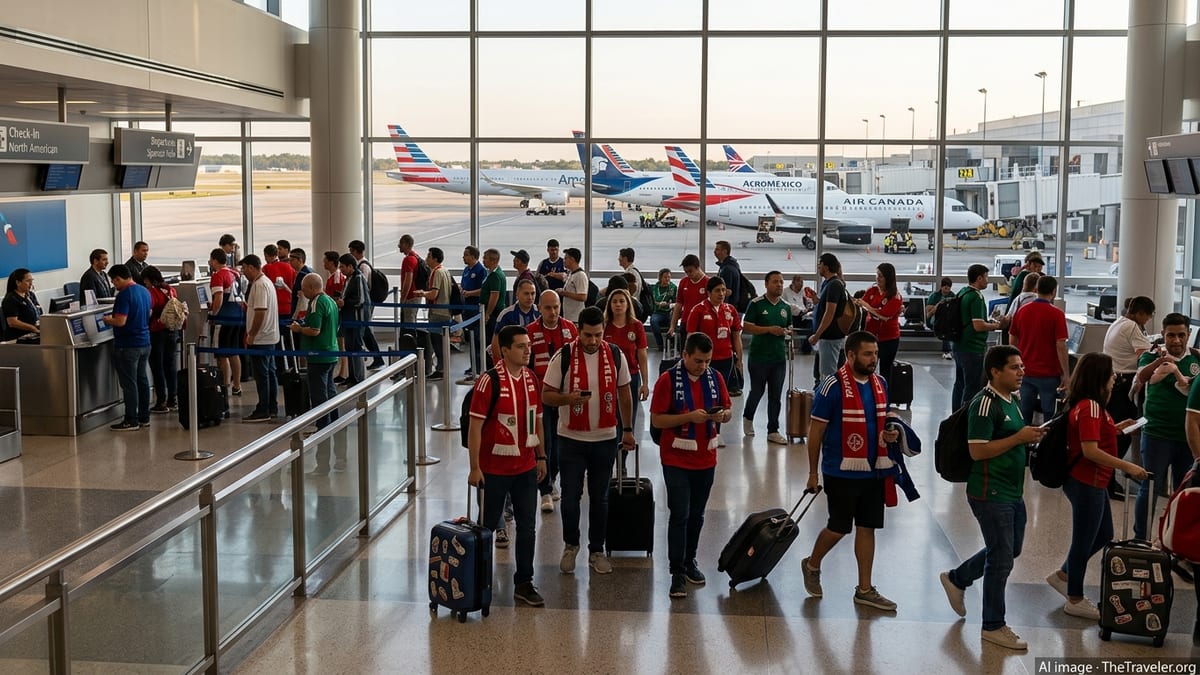
As hotel prices in 2026 World Cup host cities across the United States, Mexico and Canada jump by several hundred percent, airlines from North America and the United Kingdom are reporting brisk bookings and rapidly filling cabins, as fans race to secure scarce rooms and seats before the tournament kicks off on June 11.
Get the latest news straight to your inbox!
Hotel Prices Spike Across World Cup Host Cities
Early snapshots from host cities show the familiar pattern seen at previous mega-events: room rates climbing sharply as schedules are confirmed and fans begin to commit. In Kansas City, local reporting and traveler forums indicate hotel prices for World Cup match dates have risen more than threefold compared with typical summer levels, with some analyses putting the increase at around 300 to 400 percent following the release of match lineups. Similar stories are emerging in other U.S. hosts, where limited central inventory is being snapped up quickly.
In Mexico City, a recent real estate and hospitality review projected an influx of around 5.5 million visitors for the tournament period and documented steep jumps in nightly rates near Estadio Azteca, where midrange properties that normally charge under 100 dollars a night are listing significantly higher prices for June and July. Analysts describe both a classic supply squeeze and a “quantity effect,” as the city’s global profile during the event enables hotels to charge a substantial premium over baseline pricing.
Canadian hosts are seeing similar trends. An independent assessment for Vancouver highlighted an anticipated shortfall in traditional hotel capacity relative to projected visitor numbers, warning that the combination of compressed dates and limited rooms would put sustained upward pressure on rates. Local tourism and accommodation outlooks suggest that even secondary markets within driving distance of matches are preparing for spillover demand as core downtown hotels sell out.
The pattern extends beyond hotels to short term rentals. A Deloitte analysis commissioned by a major platform described how World Cup events typically push nightly rates for both hotels and rentals close to double their usual levels, while separate coverage of Philadelphia’s preparations reported strong pre-booking interest, with platforms offering incentives to attract new hosts in response to the surge.
Airlines Build Capacity as Flights Sell Out
On the aviation side, carriers in the United States, Mexico, Canada and the United Kingdom are positioning aggressively for the World Cup. American Airlines has been named the official North American airline supplier for the tournament, securing travel rights linked to FIFA and promoting nonstop and direct services into host cities including Dallas, Philadelphia, Miami, Vancouver, Toronto and Mexico City. The airline is marketing dedicated pages that package flights to these hubs, signaling expectations of concentrated demand on specific routes and dates.
Air Canada is also leaning into the event, focusing on its hubs at Toronto and Vancouver, which will both host matches. Industry forecasts disseminated through travel market reports suggest that Canadian carriers expect robust inbound traffic despite wider regional tensions around U.S. travel, and are planning schedules and pricing on the assumption that football tourism will offset softness in other categories.
Mexican operators such as Aeroméxico are preparing for a surge in both intra-regional and long haul demand. Mexico City and Guadalajara are projected to draw especially large crowds, and available route maps and booking patterns show additional capacity being steered toward these gateways for the June and July window. Analysts note that Mexico’s relative affordability compared with some U.S. markets, even after rate hikes, makes it attractive to cost conscious fans willing to combine football with broader vacation itineraries.
In the United Kingdom, carriers including British Airways and low cost rivals have been adjusting transatlantic networks in anticipation of tournament traffic. British Airways recently added new U.S. gateways such as St. Louis and continues to promote its extensive North American network, with company and industry commentary pointing to the World Cup as a key driver of medium term demand. Separate coverage has highlighted the entry of continental low cost airline Wizz Air into the UK U.S. market ahead of 2026, explicitly tying its launch authority to expected flows of football fans across the Atlantic.
Why Demand Remains Strong Despite Headwinds
The surge in bookings is unfolding against a complicated backdrop for international travel to the United States. Various data sets cited in business and travel media show that, on some measures, advance bookings from Europe to U.S. host cities for June 2026 are slightly below last year’s levels, with one analysis by aviation data firm Cirium pointing to a mid single digit decline from Europe and a modest dip from Asia. Political tensions and calls for boycotts have been flagged by some outlets as contributing factors.
Yet overall demand for the tournament appears resilient, with tourism and airline analysts emphasizing that ticket allocations, not appetite for travel, remain the main limiting factor. Commentary from industry groups tracking inbound tourism notes that registrations for World Cup tickets far exceed available seats in stadiums, suggesting that any travelers deterred by cost or politics are likely to be replaced by others eager to step in. This substitution effect helps explain why flights on key match dates are already filling up, even as overall regional demand metrics appear mixed.
Travel market outlooks for North America underline the broader context. Forecasts published late last year projected that, despite economic uncertainty, leisure travel in the United States would remain robust through 2026, supported by milestone events such as the World Cup and the U.S. semiquincentennial the same year. Hotel industry reports anticipate national rate growth as demand continues to outpace new supply, with major sports and entertainment events creating short bursts of particularly acute pressure in host cities.
Short term rental operators are also reporting early signs of this squeeze. Industry facing briefings aimed at property managers in host cities describe booking curves that are “multiple times stronger” than the previous year for tournament dates, with guests already accepting significantly higher nightly prices. Property owners posting on hosting forums confirm that, in some neighborhoods, weeks that once sat empty are now blocked out more than a year in advance by international visitors.
Fans Turn to Alternative Stays and Secondary Cities
With many central hotels in marquee hosts either sold out or quoting eye watering rates, fans are increasingly exploring alternative accommodation strategies. In Philadelphia, for example, Axios highlighted projections that nearly 150,000 visitors needing a place to stay could descend on the region during six World Cup matches, far exceeding the capacity of traditional hotels. The analysis suggested that short term rentals would play a pivotal role in absorbing overflow, with average hosts poised to earn well over one thousand dollars during the tournament period.
Similar dynamics are expected in Vancouver, Los Angeles and Mexico City, where Deloitte and local market reports warn of structural gaps between existing hotel supply and projected visitor volumes. Travelers are already turning to vacation rental platforms, suburban motels and university dorm style offerings, trading proximity and amenities for affordability. Some fans are booking stays in satellite towns and planning to commute to games by rail or car to avoid peak pricing in central business districts.
The surge is also rippling into secondary and tertiary cities that serve as transport or tourism gateways. British travel guidance for 2026 notes that airfares to non host U.S. destinations may remain relatively soft outside the core tournament window, but that prices into and around host regions during June and July are likely to rise noticeably. As a result, some visitors from the UK and Europe are stitching together multi stop itineraries, flying into one North American hub on sale fares and then connecting to host cities using separate tickets, low cost carriers or even long distance coaches.
For airlines, this has translated into strong point to point demand not just on obvious city pairs such as London to New York or Mexico City, but also on less traditional links like Manchester to Dallas or regional Canadian airports feeding into Toronto and Vancouver. Carriers are using revenue management tools to adjust fares dynamically, raising prices sharply on flights that coincide with high profile matches while keeping other dates relatively accessible to maintain baseline traffic.
What Travelers Should Expect Next
As the tournament draws closer, analysts expect further tightening in both air and hotel markets for the most in demand cities and matchdays. Historical comparisons to events such as the Olympics and major concert tours suggest that availability tends to shrink rapidly once final fixtures, kickoff times and team placements are confirmed. At that point, last minute buyers typically face a choice between paying steep premiums in central areas or staying farther afield and accepting longer commutes.
Travel outlooks for 2026 advise prospective visitors to lock in flexible reservations where possible, noting that while some fans may cancel if their preferred teams do not advance, those released rooms and seats are likely to be snapped up quickly by others. Industry watchers also point out that, away from the World Cup corridors and outside peak dates, there may still be opportunities for value, particularly in non host U.S. cities and in Canada and Mexico’s less publicized regions.
For airlines such as American, Aeroméxico, Air Canada and major UK carriers, the World Cup is shaping up as both a logistical challenge and a commercial opportunity. Their strategies, from added capacity and new routes to co branded marketing with tourism boards and tournament organizers, reflect a shared calculation that football tourism will be one of the defining travel stories of 2026. For fans, the message embedded in current booking and pricing patterns is clear: the longer they wait, the further they may have to travel, and the more they are likely to pay.