

More news on this day
The United States is warning its citizens to exercise increased caution when traveling abroad as the escalating war involving Iran, the United States and Israel triggers security incidents, airspace disruptions and anti-American protests across multiple regions popular with international travelers.
Get the latest news straight to your inbox!
Heightened Global Advisory as Conflict Spills Beyond the Gulf
Publicly available US government information shows that, in late February 2026, coordinated US and Israeli strikes on Iranian targets marked the start of a fast-moving regional war. In the weeks since, Iran has launched retaliatory drone and missile attacks on neighboring states and energy infrastructure, while the United States and its allies have expanded military operations around the Strait of Hormuz and the wider Gulf.
According to widely reported security alerts and media coverage, the United States has issued a broad caution for citizens worldwide, urging travelers to stay alert to the potential for anti-US sentiment, protests and opportunistic attacks linked to the conflict. This global messaging is layered on top of country-specific advisories for parts of the Middle East and surrounding regions where direct strikes and unrest are occurring.
Recent summaries of State Department guidance highlight an unusual combination of warnings: in addition to urging Americans to reconsider or avoid travel to certain conflict-affected states, the government is also emphasizing global vigilance in destinations far from the immediate war zone, citing the possibility of copycat attacks, cyber incidents and politically motivated demonstrations.
Travel-industry risk bulletins and insurance advisories echo this picture, describing the 2026 Iran war as a major escalation that is reshaping security calculations for airlines, cruise lines and corporate travel programs, particularly for routes that typically transit the Gulf, Eastern Mediterranean and key European hubs.
Middle East Hotspots: Direct Conflict and Disrupted Hubs
The most acute risks for travelers are concentrated in and around Iran, Israel and Gulf states closely tied to the conflict. Open-source reporting indicates that Iran has been hit by repeated airstrikes on military and energy facilities, while responding with missile and drone attacks on neighboring countries, including areas that host US forces and major commercial infrastructure.
Manama in Bahrain, home to the US Navy’s Fifth Fleet, has experienced Iranian missile and drone strikes, with casualties and damage recorded in civilian districts. In Iraq, Baghdad and other cities have seen large protests and clashes around US diplomatic and military sites following the outbreak of the war, with security messages urging Americans there to shelter in place or depart when commercial options allow.
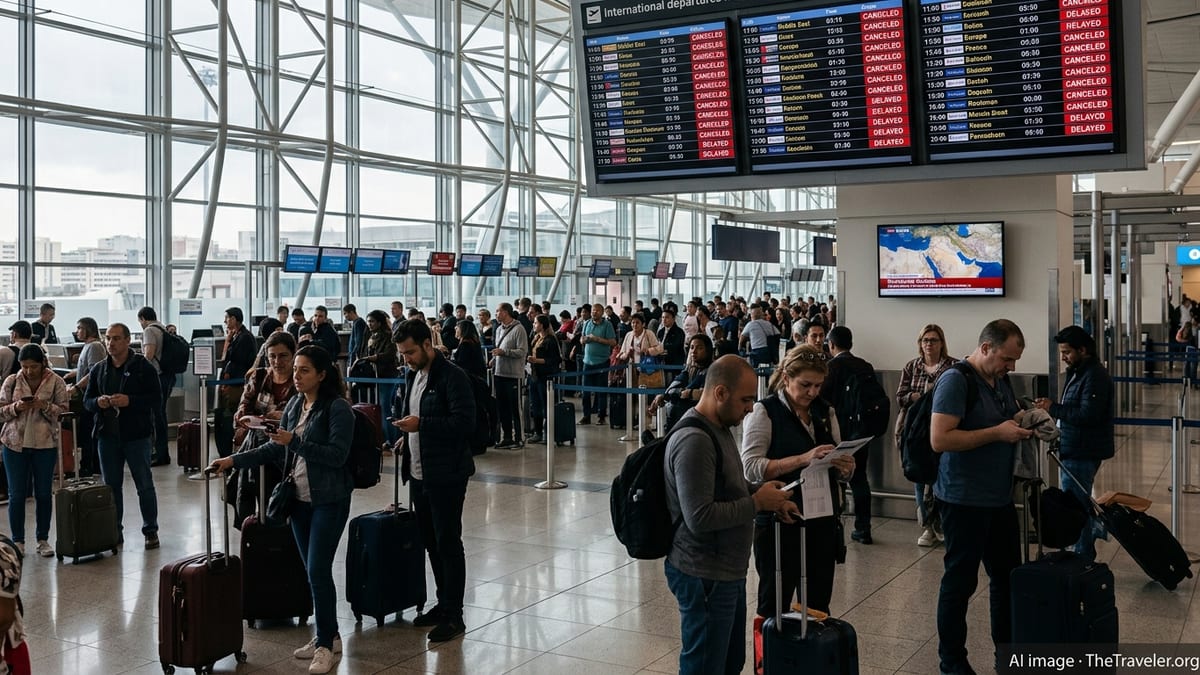
The Gulf’s role as a global aviation crossroads has drawn particular attention. Reports from international newswires describe Iranian strikes and threats near oil and gas facilities and port infrastructure, as well as a drone attack that temporarily closed Dubai International Airport, one of the world’s busiest hubs for intercontinental travel. Airlines and corporate travel managers are responding with rerouted flights, schedule changes and additional contingency planning for passengers transiting the region.
Industry risk assessments from insurers and business-travel associations note that war-related events are commonly excluded from standard travel cover, and that travelers to affected states may face limited recourse for cancellations or disruption linked directly to hostilities. Travelers with itineraries involving Gulf stopovers are being advised to confirm coverage details, monitor airline communications closely and remain prepared for sudden changes to routing or timing.
Rising Security Concerns Beyond the Immediate War Zone
While the core fighting is centered on Iran and its immediate neighbors, ripple effects are increasingly visible in Europe and other regions where US diplomatic facilities, transport nodes and tourist sites could be perceived as soft targets. International media digests in early March highlighted an explosion near the US embassy compound in Oslo, which authorities are treating as a possible deliberate act, reinforcing concerns about opportunistic attacks connected, directly or indirectly, to anger over the war.
Travel risk consultancies and global news roundups also describe large anti-war demonstrations in multiple capitals, including marches on US and Israeli embassies. Most gatherings remain peaceful, but analysts caution that sudden unrest, localized clashes or vandalism near diplomatic missions and symbolic sites are plausible, especially around weekends or key political announcements related to the conflict.
Several European governments and private security briefings are advising that US travelers pay closer attention to local events calendars, avoid counter-protests and be cautious in areas around foreign embassies, government buildings and major public squares when large rallies are announced. This advice aligns with the broader US message urging citizens worldwide to maintain a low profile, keep their travel documents accessible and stay attuned to rapid changes in the security environment.
For tourism-dependent cities, the combination of heightened alert status, visible security around US-linked locations and nervousness over the conflict’s trajectory is beginning to affect bookings and travel sentiment, even where the direct threat level remains relatively low. Hotel and airline data providers are reporting softer demand for some Middle Eastern and Eastern Mediterranean destinations compared with earlier forecasts for the 2026 high season.
Practical Guidance for Americans Planning International Trips
Publicly accessible guidance from the US government continues to stress preparation and real-time awareness as the conflict evolves. American travelers are encouraged to review the latest country-specific advisories before departure, enroll in the Smart Traveler Enrollment Program so they can receive security updates, and share detailed itineraries and contact information with family or trusted contacts at home.
Analysts who track global mobility risks recommend that travelers maintain flexible plans where possible, including refundable tickets or accommodation and contingency routes that avoid the most volatile corridors in the Gulf and neighboring airspace. For long-haul journeys, itineraries that connect through more distant hubs in Europe, Asia or the Americas may offer additional resilience if military activity or insurance considerations lead airlines to curtail operations over or near Iran and adjacent waters.
On the ground, travelers are being advised to follow common-sense precautions that take on added weight during geopolitical crises. These include limiting overt displays of nationality, avoiding political gatherings or discussions in public, and carrying both digital and physical copies of key documents. Security professionals also highlight the value of basic preparedness steps such as knowing the location of the nearest medical facility, keeping mobile devices fully charged and maintaining access to emergency funds in more than one form.
For Americans already living or working abroad, particularly in countries bordering Iran or hosting US military assets, employer and school contingency plans are taking on renewed importance. Reports indicate that corporate security teams and educational institutions are reviewing evacuation options, shelter-in-place procedures and communication protocols in case local conditions deteriorate or commercial flights become more limited.
Travel Industry Response and Outlook for the Months Ahead
The travel and tourism industry is closely monitoring how the US advisory posture evolves as the conflict enters its fourth week. Major airlines, cruise operators and tour companies are weighing route viability, demand trends and operational risks against the backdrop of an already sensitive global security environment and fragile consumer confidence.
Business-travel associations and global insurers, in recent bulletins, frame the current situation as a test of the sector’s crisis-management lessons from previous shocks. Those assessments point to improved coordination between carriers, airports and security agencies compared with earlier eras, but also warn that sustained hostilities involving energy chokepoints such as the Strait of Hormuz could translate into higher fuel costs, longer routings and renewed volatility in ticket prices.
For leisure travelers, the outlook will depend heavily on whether the fighting remains geographically constrained or expands further into neighboring states and international sea lanes. If the conflict stabilizes or moves toward de-escalation, some currently suppressed demand for Middle Eastern and Mediterranean journeys could return later in 2026, especially for destinations that have so far avoided direct attacks.
If tensions continue to rise, however, analysts expect the United States and other governments to keep or even tighten current advisories, potentially reshaping travel patterns away from certain hubs and toward alternative routes perceived as safer. For now, the consistent message across official advisories, industry briefings and independent risk analyses is that Americans should stay informed, flexible and prepared for a more unpredictable travel landscape than the one they may have planned for when they first booked their trips.