

More news on this day
Emirates is once again drawing attention to the extremes of superjumbo flying, adding more Airbus A380 services on routes of around two hours or less and cementing its grip on the world’s shortest scheduled flights operated by the double-decker aircraft.
Get the latest news straight to your inbox!
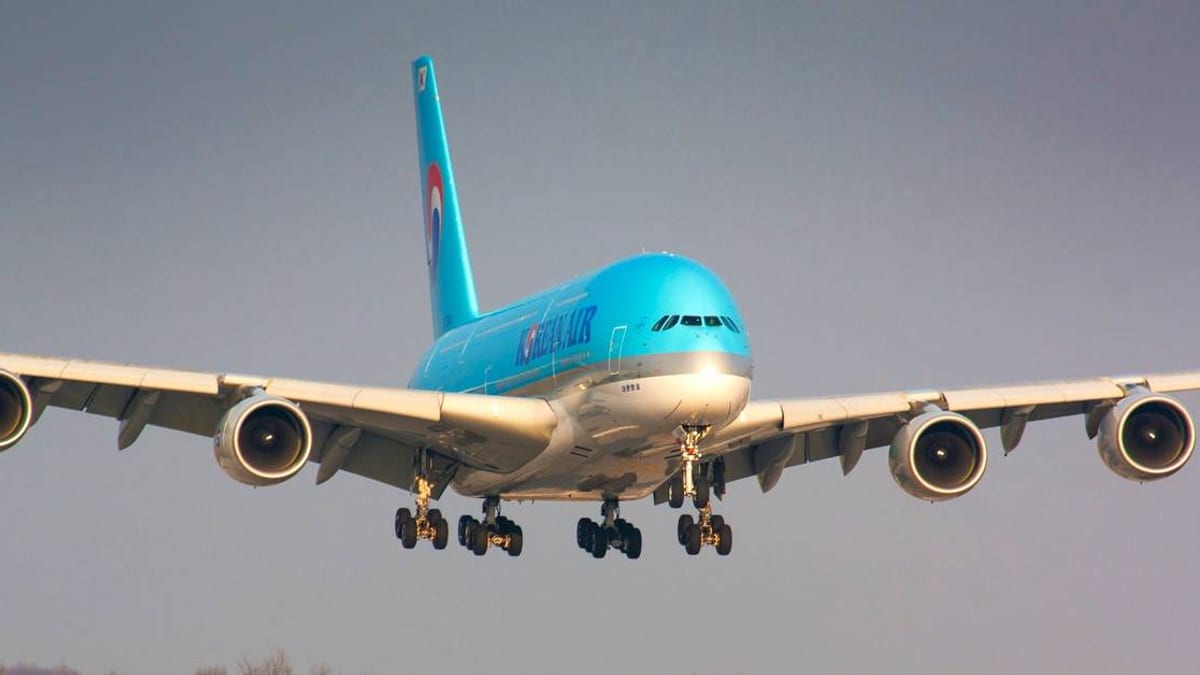
Image by simpleflying.com
A Superjumbo on a Two-Hour Hop
Recent schedule updates and industry reports indicate that Emirates is intensifying Airbus A380 deployment on regional routes from Dubai that clock in at roughly two hours, a stark contrast to the ultra-long-haul missions for which the jet was originally designed. New rotations and added frequencies are being layered onto existing services, turning short sectors into some of the busiest A380 operations in the world by daily cycles rather than distance flown.
Among the standout examples is the Dubai to Madinah service, highlighted in late 2025 coverage as Emirates’ shortest A380 flight by block time at around 2 hours and 30 minutes. According to publicly available schedule data, this operation was introduced to accommodate a sharp spike in religious travel demand, showing how large tour groups and seasonal flows can justify using a 500-plus-seat aircraft on routes that, by time, barely qualify as medium haul.
Separate aviation industry analysis points to other sub-three-hour A380 links in the Emirates network, including Dubai to Jeddah at approximately 2 hours and 45 minutes, Dubai to Amman at just under three hours, and Dubai to Mumbai at slightly more than three hours. These routes demonstrate how the airline is increasingly treating the A380 as a flexible high-density shuttle within a broader regional network, not only as a flagship for intercontinental services.
While block times around two hours are short compared with many A380 flights that stretch beyond 14 or 15 hours, they still offer enough cruise time for passengers to experience the aircraft’s signature features. The cabin product, from private suites in first class to expansive economy cabins, becomes a differentiator on routes otherwise dominated by narrowbodies and smaller twin-aisle jets.
From Doha and Muscat to Today’s Regional Record-Holders
The idea of operating an A380 on very short routes is not new for Emirates. Historical records from 2016 show the airline briefly operated the world’s shortest scheduled A380 service between Dubai and Doha, a hop of just 379 kilometers with scheduled flight times of about 1 hour and 20 minutes in one direction and 1 hour and 10 minutes in the other. That record shifted within a few years to an even shorter Dubai to Muscat rotation, covering roughly 340 kilometers in approximately 40 minutes of flight time.
Those earlier services were curtailed or reshaped as regional politics, airspace dynamics, and fleet planning evolved, but they established a template for using the A380 as a high-profile shuttle on sectors that traditionally would never see such a large jet. The aircraft’s sheer size made the novelty of these flights a talking point among aviation enthusiasts, while the high seat count gave Emirates a way to meet intense demand peaks on dense regional corridors.
With today’s focus on two-hour and sub-three-hour A380 routes, the airline appears to be revisiting that playbook in a more targeted way. Rather than scheduling an entire bank of ultra-short superjumbo flights, Emirates is selectively dropping the A380 into markets where load factors and yield conditions justify the added capacity. The result is a patchwork of routes in the Middle East and surrounding regions where travelers can book an A380 experience on journeys that, in many cases, are no longer than a typical domestic flight elsewhere.
Industry commentators note that this approach also reflects a broader shift in global A380 operations. As several airlines retire the type and others scale back fleets, Emirates is leaning even more heavily on its remaining superjumbos, pushing them into roles that maximize visibility and passenger appeal across both long and short sectors.
Capacity, Pilgrimage Travel and Network Strategy
The decision to schedule extra A380 flights on such short routes appears closely linked to religious travel, particularly the Umrah and Hajj pilgrimages. Travel industry publications covering the Dubai to Madinah deployment describe it as a strategic response to unprecedented growth in pilgrimage traffic, with tour operators booking large groups that can quickly fill the superjumbo’s multiple cabins.
Using the A380 on two-hour sectors allows Emirates to consolidate demand that might otherwise be spread across multiple smaller aircraft. In operational terms, one high-capacity departure can replace two or even three narrowbody flights, easing gate pressure at busy airports and reducing crew and slot complexity. For passengers, the appeal lies in the ability to travel in larger groups while still accessing premium cabins and upgraded inflight amenities.
Network planners also benefit from the aircraft’s flexibility. Short A380 flights can be scheduled to dovetail with long-haul connections in Dubai, feeding passengers from regional cities directly into global routes to Europe, North America, and Asia. This hub-and-spoke strategy is particularly effective when short-haul demand lines up with banked departure waves on long-haul sectors, allowing the A380 to operate at consistently high load factors throughout the day.
At the same time, there are trade-offs. Running such a large four-engine jet on routes of around two hours concentrates a significant amount of capacity into a narrow time window, which can expose the operation to volatility if demand dips. It also raises questions about unit costs versus more fuel-efficient twin-engine widebodies. For now, publicly available analysis suggests that strong, event-driven demand and brand positioning are tipping the balance in favor of continued short-haul A380 use.
What Ultra-Short A380 Flights Mean for Travelers
For passengers, the expansion of very short A380 routes translates into more opportunities to sample one of the world’s most recognizable aircraft without committing to an ultra-long flight. Travelers flying between Dubai and key regional cities now have a higher chance of finding at least one daily rotation scheduled with the double-decker, often at times designed to capture peak demand.
Onboard, the experience on a two-hour sector differs from an intercontinental service primarily in service pacing rather than product quality. Cabin layouts remain the same, and travelers can expect the familiar spacious feel, large overhead bins, and quieter ride that have long distinguished the A380. Service flows are compressed, with crews moving quickly through meal or snack offerings, but the hard product is largely identical to what passengers would find on much longer flights.
The trend also has implications for fare dynamics. Aviation analysts point out that when airlines upgauge to larger aircraft on high-demand short routes, economy prices can sometimes become more competitive due to the sheer volume of seats, even as premium cabins target higher-yield segments. For budget-conscious travelers who are flexible on timing, monitoring which departures are operated by the A380 can be a way to secure both a lower fare and an upgraded onboard experience.
For enthusiasts, the accumulation of extra A380 rotations on two-hour and sub-three-hour routes effectively turns certain city pairs into living showcases of the aircraft’s versatility. As the global A380 footprint contracts elsewhere, the Gulf region is emerging as the place where the superjumbo not only survives but finds new life flying some of the shortest widebody sectors in commercial aviation.
A Niche but Growing Role in the A380 Era
Although ultra-short A380 flights still represent a small fraction of total superjumbo operations worldwide, the decision to add more rotations on these routes underlines a distinctive niche for the aircraft in the post-pandemic era. With fewer airlines operating the type, each new deployment attracts outsized attention, especially when it breaks with the traditional model of very long intercontinental legs.
Observers note that the economics of such flights will remain under scrutiny as fuel prices, environmental regulation, and fleet renewal plans all evolve. However, as long as certain corridors can consistently fill a superjumbo in two hours or less of flying time, the A380 is likely to retain a role on some of the world’s most unusual short-haul trunk routes.
For travelers planning trips through Dubai and the wider Gulf region, these developments mean that the world’s shortest A380 services are not just surviving but expanding in frequency. What began as a novelty with hops such as Dubai to Doha and Muscat has evolved into a more deliberate strategy, with two-hour and sub-three-hour A380 routes now forming a visible, and growing, part of Emirates’ global network.