

More news on this day
The world’s shortest regularly scheduled Airbus A380 service, linking Doha and Dubai in around two hours of gate‑to‑gate time, is set to become even more frequent as Qatar Airways adjusts its interim schedules and leans on the double‑deck superjumbo to shore up high‑demand regional links.
Get the latest news straight to your inbox!
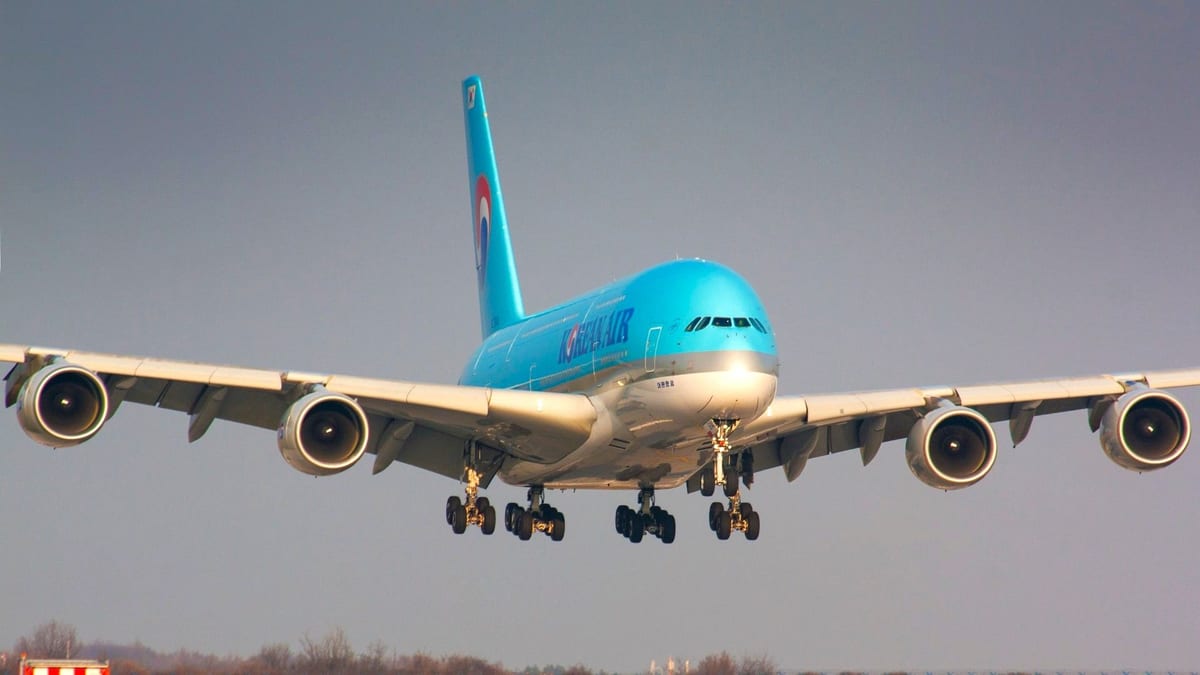
Image by Simple Flying
A Superjumbo on a Shuttle-Length Hop
The Airbus A380 was designed with globe-spanning missions in mind, yet one of its most eye-catching assignments today is the brief hop between Doha and Dubai. The flight time in the air is typically well under an hour, but when ground operations and taxiing are included, the sector occupies about two hours from boarding to arrival. That makes it the shortest regularly flown A380 route currently available to passengers.
Historically, Gulf carriers have deployed the A380 on regional legs in and out of their hubs, both to reposition aircraft and to absorb surging demand on trunk routes. Before the pandemic, combinations such as Dubai to Muscat and Dubai to Doha attracted attention for putting hundreds of widebody seats on flights comparable in duration to a medium-length train journey. The renewed focus on Doha to Dubai continues this pattern, but with a sharper strategic edge.
Publicly available timetable data and industry tracking indicate that Qatar Airways has been rebalancing its widebody fleet as it copes with shifting long-haul demand and evolving airspace constraints. Within that shuffle, the A380 has re-emerged as a high-capacity tool on regional links, even when those links are among the shortest in the world for the type.
For travelers, the result is a route where the cabin experience can feel slightly surreal: the same multi-deck layout, premium lounges, and expansive economy cabin that usually accompany a long-haul journey, compressed into a flight that occupies roughly the time it takes to watch a single movie.
More Frequencies to Match Volatile Demand
Published schedules for late March and April 2026 show a pattern of incremental frequency boosts on key Gulf routes, including Doha to Dubai, as Qatar Airways rebuilds connectivity during a volatile period for Middle East aviation. Industry outlets and passenger reports describe a rolling series of interim timetables, with some destinations temporarily suspended, others downgauged, and a select group upgraded to larger aircraft or additional daily services.
Within that context, the Doha to Dubai shuttle has become a prime candidate for extra capacity. Slot constraints, demand volatility and the role of both cities as connecting hubs mean that adding more departures with a large aircraft can be more efficient than scattering capacity across multiple smaller jets. The A380, with its ability to carry well over 450 passengers in typical configurations, allows the airline to consolidate demand onto fewer movements while preserving connectivity.
Recent operational updates referenced in aviation forums and regional news coverage suggest that, as Qatar Airways brings additional widebodies back into circulation, the superjumbo is being targeted at sectors where traffic has proven resilient. The Doha to Dubai link sits at the intersection of business travel, leisure flows and onward long-haul connections, making it especially sensitive to any reduction in seats. Increasing the number of A380-operated frequencies is one way to ease that pressure.
The frequency gains may not be permanent. Industry analysts note that as geopolitical risks ease and airspace patterns normalize, airlines typically pivot back toward more fine-tuned capacity management, including a shift from very large aircraft to more flexible twinjets. For now, however, the short A380 shuttle remains an efficient shock absorber for demand spikes.
Passenger Appeal: A Long-Haul Cabin on a Short Flight
One of the main talking points around the Doha to Dubai A380 flights is the disproportionately high level of onboard comfort for such a short journey. The aircraft’s wide fuselage and twin-deck layout enable features not normally associated with regional flights, ranging from spacious premium cabins to quieter, more stable ride quality in turbulence.
According to published fleet data, Qatar Airways configures its A380s with multi-class cabins that include a large business-class section and a high-capacity economy cabin. On a sub-one-hour hop, many passengers barely have time to explore the aircraft, yet they still benefit from details such as wider seats compared with many single-aisle jets, more generous overhead bin space and multiple galleys that can speed up service.
Observers note that the superjumbo deployment also carries brand value. Operating an A380 on such a short route reinforces the perception of both Doha and Dubai as aviation powerhouses, with enough local and connecting traffic to justify superjumbo flights between them. Social media posts and enthusiast coverage frequently highlight the novelty of boarding a double-decker giant for what is, in effect, a regional shuttle.
For economy passengers, the trade-off is particularly attractive. Fares on these short Gulf sectors are often competitive with services operated by smaller aircraft, but the onboard experience can feel significantly more premium. Business travelers making same-day returns, and leisure passengers positioning for long-haul departures, are among those most likely to benefit from the added frequencies.
Network Strategy in a Tense Regional Climate
The decision to lean more heavily on the A380 for short-haul links also reflects a broader strategic calculation. Since early 2026, published coverage has documented repeated disruptions and temporary suspensions affecting flights around the Gulf and the wider Middle East, influenced by regional tensions and evolving airspace restrictions. Carriers have responded by trimming some routes, re-timing others and concentrating capacity on corridors where demand and operational reliability remain strongest.
In this environment, the ultra-short Doha to Dubai hop takes on outsized strategic importance. Both airports function as critical connection points between Europe, Asia, Africa and Australasia. Ensuring plentiful capacity between them, even over a flight of less than an hour, helps maintain a lattice of onward options for passengers whose original routings may have been rebooked or diverted.
Aviation analysts point out that very large aircraft can serve as tactical assets during such periods. By scheduling an A380 on routes like Doha to Dubai, an airline can move large numbers of disrupted passengers quickly, clear backlogs from earlier cancellations and stabilize its wider network. The recent step-up in frequencies suggests that this logic is in play, even as airlines retain the flexibility to redraw the map again if conditions change.
At the same time, environmental advocates continue to scrutinize the use of four-engine widebodies on short sectors, where fuel burn per seat-kilometer can be less favorable than on newer twinjets. Airline planners must therefore weigh the operational advantages of the A380 against long-term sustainability goals and regulatory pressures that increasingly favor more efficient aircraft.
What It Means for Travelers Eyeing the Two-Hour Superjumbo Hop
For passengers, the near-term implications of the increased A380 presence on the Doha to Dubai route are largely positive. More frequencies translate into greater choice of departure times, especially during peak travel periods, and the probability of securing an A380-operated flight rises with each added rotation. Travelers able to adjust their schedules slightly may find it easier to select a superjumbo service instead of a smaller widebody or narrowbody alternative.
Given the fluid regional situation, however, industry commentators urge travelers to remain alert to schedule changes. Interim timetables and rolling updates mean that aircraft types and departure times can still shift at relatively short notice. While the intention is to provide additional A380 capacity, there is no guarantee that every planned superjumbo operation will be preserved if conditions tighten again.
Even with that caveat, the world’s shortest regular A380 route offers a rare aviation experience at a time when the type’s global footprint remains limited compared with its pre-pandemic peak. For enthusiasts and casual travelers alike, the combination of a two-hour gate-to-gate journey and a full-scale A380 cabin is likely to keep Doha to Dubai firmly on the radar, especially as more of these flights populate the schedule in the weeks ahead.