

More news on this day
A record breaking bridge project and one of the world’s most ambitious new museums have been named among the “greatest places of 2026,” underscoring how ultra scale engineering and cultural complexes are reshaping the global travel map.
Get the latest news straight to your inbox!
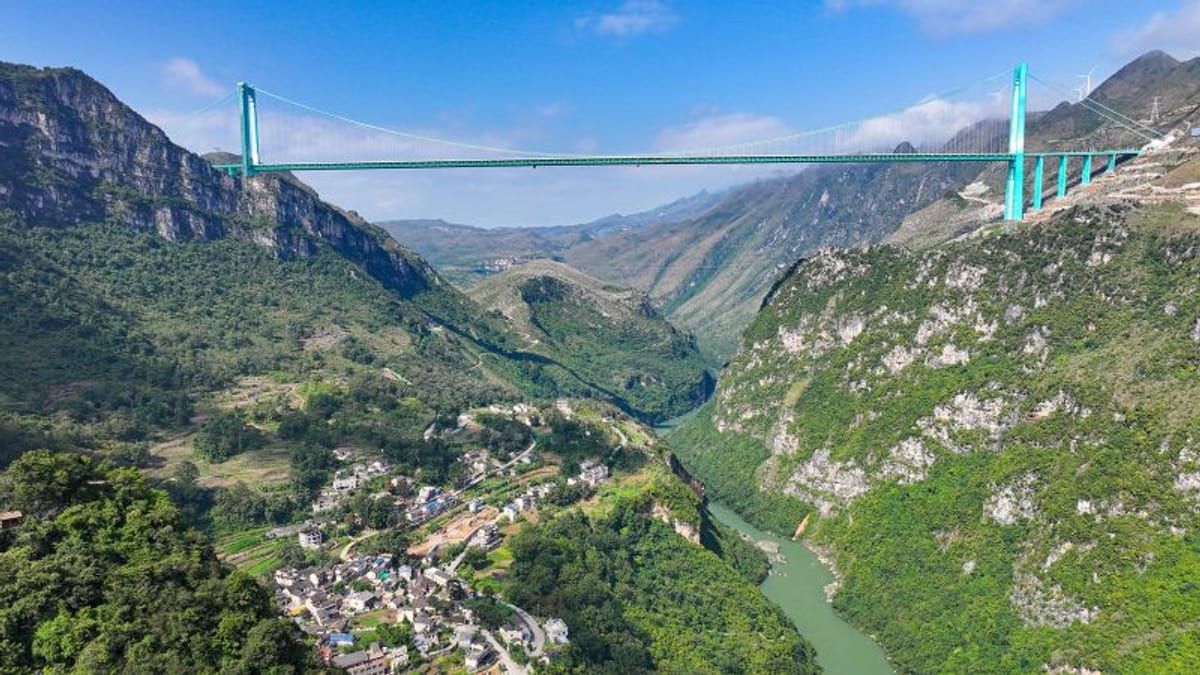
Image by cnn.com
Superlative Landmarks Dominate 2026 Destination Lists
Recent roundups of the greatest places to visit in 2026 highlight a striking theme. Several of the most talked about openings are defined by superlatives, including what reports describe as the world’s tallest bridge structure and one of the largest purpose built museums on the planet. Together, they exemplify how destinations are using headline grabbing dimensions to stand out in an increasingly crowded tourism market.
Travel and lifestyle publications compiling new season hotlists for 2026 have pointed to these megaprojects as emblematic of a post pandemic push toward ambitious public works, from vast transport links to sprawling cultural districts. Their inclusion alongside long established capitals and resort regions positions infrastructure itself as a core part of the tourism story rather than a backdrop to it.
The focus on height and sheer floor area also taps into a wider competitive trend among emerging hubs. Cities in Asia and the Middle East in particular have spent the past decade pursuing record setting towers, malls and museums to attract international visitors and investment, and the 2026 lists suggest that this strategy is continuing to influence where travelers are being encouraged to go next.
World’s Tallest Bridge Becomes a Destination in Its Own Right
The bridge singled out in 2026 coverage is drawing attention not only for its engineering but for its potential as a standalone attraction. Rising to a height that places its deck far above many existing valley crossings, the structure has been designed as both a transport corridor and a panoramic viewing platform, with designated stopping points and viewing areas built into its approaches.
Publicly available information indicates that the project combines a long span design with tower elements that push the overall height into record territory. While existing bridges in Asia and Europe have long held records for span or pier elevation, the new crossing has been described in recent reporting as setting a fresh benchmark for total structural height, placing it in the spotlight for record focused travelers.
Local tourism planners are positioning the bridge as part of a broader scenic route, with new visitor centers, trailheads and roadside facilities emerging around both ends of the crossing. The emphasis on lookouts and interpretive displays reflects how many destinations now view major transport infrastructure as an opportunity to extend visitor stays, rather than simply speed travelers from one point to another.
The bridge’s appearance on early 2026 “greatest places” lists suggests that such multipurpose planning is resonating with international editors. It also hints that travelers are increasingly drawn to the drama of large scale infrastructure in landscapes, seeking out sites where technology and topography meet in a single, photograph friendly frame.
Biggest Museum Highlights Global Race for Cultural Scale
The museum highlighted as the world’s largest among the 2026 picks reflects a different but related impulse toward scale. With a floor area that exceeds many national galleries, the complex has been designed as a city sized cultural quarter, housing extensive permanent collections, temporary exhibitions, education spaces and event venues under one overarching institutional brand.
According to published coverage, the museum’s development has been closely tied to national level cultural and tourism strategies that aim to diversify economies and elevate global profile. Its inclusion in 2026 destination lists is framed not only around its size but also around its role as a gateway to wider archaeological and historical landscapes that have seen stepped up excavation and interpretation in recent years.
The project joins a lineage of cultural megastructures that includes recent grand museums in the Gulf and East Asia, where vast, architect driven institutions have become shorthand for a country’s modern identity. The 2026 recognition indicates that such projects still carry strong appeal for travelers looking for concentrated cultural experiences in a single, easily legible venue.
At the same time, editors have drawn attention to how the museum blends high profile national treasures with more localized narratives. That approach aligns with a broader shift in museum practice toward balancing international blockbusters with community oriented programming, an aspect that may help the institution sustain interest long after the novelty of its scale fades.
Tourism Strategies Built on Records and Reach
The pairing of the world’s tallest bridge and the biggest museum in lists of the greatest places of 2026 illustrates how tourism strategies are converging around a few key concepts. Height, scale and accessibility are being deployed as marketing shorthand that can cut through in social feeds and headline lists, quickly signaling that a destination offers something measurable and unique.
Infrastructure led tourism, in which bridges, rail lines and airports are presented as attractions, has gained momentum in regions investing heavily in new transport corridors. By incorporating features such as observation decks, integrated public art and visitor facilities, governments and developers are seeking to turn essential projects into narrative rich experiences that encourage travelers to linger and explore adjacent areas.
Culturally, large museums serve a similar function by acting as anchors for wider urban districts. Surrounding neighborhoods often see new hotels, cafes and galleries appear in the wake of a museum opening, extending the economic impact beyond ticket sales. The fact that a single institution can command a place on global travel lists before it has fully matured programmatically underlines how powerful such anchor projects have become in destination branding.
For travelers, the prominence of these superlative sites in 2026 recommendations may influence itinerary planning, nudging visitors to combine long haul trips with visits to record setting structures that promise both spectacle and deeper engagement with local history, landscapes and design.
Implications for Future Destination Development
The attention directed at the tallest bridge and biggest museum for 2026 is likely to reinforce similar ambitions elsewhere. Urban planners and tourism agencies monitoring the coverage may see confirmation that high profile, high cost projects can yield substantial reputational returns if they achieve global firsts or superlative status that resonates with international media.
However, analysts observing recent years in tourism development have also pointed to the importance of what surrounds these megastructures. Access to public transport, thoughtful integration into existing communities and programming that extends beyond opening ceremonies are increasingly viewed as critical to turning record breaking construction into enduring travel demand.
As more regions pursue their own signature bridges, museums and cultural hubs, the competitive advantage may shift from simple superlatives to how effectively destinations connect these flagship sites with broader experiences. For now, though, the elevation of the world’s tallest bridge and the largest museum onto “greatest places of 2026” lists confirms that scale and ambition remain central ingredients in the global travel story.