

More news on this day
The United States has renewed and strengthened its worldwide caution for citizens traveling abroad in early 2026, as new regional conflicts, security alerts, and disrupted flight corridors prompt calls for American travelers to exercise increased vigilance in almost every corner of the globe.
Get the latest news straight to your inbox!
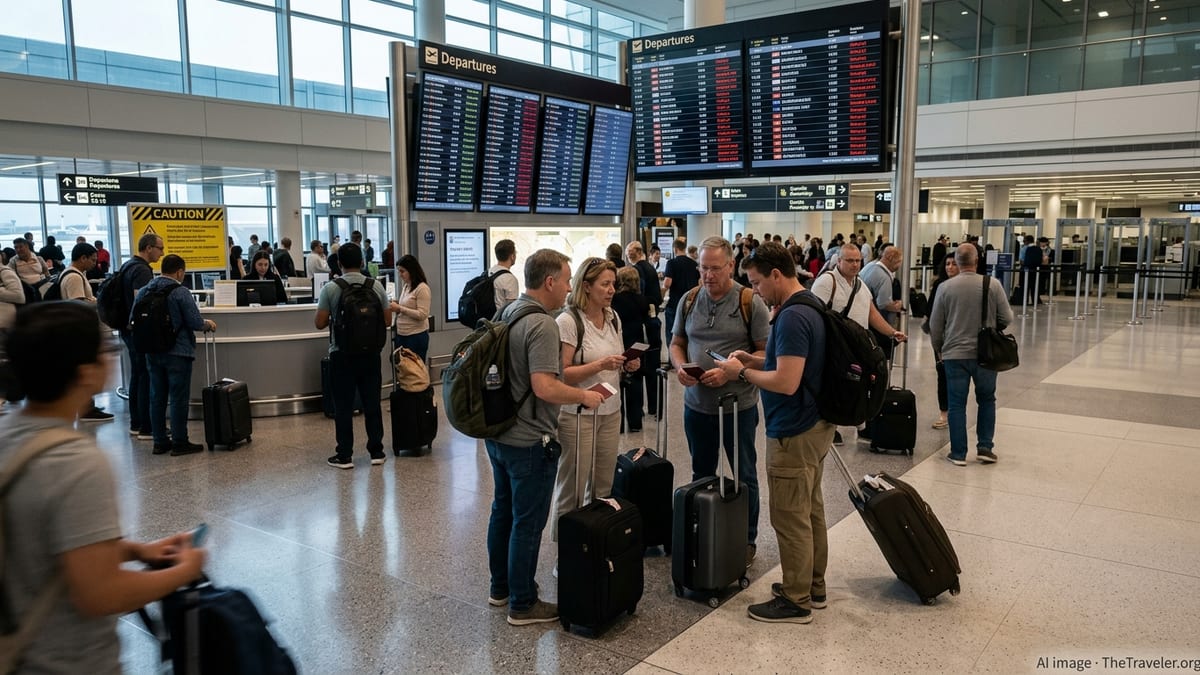
Worldwide Caution Reissued Amid Heightened Global Tensions
In late February 2026, the U.S. Department of State updated its Worldwide Caution notice, advising American citizens overseas to exercise increased caution due to rising security risks, periodic airspace closures, and the potential for sudden outbreaks of violence or unrest. The advisory, dated February 28, underscores that the concern is not limited to a single hotspot but reflects a more volatile global landscape overall.
Publicly available information indicates that the worldwide alert emphasizes possible threats ranging from terrorism and cyberattacks to anti-U.S. demonstrations and opportunistic crime targeting foreign visitors. Travelers are urged to review the individual travel advisory level for any destination, as well as recent security alerts, before and during trips.
While warnings of this kind are not unprecedented, the 2026 update is notable for coinciding with overlapping crises in the Middle East, ongoing geopolitical tensions in Eastern Europe and parts of Africa, and more frequent climate-related disruptions. Together, these factors create a travel environment in which conditions can deteriorate quickly, even in destinations that have traditionally been viewed as relatively stable.
Americans planning international travel are being advised to stay informed through official advisory pages, airline notices, and local media in the countries they plan to visit, and to build flexibility into itineraries to accommodate sudden changes in security posture or transport availability.
Middle East on Highest Alert as Conflict Disrupts Mobility
The sharpest escalation in risk is currently centered on the Middle East, where a widening conflict involving Iran, the United States, and Israel has led to a cascade of travel disruptions and safety warnings. Recent reporting from major outlets describes large-scale strikes, retaliatory attacks, and protests across the region, along with diplomatic efforts to facilitate evacuations for foreign nationals.
In early March, a new advisory urged U.S. citizens in a broad swath of territories including Bahrain, Egypt, Iran, Iraq, Israel, the West Bank, Gaza, Jordan, Kuwait, Lebanon, Oman, Qatar, Saudi Arabia, Syria, the United Arab Emirates, and Yemen to leave as soon as possible using available commercial flights. Coverage of the guidance notes that several of these countries, or parts of them, already carry higher-level advisories that recommend against travel or call for U.S. citizens to depart.
Airspace closures and rerouted flight paths have become a defining feature of the 2026 crisis. Reports show that carriers operating between North America, Europe, and Asia have adjusted routes to avoid conflict zones, adding hours to some journeys and occasionally stranding passengers during rapid schedule changes. Travelers transiting through major Middle Eastern hubs are being warned to monitor flight status closely and to prepare for last-minute cancellations or rerouting.
Visa processing and consular services are also affected. Analysis by mobility and immigration specialists indicates that routine visa interviews and document services across parts of the region have been postponed or relocated, contributing to backlogs and uncertainty for travelers and expatriates alike.
Layered Risk Map: From “Exercise Increased Caution” to “Do Not Travel”
The broad call for increased vigilance overlays an already complex, country-by-country advisory system. The State Department classifies destinations on a four-level scale, from Level 1 (exercise normal precautions) to Level 4 (do not travel). As of March 2026, media summaries of the advisory map show that every region of the world includes countries and territories where American travelers are asked to at least exercise increased caution.
Level 2 advisories, which cover a significant share of popular destinations in Europe, Latin America, Africa, and Asia, typically cite elevated risks of crime, kidnapping, terrorism, civil unrest, or limited emergency healthcare. For instance, some countries highlight specific urban areas or border regions where conditions differ markedly from the national average. Travelers are encouraged to read the detailed country pages rather than relying solely on the overall level.
At the other extreme, several destinations remain at Level 4, where Americans are advised not to travel at all because of armed conflict, widespread unrest, severe crime, or a lack of consular access. Recent overviews in travel and security publications list parts of the Middle East, sections of Eastern Europe close to active front lines, and certain regions in Africa and Latin America as falling under these strictest warnings.
Between these poles are Level 3 “reconsider travel” advisories, which have become more common in areas affected by political instability, surging gang violence, or significant natural disaster damage. For travelers, the practical difference between Levels 2, 3, and 4 often comes down to the availability of flights, local support networks, and the individual’s personal risk tolerance, but the shift upward in advisory level is a clear signal that past safety assumptions may no longer apply.
Practical Guidance: Documentation, Itineraries, and On-the-Ground Awareness
For Americans still planning or undertaking trips in 2026, the latest guidance places heavy emphasis on preparation and situational awareness. Travel risk experts recommend that U.S. citizens check the latest advisory level not only for their primary destination but also for any countries they will transit, as sudden changes in regional security can affect connecting flights and overflight permissions.
Travelers are encouraged to maintain multiple copies of essential documents, including passports, visas, and prescriptions, stored both physically and securely online. Publicly available advice from universities and international programs reiterates that U.S. citizens should share itineraries and contact details with family or trusted contacts at home, and be ready to adjust plans if local conditions deteriorate.
Once on the ground, the 2026 alerts stress the value of blending in and avoiding predictable routines. Americans are advised to steer clear of large gatherings, demonstrations, and locations associated with government or military activity, which can become flashpoints during periods of tension. Local news, transport updates, and airport notices can offer early warning of disruptions such as roadblocks, curfews, or transit strikes.
Insurance has also moved into sharper focus. Some travel insurers are updating policies to reflect that the Middle East conflict and related instability are now considered known events, which may limit coverage for newly booked trips into affected areas. Reading the fine print on war, terrorism, and civil unrest exclusions is therefore more important than ever before departure.
What This Means for 2026 Travel Planning
The convergence of a renewed worldwide caution and numerous high-profile regional crises makes 2026 a year in which American travelers must plan more carefully, even for destinations that previously felt straightforward. Analysts note that the advisory map can change quickly following elections, unrest, or major attacks, and that today’s Level 2 destination could shift to Level 3 or Level 4 with little warning.
Travel industry reporting suggests that some travelers are pivoting toward destinations that maintain lower advisory levels, offer robust healthcare, and have reliable air links that avoid known conflict corridors. Others are continuing with existing plans but building in additional time, flexible tickets, and backup routes in case of sudden disruption.
Above all, the latest wave of warnings underscores that no region is entirely insulated from global volatility. For U.S. citizens, staying informed, maintaining realistic expectations about potential delays or cancellations, and treating official advisories as a dynamic planning tool rather than a formality are emerging as key habits for safer international travel in 2026.