

More news on this day
A large-scale system failure affecting Baidu’s Apollo Go robotaxi fleet in Wuhan has stranded passengers in fast-moving traffic and ignited new questions about how safely cities can rely on driverless ride services.
Get the latest news straight to your inbox!
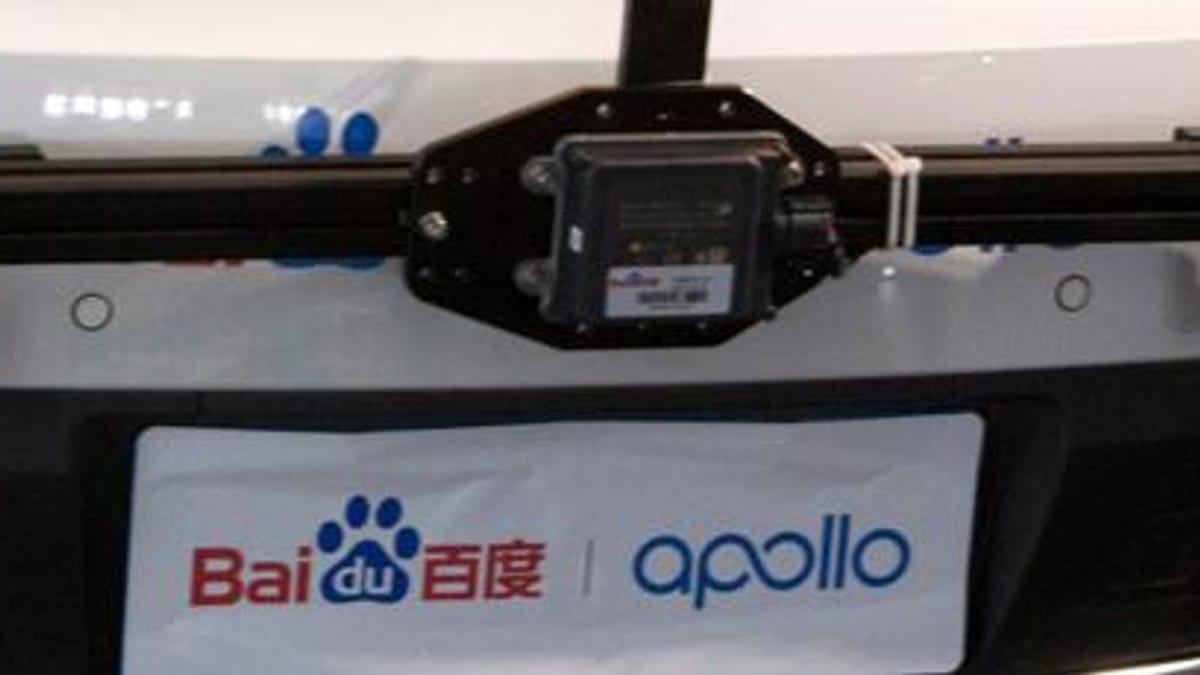
Mass shutdown hits Baidu’s flagship robotaxi city
According to published coverage, the incident unfolded on the evening of March 31, when more than 100 Baidu Apollo Go robotaxis reportedly suffered a simultaneous system malfunction across multiple roads and elevated expressways in Wuhan. Vehicles came to a halt in active lanes, in some cases in the middle of multi-lane highways, leaving riders trapped as regular traffic continued to flow around them.
Reports indicate that many vehicles stopped abruptly after completing routine maneuvers such as turning a corner or merging onto an overpass. In several widely shared clips on Chinese social media, stationary white robotaxis can be seen lined up along elevated roads while other cars and heavy trucks pass nearby, underscoring how exposed the stranded vehicles and their occupants were.
Police statements and media summaries describe the disruption as a system malfunction affecting Baidu’s driverless operation in the city. No injuries have been publicly reported, but traffic on some routes was heavily disrupted as human drivers attempted to navigate around abandoned robotaxis and congestion rippled across key corridors.
The event is being described in multiple outlets as the first mass shutdown of robotaxis on public roads in China, a significant milestone given Wuhan’s status as one of the country’s leading test beds for large-scale autonomous mobility.
Passengers describe being trapped above traffic
Firsthand accounts collected by Chinese media and international technology outlets portray a confusing and stressful experience for passengers caught in the outage. Some riders reported that their vehicles displayed on-screen messages citing a driving system malfunction and promising staff assistance within minutes, only for help to take much longer to arrive.
In several reports, passengers said they tried in-vehicle SOS buttons and customer service hotlines, sometimes needing repeated calls before they could connect to an operator. Waiting times of 30 minutes or more were described, with some riders indicating they remained stuck in their vehicles for up to 90 minutes while traffic continued to flow around them.
One widely cited account detailed a robotaxi coming to a stop on an elevated overpass with large construction or dump trucks passing on both sides, creating what the rider described as a sense of vulnerability. Images and videos circulating on Chinese platforms show riders standing on the shoulder of raised highways after exiting immobilized vehicles, highlighting the practical challenges of evacuating stranded robotaxis in high-speed environments.
Published coverage also points to at least a few rear-end collisions in which human-driven vehicles struck stationary robotaxis that had stopped in active lanes. While the crashes appear to have been limited in number, they have intensified public concern over how autonomous fleets handle rare but high-risk failures.
Baidu keeps quiet as questions mount
Baidu, which operates Apollo Go as one of China’s most prominent commercial robotaxi services, has not released a detailed public explanation of the failure. Reports note that the company has acknowledged the incident in general terms but has not clarified whether the problem stemmed from a software bug, network disruption, remote control system error, or a deliberate emergency shutdown triggered by safety protocols.
Technology analysts quoted in public commentary describe the episode as a type of failure that system designers aim to avoid at all costs. A fundamental principle of automated driving safety is that vehicles should default to a safe state, typically by pulling over to the side of the road, instead of stopping in a travel lane where they become obstacles.
The Wuhan incident appears to have violated that expectation in a large number of cases, with multiple cars coming to rest where there was little or no shoulder space. Observers argue that the scale of the malfunction suggests either a shared software or infrastructure dependency across the fleet, raising concerns about single points of failure in centrally managed robotaxi systems.
The silence from Baidu has prompted criticism from some mobility experts and commentators, who say the lack of clear, timely information hampers public trust in autonomous technology. Calls are growing for more transparent incident reporting, independent technical review, and clearer rules about how companies must communicate with passengers and city authorities during and after large-scale disruptions.
China’s autonomous ambitions face a high-profile test
China has promoted cities such as Wuhan, Beijing, and Shanghai as global showcases for driverless transport, granting expansive test zones, relaxing some regulatory hurdles, and encouraging tech giants to scale commercial robotaxi services. Apollo Go has played a central role in that push, logging millions of driverless rides in Wuhan and expanding service areas over the past two years.
Publicly available information shows that Baidu has also been pursuing partnerships to export its robotaxi model to overseas markets, including parts of Europe and the Middle East. The Wuhan outage therefore lands at a sensitive moment, when the company is positioning its technology as mature enough for global deployment and when regulators in other countries are scrutinizing the real-world safety record of autonomous fleets.
Analysts note that previous incidents involving robotaxis in China and abroad, including collisions and smaller outages, have already fueled debate about the pace at which self-driving cars should be integrated into busy urban networks. The Wuhan event, distinguished by its scale and the dramatic imagery of cars frozen on highways, is likely to become a reference point in future policy discussions about acceptable risk and required safeguards.
For now, Chinese officials and industry observers appear focused on how quickly services can be restored and under what conditions. Any extended pause or new restrictions in Wuhan could signal a more cautious regulatory posture that might reverberate across other pilot cities.
Global spotlight on robotaxi safety and resilience
The Wuhan outage also resonates with a broader series of robotaxi incidents in other countries, where autonomous vehicles have been criticized for blocking intersections, hindering emergency responders, or stopping unpredictably after technical failures. Comparisons in recent coverage point to power-related disruptions in San Francisco and operational pauses in other pilot markets, reinforcing concerns that large fleets remain vulnerable to rare but high-impact events.
Safety advocates argue that the key issue is not whether robotaxis can generally navigate city streets, but how they behave in edge cases such as network loss, large-scale software errors, or infrastructure failures. The expectation is that fleets should include robust fallback strategies, from local decision-making that favors pulling off-road to rapid remote support and physical response teams that can clear stalled vehicles quickly.
Urban planners and transport experts following the Wuhan case suggest that cities integrating robotaxis may need to revisit contingency planning, including how to prioritize recovering stranded vehicles and how to coordinate messaging to affected riders and other road users. Some commentators are calling for mandated stress testing and public disclosure of how autonomous systems perform under simulated large-scale outages.
As video of stalled robotaxis in Wuhan continues to circulate globally, the episode underscores both the promise and the fragility of driverless mobility. For travelers and residents in cities experimenting with robo-ride services, the incident offers a vivid reminder that the convenience of an autonomous trip depends not only on sophisticated algorithms, but also on the resilience of the systems behind them.