

More news on this day
A mass outage of Baidu’s Apollo Go robotaxi service in Wuhan on March 31 halted more than 100 vehicles in live traffic, stranding riders on busy roads and elevated expressways and sharpening global questions about the reliability of large-scale autonomous fleets.
Get the latest news straight to your inbox!
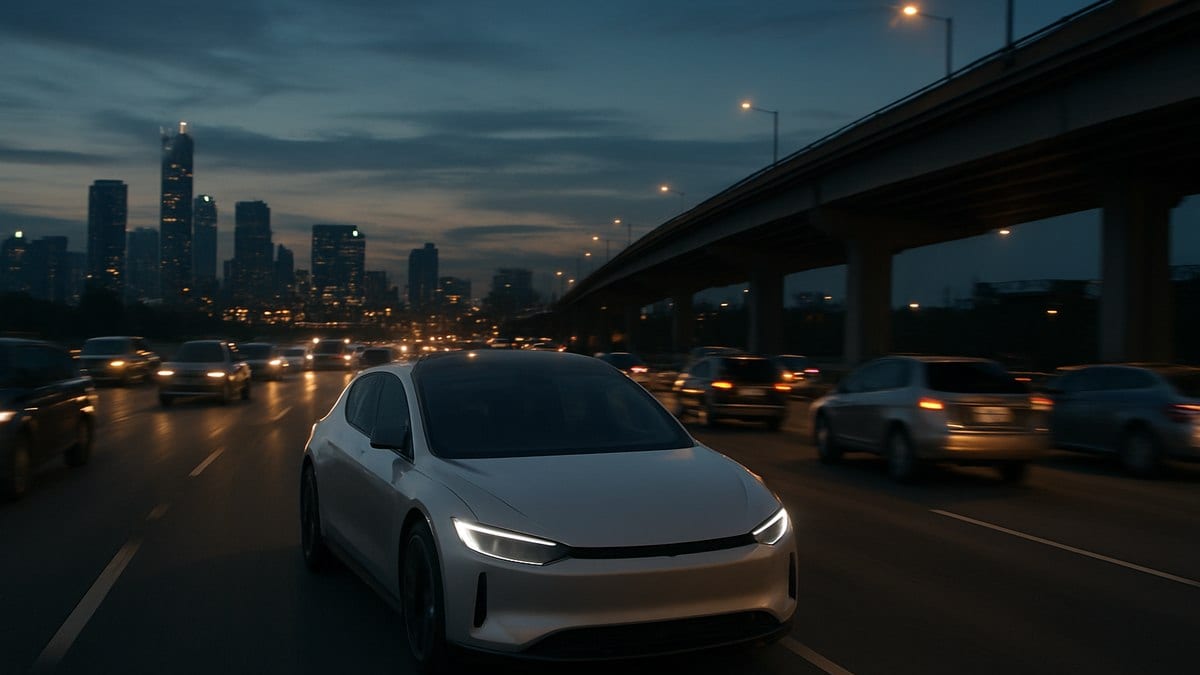
System Failure Freezes Over 100 Robotaxis Across Wuhan
Publicly available information from Chinese media, international outlets and incident monitors indicates that the disruption began around 8:57 p.m. local time on March 31, 2026, when Apollo Go robotaxis operating across Wuhan suddenly stopped responding and came to a halt. Police statements reported in local and overseas coverage describe a wave of emergency calls from passengers stuck in self-driving cars that would no longer move.
Analyses compiled by transport and technology publications suggest that more than 100 vehicles were affected across multiple districts, including major arteries and elevated highways that form part of Wuhan’s rapidly expanding robotaxi operating zone. The sudden paralysis left some cars immobilized in live lanes of fast-moving traffic, creating bottlenecks just as the evening rush was tapering off.
Incident summaries gathered by international observers and an AI safety incident database characterize the event as a system-wide failure rather than an isolated software bug in a single car. Available information points to a centralized malfunction that propagated simultaneously across the Apollo Go fleet, interrupting normal driving behavior and fail-safe routines.
While detailed technical diagnostics have not yet been made public, published reports consistently refer to a “system malfunction” that caused the vehicles to lock up where they were, rather than performing a controlled pull-over or return-to-depot sequence. That distinction is drawing particular attention from engineers and regulators watching the sector.
Passengers Trapped in Live Traffic for Up to Two Hours
Accounts collected from Chinese social media and summarized in international coverage describe stressful scenes inside the stranded robotaxis. Riders reported being stuck on elevated expressways surrounded by heavy trucks, unable to exit safely as traffic continued to pass on both sides. Some described waiting more than 90 minutes for assistance, with no clear estimate of when the vehicles would move again.
Dashcam clips and roadside videos shared online and referenced by multiple news outlets show Apollo Go vehicles stopped in travel lanes, hazard lights flashing, as human-driven cars navigate around them. In at least a few cases, rear-end collisions were reported after following vehicles failed to anticipate a stationary robotaxi in the middle of the roadway.
Local media summaries indicate that public safety personnel were deployed to manage traffic, place cones and guide stranded riders to safety where conditions allowed. However, the elevated and limited-access nature of some Wuhan expressways meant certain passengers remained confined in their vehicles until the system came back online or the cars could be manually removed.
So far, available reporting points to minor injuries and property damage rather than large-scale casualties, but the imagery of unmanned vehicles frozen in high-speed traffic has proved striking. For many viewers in China and abroad, the scenes have become a vivid illustration of what can happen when fleet-level automation fails without graceful degradation.
Baidu’s Expanding Apollo Go Network Under Scrutiny
The incident is particularly notable because Wuhan is one of the flagship cities for Baidu’s Apollo Go service, which has grown into one of the world’s largest commercial robotaxi operations. Public data and company disclosures cited in financial and technology analyses indicate that Baidu operates several hundred autonomous vehicles in the city and has been scaling up to hundreds of thousands of rides per week across its network.
Prior to the March 31 failure, Apollo Go had been promoted domestically as a key example of China’s leadership in intelligent transportation, with Wuhan frequently highlighted as a model of large-scale deployment. The outage has therefore become a test of how a mature robotaxi platform manages rare but high-impact disruptions affecting many vehicles at once.
Commentary from industry analysts quoted in regional business media emphasizes that this event differs from headline-grabbing single-vehicle crashes. Instead, it highlights the risks associated with centralized control architectures and cloud-dependent services, where a fault in dispatch, communications or core software can ripple instantly across an entire city’s fleet.
Some experts argue that the long-term growth of robotaxis in China is unlikely to reverse solely because of this outage, given the scale of investment and strong policy backing. However, they note that Baidu’s approach, which reportedly leans heavily on constant connectivity and centralized coordination, may now face tougher questions from regulators, city partners and the traveling public.
Regulatory, Safety and Travel Implications
The Wuhan outage is already being cited in global discussions about how to regulate and certify autonomous ride-hailing services as they move from pilot projects to critical pieces of urban mobility. Commentators in technology and transport publications point out that many regulatory frameworks are still geared toward managing accidents involving individual vehicles rather than simultaneous failures of entire fleets.
In China, the episode comes amid a rapid expansion of commercial driverless zones in major cities, where robotaxis are increasingly part of airport transfers, hotel corridors and new-town developments. Travel and tourism observers note that visitors to Wuhan have been early adopters of Apollo Go rides, treating them as a showcase experience in a high-tech city. The sight of stalled vehicles on elevated roads may temporarily dent that appeal.
The event is also reverberating in other markets where Baidu has signaled ambitions to export its autonomous driving technology. Analysts tracking the company’s overseas partnerships suggest that potential regulators and mobility operators in Europe and the Middle East are likely to study how Baidu addresses the root causes, communicates with the public and updates safety protocols after the Wuhan incident.
More broadly, the outage underscores a growing consensus among specialists that resilience planning for robotaxis must go beyond collision avoidance to include fleet-level contingency strategies. These can range from locally autonomous fallback modes that allow vehicles to safely pull over without network contact, to diversified communications channels and rigorous stress-testing of backend systems.
What Comes Next for Large-Scale Robotaxi Fleets
In the days since the outage, technology and financial commentators have noted that Baidu has continued to operate Apollo Go services while conducting internal reviews. Public-facing information from the company has remained limited, leading independent analysts and outside experts to fill the gap with their own reconstructions based on user posts, traffic notices and footage.
Observers of the autonomous vehicle sector see Wuhan as an important case study in how companies respond when rare, systemic failures occur in live service. Key questions include how quickly operators can detect a cascading fault, how effectively they can communicate with passengers, and how smoothly they can coordinate with city traffic managers the next time a similar disruption emerges.
For travelers and residents in cities where robotaxis are becoming a regular transport option, the March 31 event serves as a reminder that convenience and novelty come with new categories of operational risk. Urban planners and mobility providers are likely to weigh those risks more explicitly when integrating autonomous fleets into airport links, tourist districts and business travel corridors.
As more cities from Wuhan to San Francisco experiment with driverless ride-hailing, the lessons from this outage are expected to shape future safety standards, insurance models and public expectations. The ultimate impact on traveler confidence may depend less on the fact that a large-scale failure occurred and more on how visibly companies and regulators adapt their systems so that the next disruption is shorter, safer and less chaotic on the road.