

More news on this day
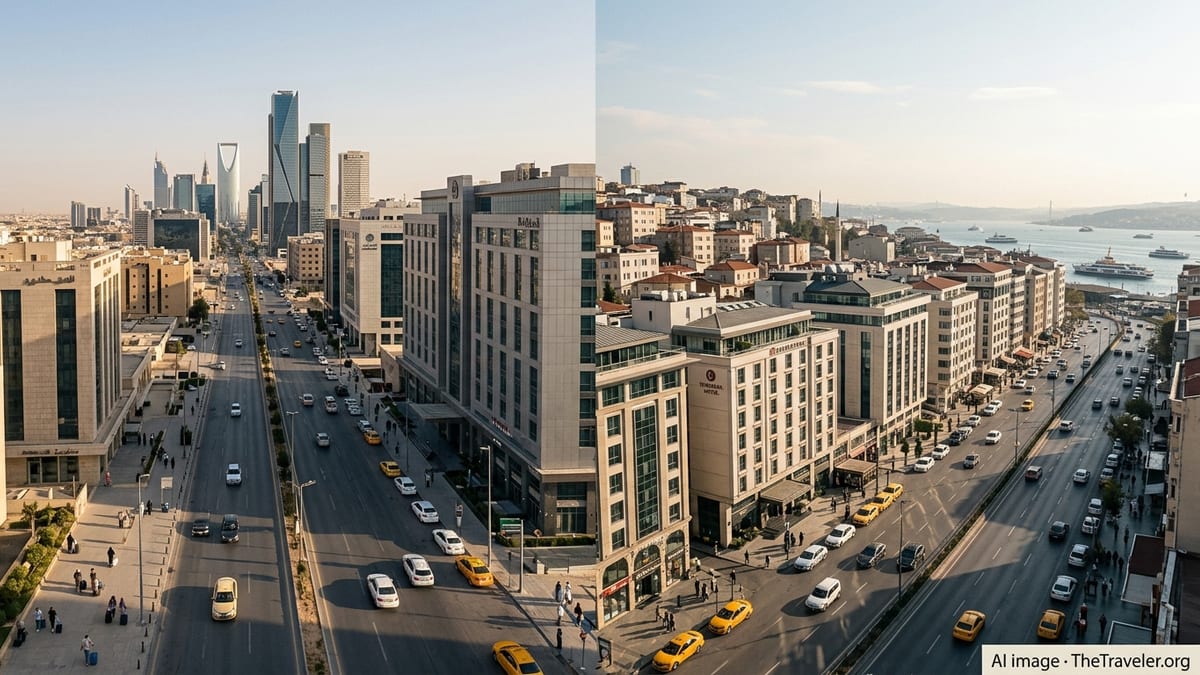
Wyndham Hotels & Resorts is accelerating its expansion across Europe, the Middle East, Eurasia and Africa, with Saudi Arabia and Türkiye emerging as standout growth engines as the company targets more than 170 new hotel signings across the EMEA region in 2025.
Get the latest news straight to your inbox!
Record Development Pipeline Across EMEA
Publicly available corporate filings and development materials for Wyndham Hotels & Resorts indicate that the company entered 2025 with a record global development pipeline, a substantial share of which is concentrated in the EMEA region. The pipeline, measured in both hotels and rooms, continues to grow year over year, reflecting sustained interest from owners in franchise and management agreements.
Company disclosures show that EMEA now accounts for a significant portion of Wyndham’s international growth, supported by a portfolio of more than 720 operating hotels and over 90,000 rooms across Europe, the Middle East, Eurasia and Africa. Development documents circulated in early 2025 highlight a regional pipeline of more than 150 projects, which is expected to rise sharply as new deals progress toward formal signing this year.
Within that wider story, 2025 is shaping up as a pivotal year. Industry coverage points to more than 170 anticipated new signings across EMEA for Wyndham’s brands during the year, spanning midscale, upper midscale and upscale segments, as well as extended stay. This expected volume would mark one of the strongest annual development performances for the company in the region and underscore EMEA’s status as a strategic growth platform.
Observers note that Wyndham’s asset-light, franchise-led model is resonating with regional investors seeking global distribution, loyalty integration and standardized operating frameworks. The company’s emphasis on conversion-friendly brands and flexible design standards is also frequently cited as a factor helping to accelerate signings in markets where existing independent hotels are looking to join international systems.
Saudi Arabia Emerges as a Strategic Growth Hub
Saudi Arabia is one of the most dynamic elements of Wyndham’s EMEA story for 2025. The kingdom’s long-term tourism strategy, which aims to attract tens of millions of international and domestic visitors annually, is fueling a wave of hotel project announcements across multiple cities and resort destinations. Hospitality and tourism reports note that global brands are competing aggressively for market share, and Wyndham is positioning itself prominently within that contest.
Development overviews for Wyndham’s EMEA region point to Saudi Arabia as a priority market, with a growing cluster of signed and operating hotels in key destinations such as Riyadh, Jeddah and the holy cities. As religious tourism, business travel and large-scale events continue to expand, the company is expected to layer additional midscale and upper midscale properties into emerging corridors, aligning with government efforts to diversify the economy and expand accommodation capacity.
Industry analysis suggests that many of the new Saudi projects involve new-build hotels within master-planned districts and mixed-use developments, where international standards and brand recognition are seen as critical to attracting guests and securing financing. Wyndham’s pipeline in the kingdom increasingly reflects a mix of traditional hotel formats and extended stay concepts, designed to serve both short-stay pilgrims and longer-term corporate or project-based demand.
Travel and investment commentators also highlight that Saudi Arabia’s ongoing infrastructure upgrades and visa reforms are improving accessibility, which in turn supports the case for additional branded room supply. As more resort and coastal destinations in the kingdom are developed, Wyndham’s portfolio is expected to broaden beyond major cities to include leisure-focused projects that can tap into growing domestic tourism.
Türkiye Strengthens Its Position as an EMEA Powerhouse
Türkiye, already one of Wyndham’s strongest markets in the wider region, is projected to play a central role in the company’s 2025 signings. Regional development materials show that Türkiye accounts for one of the largest shares of Wyndham’s EMEA pipeline, reflecting the country’s status as a high-volume tourism destination and a key link between Europe, Asia and the Middle East.
Recent coverage in trade publications notes that Wyndham has been steadily adding properties across major Turkish destinations, from Istanbul and Ankara to coastal resorts along the Mediterranean and Aegean seas. The brand mix spans economy and midscale flags serving domestic travelers and business guests, as well as upper midscale and upscale properties catering to international tourists and conference traffic.
Observers report that Türkiye’s robust domestic travel market and resilient tourism flows from Europe, the Gulf and Central Asia are supporting continued interest from hotel owners in affiliating with global brands. Wyndham’s brands are seen as offering a relatively broad spectrum of positioning and price points, allowing owners to match products to local demand patterns in urban centers, industrial hubs and resort towns.
As new highways, airports and tourism infrastructure are completed, especially in secondary and tertiary cities, industry analysis indicates that Wyndham’s development team is targeting additional locations where branded hotels remain underrepresented. This focus on geographic diversification within Türkiye is expected to be a key driver of the anticipated wave of new signings in 2025.
Brand Portfolio Expansion and Owner Appeal
Beyond geography, Wyndham’s growth in Saudi Arabia, Türkiye and the wider EMEA region is closely linked to how its multi-brand portfolio is being deployed. Company development brochures indicate that 17 brands are now present in EMEA, covering a wide range of price points and operating models, from select-service city hotels to resort-style properties and extended stay concepts.
Publicly available information shows that a significant portion of Wyndham’s EMEA pipeline is in the midscale and above segments, aligning with demand from owners seeking higher revenue per available room and more resilient performance across business cycles. Conversion opportunities remain a major theme, with existing independent or locally branded hotels upgrading into Wyndham’s system to gain access to global sales, marketing and loyalty channels.
For prospective owners in Saudi Arabia and Türkiye, analysts point out that Wyndham’s standardized operating frameworks, combined with the ability to localize design and services, can help projects move more quickly from planning to opening. The company’s franchise and management models are typically structured to keep capital requirements on the balance sheets of owners, which appeals to investors looking to leverage brand affiliation while retaining asset control.
Hospitality sector commentary also notes that the growing scale of Wyndham’s regional portfolio creates network effects that benefit both owners and travelers. As more hotels open under the company’s brands in key feeder markets and destinations, awareness of the portfolio rises, helping to support occupancy and rate performance at new and existing properties alike.
Implications for Travelers and the Regional Hotel Landscape
The wave of anticipated signings across EMEA in 2025, led by Saudi Arabia and Türkiye, is set to expand options for both leisure and business travelers. Guests can expect a wider choice of branded accommodations in cities and resort areas where inventory was previously dominated by independents or a limited number of global brands, particularly in fast-growing secondary markets.
Travel industry observers suggest that new Wyndham-branded hotels in Saudi Arabia are likely to play an important role in accommodating religious tourism peaks as well as conferences, exhibitions and government-related travel tied to the kingdom’s transformation plans. In Türkiye, additional openings along major tourist routes and in commercial centers are expected to help distribute visitor flows more evenly across the country, easing pressure on the most saturated districts.
From a competitive standpoint, Wyndham’s acceleration across EMEA adds momentum to a broader trend of international brands deepening their presence in the region. As other global hotel groups also report record signings and openings, the landscape is becoming more crowded, pushing operators to differentiate through brand positioning, loyalty benefits and digital guest experiences.
For travelers, the expansion translates into more consistent service standards, loyalty earning and redemption opportunities, and potentially greater price competition among branded properties. For local economies, the combination of new construction, hotel operations and tourism spending associated with Wyndham’s regional growth is expected to contribute to job creation and investment in hospitality-related infrastructure across Saudi Arabia, Türkiye and the wider EMEA region.