

More news on this day
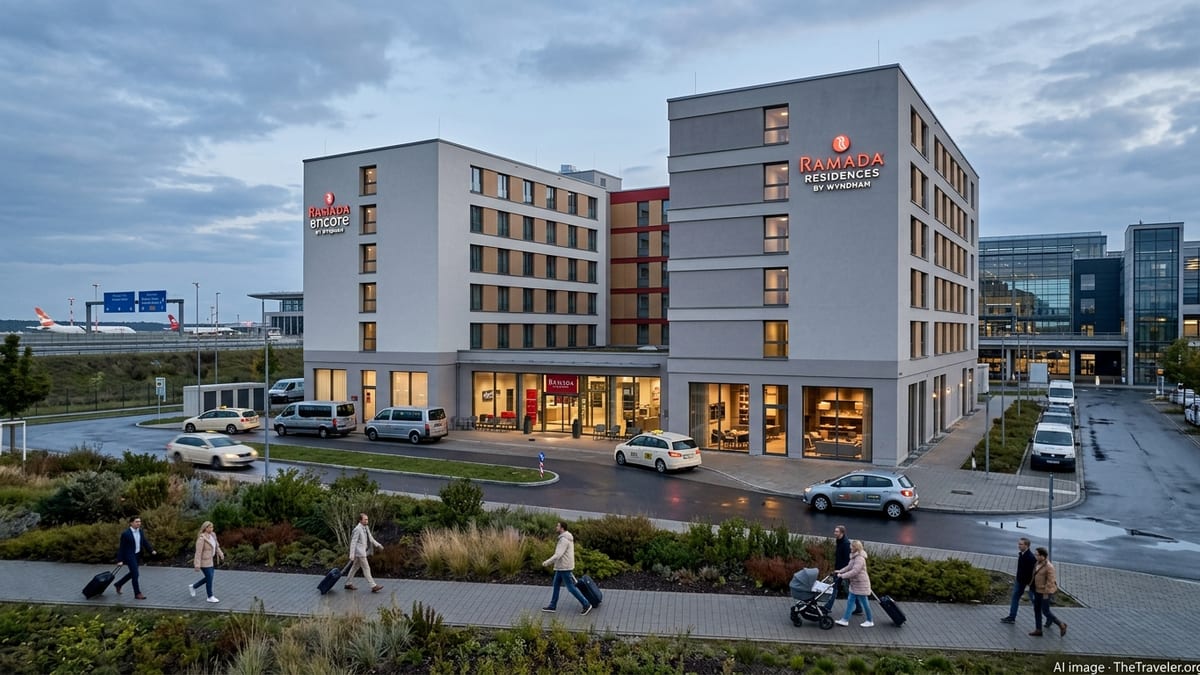
Wyndham Hotels & Resorts is preparing a fresh push into the German capital, with plans for a dual-branded Ramada Residences and Ramada Encore complex in Berlin that targets both transient airport traffic and longer-stay guests.
Get the latest news straight to your inbox!
Strategic Expansion in a High-Growth Market
The planned dual-branded development in Berlin reflects Wyndham’s broader emphasis on Germany as a key European growth market. Publicly available information on the company’s recent development activity shows a strong pipeline across the country, supported by long-standing partnerships with regional operators and developers.
Reports on Berlin’s hotel market indicate that demand has been rebounding strongly since the removal of pandemic-era travel restrictions, with the city benefiting from a mix of leisure tourism, events and business travel. This backdrop has encouraged global brands to lock in new projects near major transport corridors and at Berlin Brandenburg Airport, where capacity is still catching up with passenger growth.
Within this context, a Ramada Encore hotel paired with Ramada Residences-style serviced accommodation allows Wyndham to cover multiple segments under one roof. The concept caters to short-stay flyers, airline crews and conference guests, while also appealing to corporate travelers, project teams and families needing more space and kitchen facilities for extended visits.
The project underlines Wyndham’s strategy of using familiar midscale brands to deepen its presence in established European cities, complementing its separate focus on lifestyle and upscale flags in central urban districts.
Ramada Encore Focuses on Short-Stay and Airport Demand
According to regional development coverage, the Ramada Encore component in Berlin is planned as a modern midscale hotel geared toward efficiency, connectivity and value. Similar new-build projects under the flag typically offer streamlined guestrooms, contemporary public spaces, grab-and-go food options and informal social areas, aimed at guests who spend more time in transit than in their room.
Airport-focused reports highlight a 271-room Ramada Encore by Wyndham Berlin Airport currently under development near Berlin Brandenburg Airport. The property is described as a new-build hotel that will expand the accommodation base around the terminal, serving both early-morning departures and late-night arrivals as the airport’s traffic grows.
Ramada Encore’s brand positioning in Europe has centered on reliable essentials, integrated technology and uncomplicated design. In practice, this usually means standardised room types, strong Wi-Fi, efficient check-in processes and practical amenities such as fitness corners and compact meeting facilities. The Berlin airport project is expected to follow this model, positioning the brand as a functional choice for travelers seeking convenience over luxury.
Industry commentary suggests that as low-cost carriers and long-haul routes expand at Berlin Brandenburg, demand for midscale, internationally branded airport hotels is likely to increase. Wyndham’s decision to anchor part of its Berlin growth around Ramada Encore aligns closely with this trend.
Ramada Residences Targets Extended-Stay and Mixed-Use Demand
In parallel with the hotel component, the Ramada Residences brand is designed to target the growing extended-stay segment across Europe, the Middle East and Africa. Coverage of Wyndham’s regional development plans notes that Ramada Residences projects typically provide apartment-style units with living areas and kitchenettes, positioned between traditional hotels and serviced apartments.
Extended-stay models have gained traction in gateway cities such as Berlin, where tech, creative and infrastructure projects attract professionals on multi-week or multi-month assignments. For this audience, a residential-style product offers more space and autonomy than a standard hotel room, but still benefits from housekeeping, reception and access to shared leisure facilities.
Publicly available development materials for Ramada Residences in Europe describe a mix of studios and multi-bedroom units, often integrated into larger mixed-use complexes that may include retail, wellness or coworking spaces. A dual-branded configuration with Ramada Encore allows both products to share back-of-house functions, parking and amenities such as gyms or lounges, improving overall project economics.
For Berlin, this approach dovetails with wider urban and airport-area regeneration, where planners and investors are seeking flexible accommodation that can pivot between corporate, leisure and relocation demand depending on market conditions.
Berlin’s Hotel Pipeline and Competitive Landscape
Recent travel and hospitality coverage portrays Berlin as one of Europe’s liveliest hotel development markets, with numerous new-build and conversion projects scheduled to open through 2026 and beyond. New lifestyle hotels, design-forward conversions and international brands are spreading from the historic core to outlying districts tied to technology hubs, cultural venues and the airport.
The Ramada Encore by Wyndham Berlin Airport is one of several midscale and upper-midscale projects planned near the terminals, sitting alongside properties flagged under other international brands. This cluster is intended to provide a range of options from budget to full service, with different value propositions for business travelers, tour groups and independent guests.
Observers note that airport submarkets often prove resilient, as they are supported by airline crew contracts, meetings and events, and transit passengers even when city-centre demand fluctuates. By linking a conventional hotel with a residences-style product, Wyndham’s dual-branded concept is structured to capture different slices of that demand within a single development.
At the same time, market analysts caution that Berlin’s overall hotel room supply is expanding, which may keep pricing competitive. In that context, the combination of a global reservations system, a recognized rewards program and dual-brand operating efficiencies may become important differentiators for projects such as the Ramada Residences and Ramada Encore complex.
Partnerships, Pipeline and Wyndham’s Wider EMEA Strategy
Wyndham’s move in Berlin aligns with its wider strategy of partnering with established European hotel owners and developers to accelerate growth. Industry reports highlight the company’s collaborations with regional groups for multiple-brand portfolios, as well as its use of collection and midscale brands to convert existing properties and introduce new flags to secondary markets.
Company disclosures show that Wyndham has been adding new Ramada Encore and Ramada Residences projects across Europe, often in airport, resort or business district locations. In Greece, for example, a Ramada Residences development on the Halkidiki peninsula is slated to open in 2026, underlining the brand’s role in mixed-use, resort-style environments.
Within the broader Europe, Middle East and Africa region, Wyndham continues to emphasise “quality-led” expansion, prioritising markets with strong tourism fundamentals and robust air connectivity. Berlin fits this profile, with its combination of a major international airport, a large domestic catchment area and year-round demand from events, culture and corporate activity.
As the dual-branded Ramada Residences and Ramada Encore project progresses, it is expected to become part of a growing network of Wyndham-branded properties in Germany. For travelers, that translates into more choice in the midscale and extended-stay segments of Berlin’s hotel market, particularly in and around the airport corridor.