

More news on this day
Wyndham Hotels & Resorts is moving to strengthen its presence in the German capital with plans for a dual-branded complex combining Ramada Residences and Ramada Encore in Berlin, reflecting continued investor appetite for flexible, midscale accommodation concepts in Europe’s major gateway cities.
Get the latest news straight to your inbox!
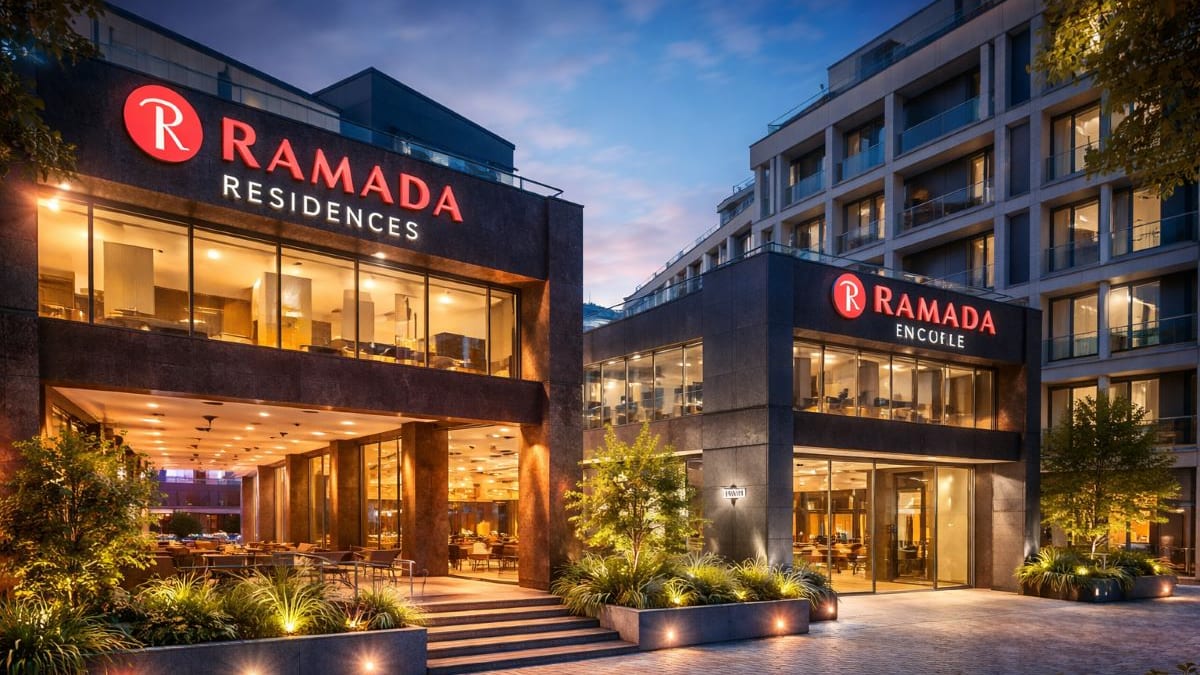
Image by International Hotels News, Hotel Industry & Hospitality News
A Dual-Branded Bet on Berlin’s Evolving Demand
The planned Berlin project brings together Ramada Residences, targeting longer-stay guests seeking apartment-style units, and Ramada Encore, a contemporary select-service hotel brand aimed at short-stay business and leisure travelers. Publicly available information indicates that the two flags will share a single site while operating as distinct products, a configuration that has become more common across Europe’s urban markets.
While specific opening timelines and final key counts have not yet been widely disclosed, sector reporting points to a focus on compact, efficient room types alongside larger serviced units designed for extended stays. This mix is intended to capture both traditional city-break traffic and longer corporate assignments linked to Berlin’s technology, media, and public-sector employers.
The Berlin scheme aligns with broader trends within Wyndham’s international portfolio, where Ramada by Wyndham and Ramada Encore by Wyndham have been used to tap midscale demand in urban locations. Ramada Residences, positioned as an apartment-style extension of the core brand family, adds another layer by catering to guests who prefer kitchen facilities, more generous living space, and residential-style amenities.
For Berlin, which continues to see steady visitor numbers and a diversified economic base, the dual-brand arrangement is expected to support year-round occupancy. The configuration allows the developer and operator to adjust pricing and inventory between the hotel and residential-style units in response to shifts in demand from both domestic and international markets.
Why Dual-Branded Hotels Appeal to Investors
The Berlin Ramada Residences and Ramada Encore complex reflects a wider move toward dual-branded assets in Europe and North America. Market analyses of recent hotel openings show that combining two complementary flags on one site can help optimize land use, generate operational efficiencies, and diversify revenue streams across different guest segments.
By pairing a classic select-service hotel with an extended-stay or serviced residence product, owners can balance shorter leisure and corporate bookings with longer-stay business, relocation, or project-based demand. This often results in higher average length of stay on the residences side, while the hotel component benefits from transient demand linked to events, conferences, and weekend tourism.
Shared back-of-house areas, consolidated management teams, and unified building systems can reduce development and operating costs compared with constructing two entirely separate properties. At the same time, distinct branding on the guest-facing side allows for differentiated pricing, distribution strategies, and loyalty positioning within a single structure.
In markets like Berlin, where development sites in central and well-connected districts are limited, this approach can be particularly attractive. A dual-branded scheme can produce a higher total key count on a constrained plot while still meeting planning expectations around mixed-use and urban design.
Ramada Residences and Ramada Encore: Complementary Roles
Ramada Residences is positioned to serve travelers who require more space and amenities than a standard hotel room, such as corporate guests on medium-term assignments, families, and relocation clients. Units typically incorporate kitchen or kitchenette facilities, separate living and sleeping areas, and laundry access, bringing the product closer to serviced apartments while remaining within the Wyndham ecosystem.
Ramada Encore, by contrast, is designed as a modern, midscale select-service option, emphasizing streamlined rooms, contemporary design, and social lobby spaces. Public brand materials highlight features such as flexible public areas, simple dining options, and technology-forward amenities intended to appeal to practical leisure and business travelers who prioritize location and value.
By combining these two flags in Berlin, Wyndham and its development partners are seeking to address distinct but overlapping guest needs. Business travelers might use Ramada Encore for short visits linked to trade fairs or government meetings, while project teams or relocating employees could base themselves at Ramada Residences for several weeks or months at a time.
This blend can support steadier occupancy than a pure short-stay hotel, particularly outside peak event periods. It also offers cross-selling opportunities within the complex, as guests may transition between the hotel and residence products depending on the length and purpose of their stays.
Implications for Berlin’s Competitive Hotel Landscape
Berlin has seen significant hotel development over the past decade, with a mix of international chains, regional brands, and independent properties entering the market. New projects have increasingly focused on lifestyle, extended-stay, and hybrid concepts that respond to changing traveler expectations around flexibility and informal workspaces.
The arrival of a dual-branded Ramada Residences and Ramada Encore complex adds another international midscale option to this landscape, potentially intensifying competition in districts that already feature multiple branded hotels. However, the extended-stay component may help differentiate the project from standard city hotels that remain more exposed to seasonal and event-driven demand swings.
Reports tracking Berlin’s accommodation sector note that demand has broadened beyond traditional leisure and conference segments to include technology start-ups, creative industries, and long-term professional projects. A property that can flex between nightly and longer-stay business is positioned to benefit from this diversification, particularly if it offers efficient access to both central business districts and major transport hubs.
The development also aligns with the ongoing internationalization of Berlin’s hotel ownership and operating structures. Global groups such as Wyndham are using familiar brand families like Ramada and Ramada Encore to deepen their footprint in continental European capitals, leveraging existing loyalty programs and distribution networks to drive occupancy from a broad base of source markets.
What Travelers Can Expect From the New Complex
Although detailed design specifications for the Berlin dual-branded site have not yet been widely circulated, brand standards and recent openings in other markets provide indications of what guests are likely to encounter. Ramada Encore properties typically feature compact, functional guestrooms, open-plan lobby lounges that double as informal work and social spaces, and a limited but convenient food and beverage offer.
Ramada Residences units are expected to deliver more square footage than standard rooms, with layouts that support longer stays. Guests may find facilities such as in-room kitchenettes, separate seating areas, and access to on-site laundry or fitness amenities, in addition to services associated with a professionally managed hotel environment.
Shared facilities within the complex are likely to include a reception area, fitness spaces, and potentially meeting rooms that can be used by guests of both brands. For travelers enrolled in Wyndham’s loyalty program, the new property will provide additional earning and redemption options in a city that already attracts a steady flow of repeat visitors.
As construction progresses and opening timelines become clearer, Berlin’s latest dual-branded Ramada development will be closely watched by both investors and travelers as a case study in how midscale, mixed-use hospitality concepts perform in one of Europe’s most dynamic urban markets.