

More news on this day
Wyndham Rewards is again marketing a limited time offer of up to a 100% bonus on purchased points, effectively allowing members to acquire points for roughly 0.65 cents each, prompting renewed debate over whether buying in is good value.
Get the latest news straight to your inbox!
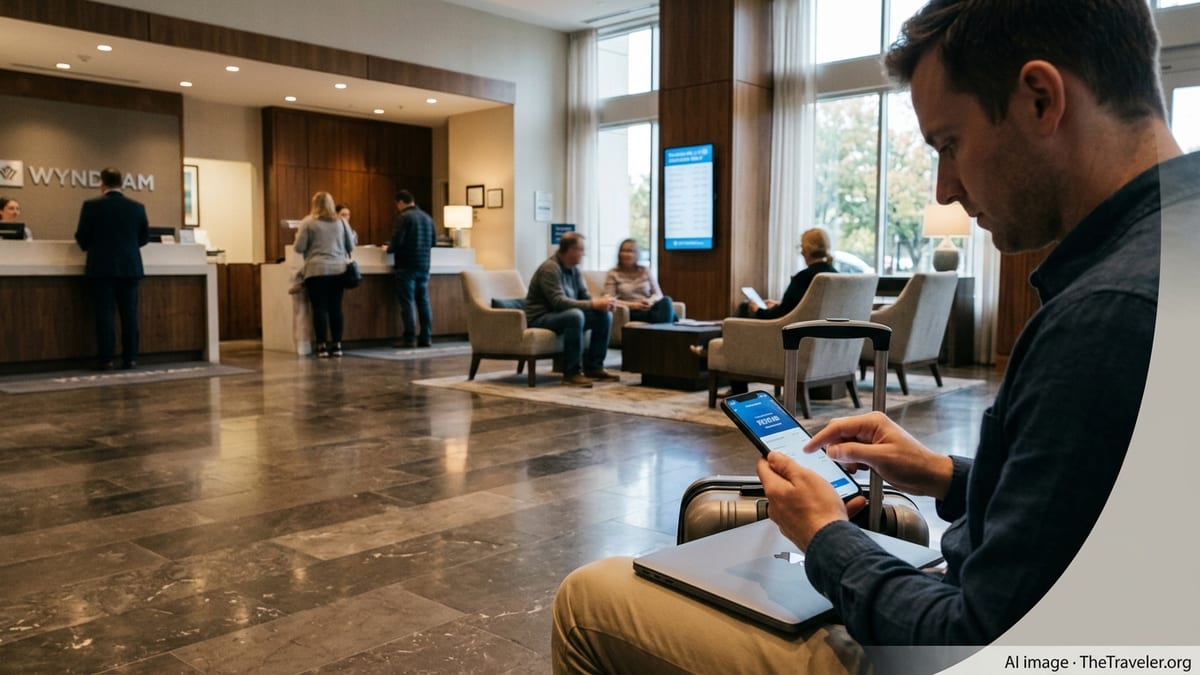
Key Details of the Latest Wyndham Rewards Points Sale
Recent loyalty program coverage indicates that Wyndham Rewards has launched a promotion offering up to a 100% bonus when members buy at least a specified minimum of Wyndham Rewards points. Reports summarizing the offer show that the bonus scales with the number of points purchased, with the maximum 100% bonus triggered from a mid-tier purchase level, often starting around 3,000 points and up. The promotion is scheduled to run into early May 2026, giving members several weeks to decide whether to participate.
With the 100% bonus applied, the effective purchase rate drops to roughly 0.65 cents per point. This calculation assumes Wyndham’s standard retail price of about 1.3 cents per point before the bonus. In other words, buying 20,000 points under the promotion would cost approximately the same as buying 10,000 points at the standard rate, cutting the per-point cost in half.
The offer is processed through Wyndham’s usual points sales platform, and purchases generally post quickly to member accounts. However, publicly available commentary suggests that some promotions may be targeted or may appear differently to individual members, so not every account will always see the same bonus levels or purchase thresholds.
As with most points sales, there are caps on how many points a member can buy in a calendar year. Wyndham typically limits annual purchases, including any promotional bonus, and those limits apply regardless of how attractive the sale price may look on paper.
How 0.65 Cents Per Point Compares With Typical Wyndham Value
The central question for travelers is whether 0.65 cents per Wyndham Rewards point represents a good deal relative to the value those points can deliver on hotel redemptions. Wyndham uses mostly fixed award tiers that often price standard rooms at 7,500, 15,000 or 30,000 points per night. Actual cash rates, however, can vary substantially by market, season and property quality.
Travel blogs and user reports commonly estimate Wyndham points to be worth around 0.7 to 1.0 cent per point in typical scenarios, with higher value possible at peak times or in high-cost destinations. That rough range suggests that buying at 0.65 cents per point can offer a modest discount against average redemption value if the points are used strategically. For instance, a room that sells for 30,000 points and costs about 250 dollars in cash yields a value of roughly 0.83 cents per point, comfortably above the 0.65 cent purchase price.
On the other hand, Wyndham’s cash rates can sometimes be low, especially at economy brands and in off-peak markets. In those situations, redeeming points might return well under 0.65 cents in value. A 15,000 point award at a hotel selling for 90 dollars would equate to only 0.6 cents per point, suggesting that a member who bought points during the promotion could end up paying more than simply booking the room with cash.
Because Wyndham’s portfolio ranges from budget roadside hotels to midscale urban properties and vacation ownership resorts, the spread of redemption values is wide. Travelers considering this sale need to compare award prices with live room rates at the specific hotels they actually plan to book rather than relying on simple averages.
Who Might Benefit Most From Buying Wyndham Points
The promotion appears most compelling for travelers with concrete plans in high-cost markets where award availability is solid. For example, members eyeing popular vacation destinations or busy urban centers during peak dates often face cash rates well above 200 dollars per night. In those cases, redeeming points instead of paying cash can yield significantly more than 0.65 cents per point, especially at properties pricing at 15,000 or 30,000 points per night.
Another potential use case is for topping up an account ahead of a specific redemption. A member who is a few thousand points short of an aspirational stay might find it reasonable to buy a small block of points during the promotion at a reduced cost rather than forgoing the trip or booking a lower category hotel. In such targeted situations, the flexibility and immediacy of purchased points can outweigh purely mathematical considerations.
Wyndham’s partnership opportunities, such as the ability to redeem for vacation rentals through affiliated platforms, have historically offered outsized value in certain markets. Recent changes in partner arrangements and evolving award charts mean that not all previous sweet spots remain, but select high-value uses still exist. Members who understand those pockets of value and can secure bookings during popular periods are more likely to come out ahead when buying points at a discount.
Frequent users of Wyndham’s midscale brands, particularly in regions where hotel prices have risen faster than loyalty award levels, may also see the promotion as a way to lock in future stays at a known per-point cost. That approach essentially pre-purchases hotel nights at a fixed rate, with the caveat that program terms and award pricing can change over time.
Risks, Restrictions and Program Trends to Consider
The potential upside of a 100% bonus on Wyndham points needs to be weighed against several structural risks. Program terms indicate that Wyndham reserves the right to adjust redemption rates, point expiration rules and partnership arrangements. In recent years, loyalty observers and travelers on discussion forums have noted instances of rising award prices at desirable hotels, effectively reducing the value of each point.
There are also limitations on how Wyndham points interact with external partners. For example, publicly available information shows that transfers from Wyndham Rewards to Caesars Rewards are now capped annually, and status earned through some co-branded credit cards no longer matches into Caesars in the way it once did. Those changes reduce a portion of the extended ecosystem value that some members previously derived from large Wyndham balances.
Members should also be aware that purchased points are typically nonrefundable and may be subject to expiration if the account remains inactive for an extended period. While routine earning or redemption activity can reset expiration clocks, travelers who do not stay with Wyndham frequently could find themselves rushing to use points before they lose them.
Finally, the broader trend across hotel loyalty programs has favored dynamic or semi-dynamic pricing and periodic adjustments that can quietly erode point value. Buying points in bulk effectively makes a forward bet on the stability of Wyndham’s award chart and the member’s own travel patterns. For risk-averse travelers or those without firm plans, that bet may not be comfortable even at a headline rate of 0.65 cents per point.
Is the Current 100% Bonus Worth It for Most Travelers?
Whether this promotion is worthwhile ultimately depends on individual circumstances. For members with short-term, high-value redemptions in mind, especially where cash rates are high and award availability is reliable, buying Wyndham Rewards points at an effective 0.65 cents can be a rational, even appealing, strategy. In those scenarios, the math often favors buying just enough points to complete the booking, effectively discounting the stay compared with paying cash.
For casual travelers without a clear plan, the calculation skews the other way. The risk of future devaluation, changing travel patterns and uneven redemption value means that speculative purchases carry real downside. In many markets and at many Wyndham brands, cash rates frequently undercut the per-point cost implied by this sale, leaving buyers with limited or negative savings.
Analysts who track loyalty programs often emphasize that buying hotel points rarely makes sense as an investment on its own. Instead, promotions like this are best used as tactical tools when a specific redemption opportunity is already identified. Against that standard, Wyndham’s 100% bonus and resulting 0.65 cent rate look competitive but not universally compelling.
For now, the offer gives engaged Wyndham Rewards members another lever to pull, particularly as travel demand remains strong and room rates stay elevated in select markets. The value will depend less on the headline bonus and more on how precisely and promptly members put their newly purchased points to work.