

More news on this day
Wyoming has secured 7.5 million dollars in new federal support from the Federal Emergency Management Agency to help cover the costs of recent catastrophic wildfires, a significant injection of disaster-recovery funding that arrives as the state grapples with longer, costlier fire seasons and mounting pressure to harden communities against future blazes.
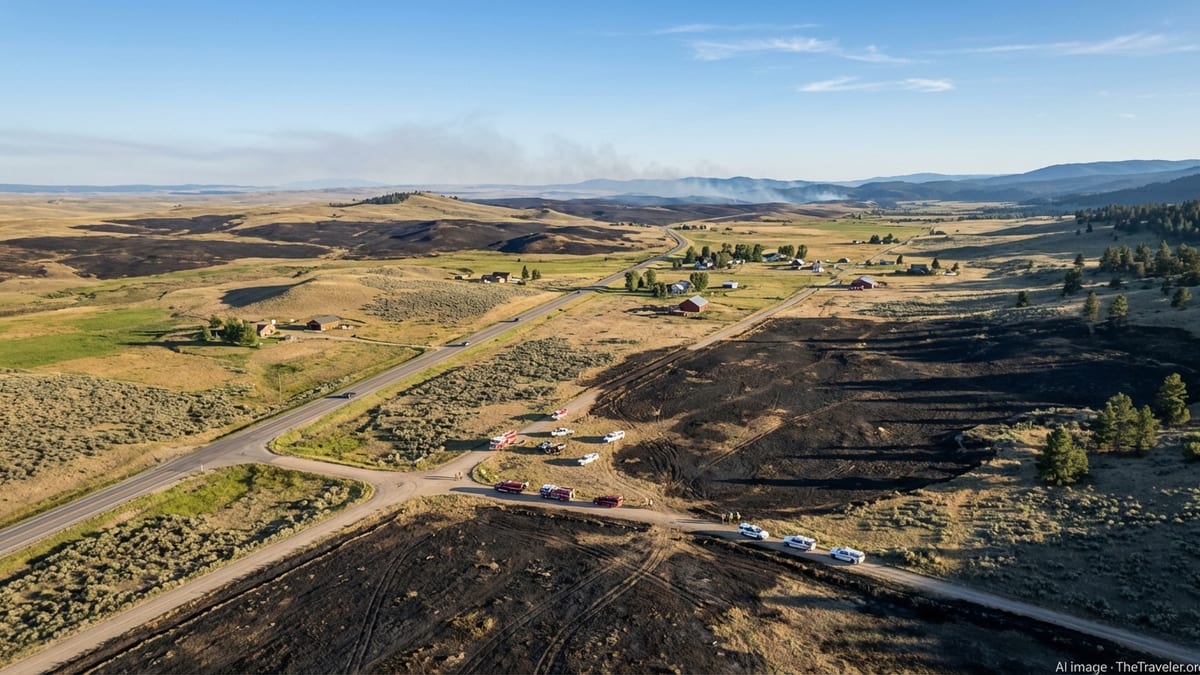
Fresh FEMA Commitment Targets Costly 2025 Wildfire Season
The newly approved 7.5 million dollars in FEMA Public Assistance funding is aimed at reimbursing Wyoming for a series of major wildfires that strained state and local budgets over the last two fire seasons. According to federal and state officials, the support will primarily cover eligible fire suppression activities carried out during several high-cost incidents in Johnson and Campbell counties.
Public Assistance funds are typically used to help state, local and tribal governments pay for debris removal, emergency protective measures and the repair or replacement of public infrastructure damaged in declared disasters. In Wyoming’s case, the bulk of this allocation is tied directly to firefighting operations, including the use of ground crews, aviation assets and extensive evacuation support that helped protect rural communities and ranchlands.
The new award arrives against the backdrop of an intense 2025 season in which the state recorded more than 1,500 wildfires and obligated tens of millions of dollars from its own Emergency Fire Suppression Account. Officials say the FEMA commitment will help backfill some of those obligations and free up state dollars for preparedness and mitigation as another fire season approaches.
State forestry leaders have warned lawmakers that the cost of wildfire response has outpaced historic norms, with more incidents qualifying for emergency accounts and, ultimately, for federal reimbursement. The latest FEMA approval, they say, indicates that federal reviewers have validated Wyoming’s documentation and cost-sharing arrangements for several of the state’s most complex recent fires.
House Draw, Flat Rock and Constitution Fires Drive Funding
Three high-profile incidents underpin most of the new FEMA support: the House Draw Fire in Johnson County and the Flat Rock and Constitution fires in Campbell County. Together, they burned through dry rangeland and timber in 2024 and 2025, triggered evacuations and threatened homes, ranch structures and key transportation corridors in northeastern Wyoming.
Roughly 4.5 million dollars of the federal allocation is dedicated to the House Draw Fire, which prompted a large interagency response when fast-moving flames advanced toward rural properties outside Buffalo. State forestry officials cite that incident as a clear example of how quickly grass and brush fires can escalate in high wind and drought conditions, forcing costly, round-the-clock suppression and structure-protection work.
The remaining three million dollars is split evenly between the Flat Rock and Constitution fires in Campbell County. Those blazes burned in and around oil and gas country, compounding concerns about worker safety, power infrastructure and access roads for energy operations. Fire managers deployed aircraft, heavy equipment and mutual-aid engines from neighboring counties in an effort to box in the flames before they could reach additional facilities.
All three fires triggered eligibility for Wyoming’s Emergency Fire Suppression Account, which covers large incidents that exceed local capacity and budgets. FEMA’s latest decision converts a portion of those state costs into federally reimbursed expenses, easing the financial burden on county governments already contending with road repairs, watershed impacts and post-fire erosion control.
How FEMA Public Assistance Works for Western Wildfires
FEMA’s Public Assistance program has become a financial backbone for wildfire-prone states in the Mountain West, and Wyoming’s new award illustrates how that system functions after the smoke clears. Once a disaster is declared and preliminary damage assessments are complete, state agencies submit project worksheets outlining eligible costs, from retardant drops and handline construction to overtime for local firefighters and law enforcement.
Regional FEMA offices then review the documentation, confirm that the work and costs meet federal criteria and obligate funds on a project-by-project basis. Because those reviews can stretch over months, states often front the money from dedicated suppression accounts, then seek reimbursement later. The 7.5 million dollars now headed to Wyoming represents a batch of such projects that have cleared federal review.
While the program is best known for rebuilding roads, bridges and public utilities after hurricanes and floods, its role has expanded in the West as megafires destroy water systems, burn powerlines and carve ruts into mountain roads. For rural states like Wyoming, where thin tax bases and vast public lands make local recovery especially challenging, Public Assistance funding often determines how quickly damaged areas can reopen to residents, visitors and commercial traffic.
The financial structure typically requires a cost share, with FEMA covering at least 75 percent of eligible expenses and state and local partners picking up the balance. In extraordinary disasters, the federal cost share can be increased, but even at baseline levels, the new Wyoming award translates into millions of state dollars freed up for other fire-related priorities.
Rising Fire Activity Reshapes Wyoming’s Preparedness Strategy
Beyond the immediate fiscal relief, the FEMA allocation underscores how wildfire trends are reshaping Wyoming’s long-term approach to fire management. Recent seasons have brought more ignitions, a higher share of fires burning on state and private lands and a growing number of incidents reaching thresholds for emergency suppression accounts.
State forestry briefings to lawmakers in late 2025 highlighted a notable shift: expanded aviation resources and aggressive initial attack have helped keep many fires smaller, but the price tag for that approach has grown. Helicopters and single engine air tankers have delivered hundreds of thousands of gallons of water and retardant in recent years, a strategy credited with preventing several lightning starts from becoming multi-week campaign fires.
The cost calculus is complex. Investing in aircraft and specialized crews can reduce the likelihood of large-scale disasters that would demand far greater FEMA involvement in the future, yet it also requires steady annual funding from the legislature. The latest federal reimbursement helps validate that strategy by returning some of those expenses to state coffers, but decision-makers remain wary of relying too heavily on funds that are subject to federal budgets and political negotiations.
At the same time, more communities across the state now recognize that firefighting alone cannot keep pace with risk. Counties are updating Community Wildfire Protection Plans, land managers are targeting invasive grasses that supercharge flames, and conservation groups are working with ranchers to restore more resilient rangelands. The FEMA award intersects with these efforts by stabilizing the response side of the ledger while Wyoming channels additional state money into mitigation.
State Lawmakers Advance Professional Wildland Fire Crews
Coinciding with the FEMA announcement, Wyoming lawmakers have advanced a plan to fund the state’s first ground-based professional wildland firefighting teams. A bill moving through the legislature would dedicate more than five million dollars to establish two full-time modules, one based in the western half of the state and one in the east, with potential locations including communities like Lander and Douglas.
Supporters describe the proposal as a natural evolution for a state that has long relied heavily on seasonal crews, volunteers and mutual-aid partners to staff wildfire incidents. Recent fire seasons, combined with the financial strain documented in state suppression accounts, have convinced many legislators that dedicated, year-round teams can both improve safety and reduce long-term costs by strengthening initial attack.
The FEMA funding bolsters the political case for that investment by demonstrating that federal partners will continue to share the financial burden when fires cross critical thresholds. Legislators who once questioned the sustainability of expanding the state’s firefighting footprint now point to federal reimbursements as a key component of a broader, multi-year strategy to stabilize wildfire budgeting.
For rural communities, the emergence of permanent wildland crews could also bring side benefits, from local employment and training opportunities to more consistent fuel-reduction and prescribed fire work in the off-season. Combined with federal assistance for past disasters, state leaders argue, these initiatives amount to a more professional, predictable wildfire response system than Wyoming has ever had.
Tourism, Travel and the Long Tail of Wildfire Recovery
Wildfires in Wyoming are not just a public safety and budget issue; they reverberate through tourism, a cornerstone of the state’s economy. When smoke blankets scenic byways or flames approach popular trailheads, visitors often reroute travel plans, and gateway towns near destinations like the Bighorn Mountains and Yellowstone region can see abrupt downturns in lodging and restaurant revenue.
FEMA’s support for suppression and infrastructure repair plays an indirect but critical role in shortening those disruptions. Faster reimbursement helps counties reopen damaged roads, restore signage and clear debris from recreation sites, all key steps in restoring visitor confidence. For travelers following fire news from afar, updates about contained perimeters, reopened campgrounds and safe access to public lands often shape decisions about upcoming trips.
In recent years, many Wyoming communities have developed more sophisticated messaging around wildfire, blending real-time safety information with clear guidance on alternative routes and experiences when certain areas are affected. Federal recovery dollars help underpin these efforts by ensuring that emergency managers and tourism boards are not competing for the same limited local funds when it comes to communication and marketing.
As another fire season nears, tourism officials are watching closely to see how quickly landscapes recover in areas impacted by the House Draw, Flat Rock and Constitution fires. While charred hillsides can persist for years, strategic rehabilitation and re-seeding, supported by a mix of state and federal funding, can speed the return of healthier vegetation and reduce erosion that might threaten highways and rivers popular with anglers and boaters.
Mitigation, Restoration and the Shift to Long-Term Resilience
Wildfire recovery in Wyoming increasingly extends far beyond extinguishing flames and repairing immediate damage. The state has committed nearly 50 million dollars in legislatively backed grants to support large-scale restoration and invasive grass control on rangelands, an effort designed to make future fires less intense and more manageable for firefighters on the ground.
These state-funded restoration grants, combined with targeted federal programs for mitigation and community planning, represent a shift toward long-term resilience. Projects include reseeding burned areas with native grasses, improving grazing management to reduce fine fuels and installing strategically placed fuel breaks near communities that sit in the wildland urban interface.
Although the latest FEMA award is focused on response and suppression, officials say it frees up room in Wyoming’s budget to pursue more of this proactive work. Every acre restored to a healthier condition can, in theory, reduce the cost of the next fire, lessening the need for large emergency deployments and future reimbursement requests.
For landowners and local conservation districts, the combination of state grants and the signal of continued federal partnership is encouraging. Many projects require multi-year commitments to see ecological benefits, and predictable funding streams make it easier to line up contractors, equipment and community volunteers who will see those efforts through.
Federal Disaster Policy in Flux as Demands Grow
Wyoming’s timely FEMA reimbursement also arrives amid broader national debates over the future of federal disaster policy. A growing backlog of disaster assistance requests in Washington and discussions about restructuring FEMA’s workforce have raised questions about how quickly and generously future aid will flow to states facing fires, floods and storms.
Emergency management experts note that the frequency and cost of climate-driven disasters are testing the limits of traditional funding models, putting pressure on both Congress and federal agencies to prioritize, streamline and, in some cases, tighten eligibility rules. For smaller states with large rural footprints, any slowdown in federal reimbursements can translate immediately into delayed road repairs, deferred equipment upgrades and constrained local services.
Against that backdrop, Wyoming’s 7.5 million dollar award is viewed by many state officials as both a financial lifeline and a reminder that meticulous documentation and strong interagency coordination remain vital. Each approved project reflects months of work by county emergency managers, state foresters and federal reviewers parsing invoices, field reports and maps.
Looking ahead, Wyoming leaders say they will continue to seek a more predictable, diversified wildfire funding strategy that blends state appropriations, local investments, mitigation grants and timely federal assistance. The latest FEMA support, they argue, is a necessary step in that direction, helping the state close the books on past disasters while it races to prepare for the next season’s sparks.