

More news on this day
A recently installed piece of electrical equipment in Xcel Energy’s system has been identified as the cause of a sweeping power outage at Denver International Airport that trapped passengers in elevators and disrupted hundreds of flights across one of the nation’s busiest hubs.
Get the latest news straight to your inbox!
New Component Pinpointed After Systemwide Failure
According to published coverage from Denver-area broadcasters, Xcel Energy’s preliminary review indicates that a single malfunctioning component in newly installed equipment triggered the March 18 outage at Denver International Airport. The failure reportedly cascaded through part of the utility’s infrastructure serving the airport, cutting power to large sections of the terminal complex.
Publicly available information describes the device as part of an upgrade intended to improve reliability and capacity for the fast-growing airport. Instead, the fault caused a rare complete loss of service to key airport systems, from lighting and escalators to airline check-in counters.
The incident occurred during the busy morning period, when passenger traffic was building and flights were preparing for departure. The timing meant that the outage’s operational impact was felt almost immediately across ticketing, security, and gate areas.
Passengers Trapped and Flights Grounded
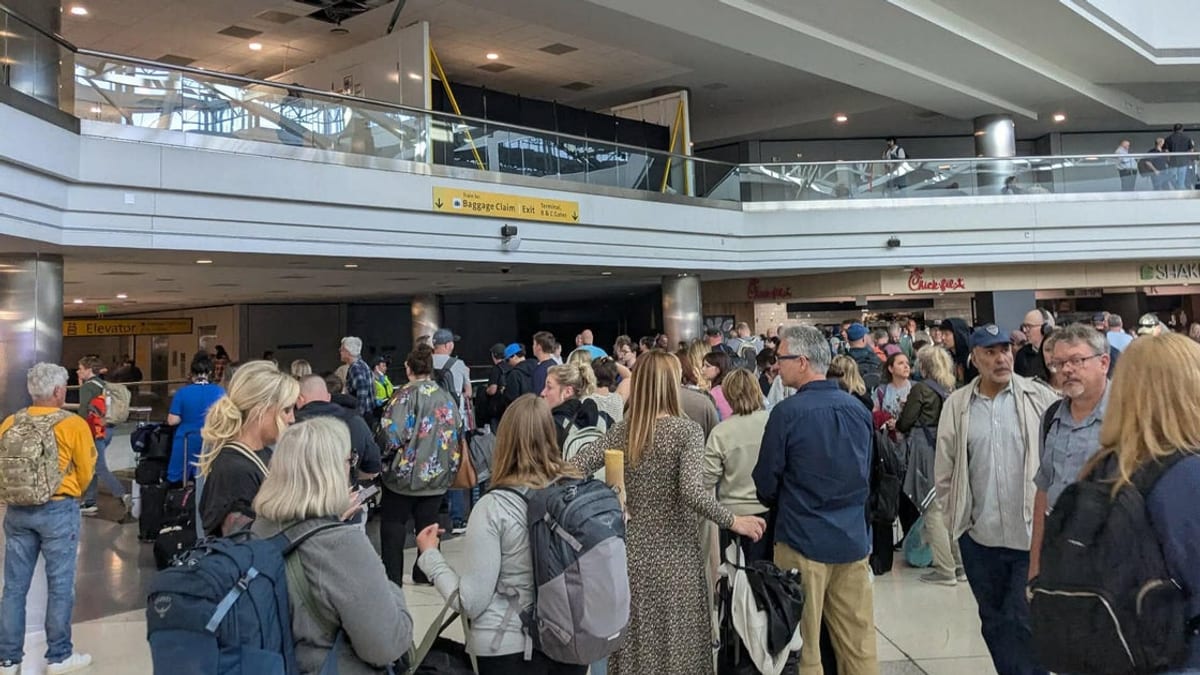
Local news reports describe scenes of passengers stuck in darkened concourses and immobilized inside elevators as the lights went out. With backup power limited to critical life-safety systems, much of the terminal’s normal activity reportedly came to an abrupt halt.
The Federal Aviation Administration instituted a temporary ground stop for flights bound for Denver, while departures and arrivals already on the ground were severely constrained. Across several hours, the outage and its ripple effects contributed to delays or disruptions for nearly 500 flights, according to tallies in national aviation tracking data cited by multiple outlets.
Travelers reported long lines, sparse public address information, and uncertainty about rebooking options as airlines worked through the sudden gridlock. Some flights were ultimately canceled, while many others departed hours behind schedule as crews and aircraft fell out of position.
Airport Power Setup Under Fresh Scrutiny
Denver International Airport receives the bulk of its electricity from Xcel Energy under a long-term franchise and operating framework, with the airport’s own planning documents emphasizing redundancy and reliability for energy supply. Those documents outline a dual-feed electric configuration designed so that power can be maintained even if one source experiences a problem.
Discussion on public forums and in regional coverage has highlighted that, at the time of the outage, portions of the system supplying the airport were already undergoing work, limiting redundancy. When the new equipment malfunctioned, there was no fully available backup source to pick up the load, resulting in a wider loss of power than typically expected at a major airport.
The event has raised questions about how resilience measures functioned in practice on the day of the outage, and whether additional safeguards, such as more extensive on-site generation or energy storage, could have softened the impact on passengers and flight operations.
Xcel Faces Broader Reliability Questions in Colorado
The Denver airport failure arrives amid heightened public attention on Xcel Energy’s grid performance across Colorado. In recent months, communities along the Front Range have experienced a mix of planned safety shutoffs and unplanned outages tied to high winds, wildfire risk, and equipment issues, according to regional news coverage and local government reports.
Regulatory filings and news analysis show that Xcel is advancing multi-billion-dollar plans to harden its grid, expand transmission infrastructure, and refine the use of public safety power shutoffs. Critics in civic hearings and public comment periods have argued that customers continue to bear the cost and inconvenience of outages, while the utility points to extreme weather, wildfire liability, and aging infrastructure as key challenges.
The Denver International Airport outage, caused by a fault in brand-new hardware rather than aging lines, adds a new dimension to that debate. It underscores that even modernization projects aimed at boosting reliability can introduce new points of failure if testing, integration, or redundancy fall short.
What Comes Next for Travelers and the Airport
For travelers using Denver International Airport, the immediate concern is whether similar disruptions could recur as Xcel and the airport continue upgrading the system. Publicly available statements indicate that Xcel has taken the problematic component out of service and is conducting a deeper technical review of the failure and its cascading effects.
Aviation and utility observers expect that the incident will feed into ongoing discussions about critical-infrastructure resilience in Colorado, especially for facilities that serve as national transportation gateways. Analysts note that airports increasingly rely on complex, digitally managed power systems, making rigorous testing and layered backups essential to avoid large-scale operational breakdowns.
In the near term, Denver International Airport is likely to face continued questions from airlines, passengers, and regional leaders about contingency planning and communication during major outages. For now, published coverage indicates that operations at the airport have largely returned to normal, even as scrutiny of what happened in March and how to prevent a repeat remains intense.