

More news on this day
Nigeria’s fast-rising premium carrier XEJet has sealed a new aviation partnership with the women’s national basketball team, D’Tigress, a move industry watchers say could translate on court success in France into wider gains for Nigerian hospitality and inbound tourism to Europe through 2026.
Get the latest news straight to your inbox!
A Strategic Aviation Win Before France 2026
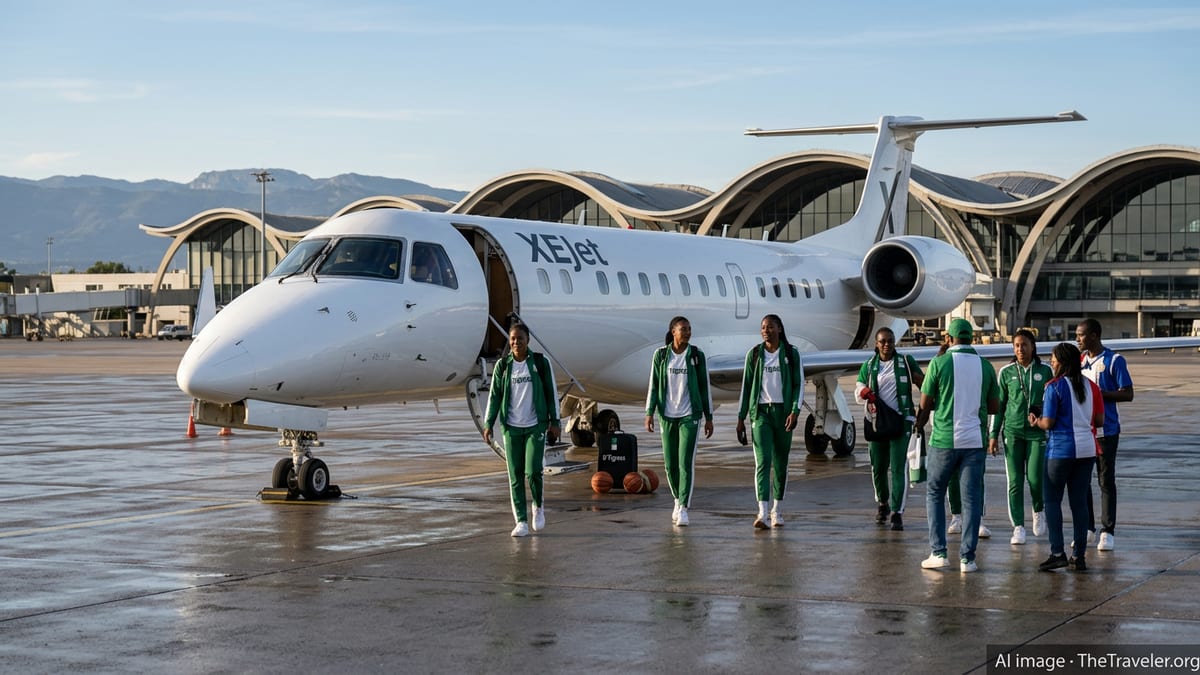
The Nigeria Basketball Federation recently announced XEJet as the official aviation partner of D’Tigress, the country’s senior women’s national basketball team, ahead of the FIBA Women’s Basketball World Cup qualifying tournament in Lyon, France, from March 11 to 17, 2026. The agreement will see XEJet provide tailored air travel and logistics support as the reigning African champions compete for a place on the game’s biggest stage.
The tie-up comes at a moment when Nigerian aviation is entering a new growth phase, with homegrown carriers pushing into premium services and regional partnerships. For XEJet, which operates an all-business-class model on key domestic routes and supports emerging brands such as Enugu Air, the D’Tigress partnership is a high-visibility platform that aligns the airline with one of Nigeria’s most successful international teams.
Sports marketing specialists note that aviation deals anchored to national teams can generate outsized media exposure in host markets, especially when the competitions are held in tourism powerhouses such as France. With Nigerian fans, diaspora communities and neutral spectators converging on Lyon, the airline’s brand will travel alongside a team already known for its dominance in African basketball and resilient performances on the global stage.
In practical terms, dedicated lift for D’Tigress and officials also means more predictable schedules and potentially chartered segments between Nigeria and European gateways, laying the groundwork for packages that combine sport, travel and curated hospitality experiences for supporters.
Nigerian Hospitality Brands Eye France-Focused Demand
The tie-in with D’Tigress comes as Nigerian hotels, tour operators and food brands increasingly look beyond traditional business travel to attract sports fans, the diaspora and curiosity-driven leisure visitors. XEJet’s positioning as a premium, hospitality-forward carrier allows these players to plug directly into new traffic flows generated by tournaments, training camps and exhibition games in France through 2026.
XEJet has already differentiated itself by emphasizing a boutique onboard product, including all-business-class seating on certain domestic sectors and menus that highlight Nigerian ingredients and culinary traditions. Aviation analysts argue that such details do more than lift the in-flight experience: they create a narrative around Nigerian hospitality that can be extended into hotel partnerships, airport lounge concepts and city-based experiences in Lagos, Abuja and regional hubs.
As the airline scales up its fleet and network, tourism boards and private-sector operators are exploring joint offerings that package XEJet flights with stays in Nigerian beach resorts, urban art districts and eco-lodges, targeting French and broader European visitors introduced to the country through basketball. The timing is favorable, with more Nigerians traveling outbound for leisure and a growing appetite in France for Afrocentric culture, fashion and food.
Industry observers expect to see cross-promotions built around D’Tigress star players, featuring them in campaigns that showcase Nigerian destinations and hospitality brands to French audiences during and after the Lyon qualifiers. Such campaigns could help shift perceptions of Nigeria from a primarily business and oil-focused market to a more rounded leisure and culture destination.
France’s Tourism Machine Meets African Sporting Energy
On the French side, the partnership feeds into a tourism ecosystem adept at turning major events into multi-city travel itineraries. Lyon, a gastronomic capital with strong rail links, is positioning itself as a gateway for fans to explore broader regions of France, from the Alps to Provence and the Riviera, during the 2026 basketball window.
Tourism strategists in France see African national teams, and particularly high-performing sides like D’Tigress, as a bridge to new visitor segments. Nigerian supporters and broader African basketball fans often travel in groups, stay longer than event-only tourists and seek authentic local experiences in food, culture and shopping. Airlines that can help bundle these elements, or at least coordinate seamless connections, are increasingly attractive partners.
As XEJet strengthens its operational capabilities, including maintenance and flight support investments at Nnamdi Azikiwe International Airport in Abuja, it is better placed to coordinate with European carriers and tour operators. This could take the form of through-ticketing, charter arrangements or cooperative marketing that highlights simplified journeys from Nigerian cities to French hosts beyond the main hubs of Paris and Marseille.
French hoteliers and destination managers, for their part, are sharpening their pitch to West African travelers by expanding halal options, incorporating African and Caribbean dishes into breakfast and dinner menus, and offering flexible group booking terms. The visibility generated by D’Tigress, amplified by XEJet’s premium positioning, is expected to accelerate these adaptations through 2026.
Premium Nigerian Aviation as a Regional Connector
The D’Tigress agreement also underscores XEJet’s ambition to be more than a point-to-point domestic operator. Beyond its all-business-class services between Lagos and Abuja, the airline has been involved in operating aircraft for Enugu Air and supporting regional carriers such as Air Sierra Leone. These arrangements effectively extend XEJet’s reach across West Africa, creating a wider catchment for potential traffic to European events.
By investing in maintenance, repair and overhaul facilities and a flight assist center in Abuja, XEJet is positioning Nigeria as a technical and operational hub. This infrastructure can underpin more reliable schedules, faster turnaround times and enhanced safety oversight, all critical factors for winning the confidence of both regulators and high-yield travelers heading to long-haul connections in Europe.
For tourism, the implication is a more resilient pipeline of visitors moving through Nigerian gateways en route to and from France. Travelers from neighboring countries could find it more convenient to route via Lagos, Abuja or Enugu under XEJet’s umbrella partnerships, combining short stays in Nigeria with onward journeys to French cities hosting sports, cultural or trade events.
Analysts say that if XEJet can sustain its premium service standards and expand capacity without diluting its brand, it may emerge as a regional connector that links African basketball, Nigerian hospitality and French tourism in a mutually reinforcing loop over the next several seasons.
From Court to Cabin: Storytelling That Sells Destinations
At the heart of the XEJet and D’Tigress collaboration is storytelling. The team’s narrative of perseverance and triumph resonates with younger travelers and the Nigerian diaspora, while the airline’s promise of comfort and local flavor taps into global demand for more meaningful, place-specific travel experiences.
Marketing experts expect content built around behind-the-scenes travel moments, from team departures at Lagos and Abuja terminals to arrivals in Lyon, to feature prominently on social and traditional media. Such coverage not only elevates XEJet’s profile but also subtly promotes Nigerian landscapes, airport infrastructure, fashions and culinary culture to audiences in France and beyond.
Over time, that visibility could translate into tangible tourism flows, as French fans drawn in by the energy around D’Tigress look to explore Nigeria for themselves, and Nigerian travelers take advantage of improving connectivity and tailored packages to experience French cities beyond the usual Paris itineraries. With the partnership now in place and the Lyon qualifiers looming, both countries’ tourism sectors are watching closely to see just how far a single aviation-sport alliance can carry them through 2026.