

More news on this day
Xiamen Airlines has launched a new daily service between Nanjing and Kuala Lumpur, a move that further strengthens air connectivity between China and Southeast Asia as regional travel demand continues to surge.
Get the latest news straight to your inbox!
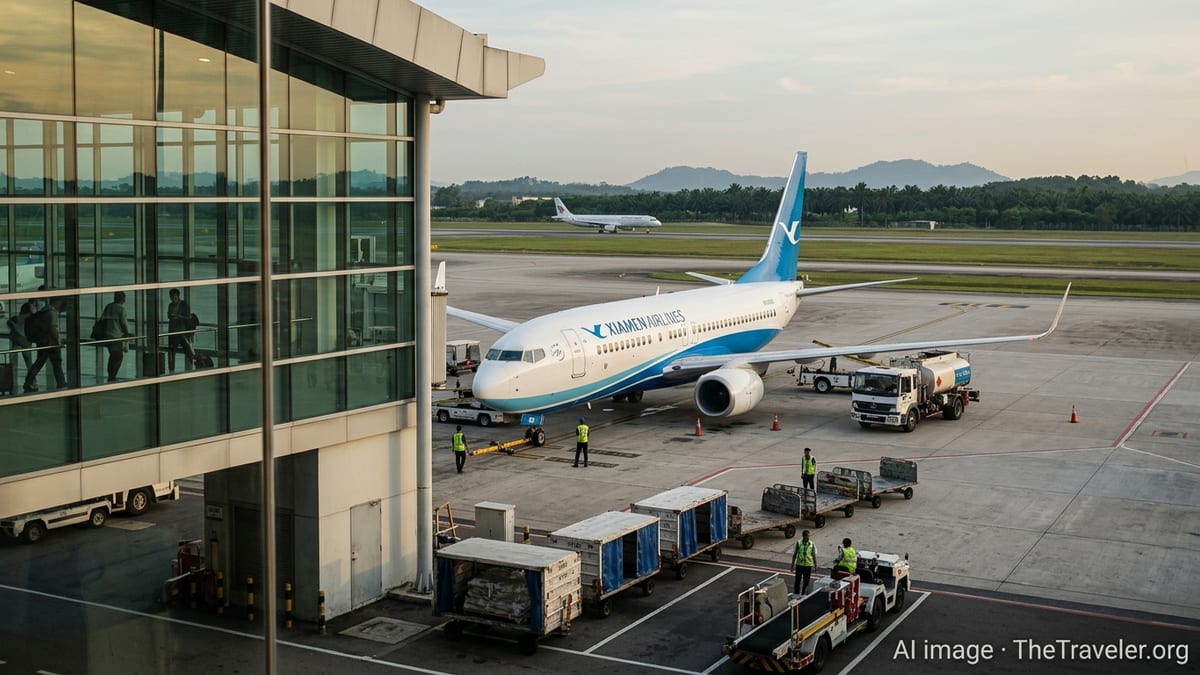
New Daily Link Between Nanjing and Kuala Lumpur
The new Nanjing–Kuala Lumpur route establishes a direct link between one of eastern China’s most important cultural and industrial hubs and Malaysia’s capital, a key aviation gateway for Southeast Asia. Publicly available schedule data indicates that the service is being operated once daily in each direction, offering year-round connectivity for both business and leisure travelers.
Flight timings are designed to provide convenient overnight or early-morning options to facilitate onward connections at Kuala Lumpur International Airport and Nanjing Lukou International Airport. The daily pattern reduces gaps in service and offers greater flexibility compared with less frequent operations, which can be a deciding factor for both corporate travel planners and independent tourists.
The launch comes as airlines across Asia continue rebuilding and expanding their international networks. Recent coverage of Malaysia’s aviation sector highlights a steady return of Chinese carriers to Kuala Lumpur, with new and resumed routes from multiple secondary cities in China reflecting a broader push to tap resurgent outbound demand.
Xiamen Airlines has been steadily increasing its presence in Malaysia in line with this trend. Published information on the carrier’s network shows existing services linking Kuala Lumpur with cities such as Xiamen and other key points in China, and the Nanjing addition further diversifies the mix of origin markets feeding into Malaysia’s tourism economy.
Supporting China–Southeast Asia Travel Growth
The new route arrives amid a broader travel boom between China and Southeast Asia. Tourism and aviation data released over the past year point to strong growth in Chinese outbound travel to regional destinations, helped by relaxed visa policies, rising disposable incomes and competitive airfares. Malaysia, Thailand, Singapore and other nearby markets have reported sustained recovery in visitor arrivals linked to increasing flight capacity from Chinese cities.
Kuala Lumpur’s role as a regional hub means that additional flights from China tend to have effects beyond Malaysia’s borders. Passengers arriving on the Nanjing service can connect onward to destinations across Southeast Asia and the wider Asia-Pacific region, taking advantage of dense networks operated by Malaysian and other regional carriers. This multiplies the impact of a single city-pair by feeding travelers into a web of secondary and tertiary routes.
Industry analysis suggests that Chinese airlines are paying particular attention to so-called tier-two cities such as Nanjing, which combine substantial local populations with growing middle-class demand for international travel. By linking these cities directly to Southeast Asian hubs, carriers can bypass congestion at larger coastal gateways and offer passengers shorter total journey times.
Observers also note that Southeast Asia’s appeal to Chinese travelers is underpinned by a mix of factors, including relatively short flight durations, diverse cultural and culinary attractions, and a wide range of accommodation choices. The addition of daily Nanjing–Kuala Lumpur flights fits into this pattern by offering another straightforward option for travelers seeking warm-weather city breaks, shopping, and nature-focused excursions.
Economic and Tourism Benefits for Nanjing and Kuala Lumpur
The route is expected to provide tangible benefits for both Nanjing and Kuala Lumpur. From Nanjing’s perspective, enhanced air access to Malaysia supports local export-oriented industries, education links, and tourism. The city is a major base for manufacturing, technology, and research, and easier connectivity can facilitate business travel, investor visits, and university exchanges with Malaysian partners.
On the Malaysian side, increased capacity from eastern China aligns with broader efforts to attract higher-spending visitors and expand beyond the country’s traditional source markets. Tourism Malaysia’s recent media releases on new Chinese routes to Kuala Lumpur have emphasized the importance of diversifying entry points and expanding connectivity to second-tier Chinese cities as a way to spread tourism benefits more evenly across the country.
Hotel operators, retail outlets and attractions in Kuala Lumpur are expected to benefit from a steadier flow of arrivals throughout the year thanks to a daily schedule. In addition, the route may support Malaysia’s role as a meeting and incentive destination, as event organizers often favor cities with frequent, predictable air links from participants’ home markets.
Improved connectivity also has potential spillover effects into other Malaysian destinations. Domestic and regional connections from Kuala Lumpur to beach, island and eco-tourism locations allow visitors from Nanjing to combine an urban stay with nature or resort experiences, lengthening their trips and increasing overall tourism receipts.
Strengthening Xiamen Airlines’ Regional Network
The Nanjing–Kuala Lumpur launch reinforces Xiamen Airlines’ position as an important player in the China–Southeast Asia market. According to publicly available network information, the carrier has steadily added or resumed international routes as travel restrictions have eased, with Southeast Asia featuring prominently among its priorities.
Industry publications tracking new services into Kuala Lumpur highlight multiple recent developments from Chinese airlines, including new routes from various provincial capitals and coastal cities. Within this landscape, Xiamen Airlines’ daily Nanjing operation contributes to a denser web of Chinese services feeding into Malaysia’s main international gateway, complementing routes offered by both Chinese competitors and local Malaysian carriers.
A consistent daily schedule can also support connectivity within Xiamen Airlines’ broader domestic network. Travelers from other cities in Jiangsu province and neighboring regions may be able to reach Nanjing Lukou and transfer to the Kuala Lumpur flight on a single ticket, potentially simplifying multi-leg itineraries that previously required connections in more distant hubs.
As competition intensifies on China–Southeast Asia routes, airlines are expected to differentiate through schedule reliability, onboard services and partnership alignment. Xiamen Airlines’ membership in a major global alliance provides additional opportunities for interline and codeshare connections, which may further raise the profile of the Nanjing–Kuala Lumpur link among international travelers.
Outlook for China–Malaysia Air Connectivity
The introduction of daily Nanjing–Kuala Lumpur flights underscores the continued momentum behind China–Malaysia air connectivity. Recent route launches from other Chinese cities to Kuala Lumpur, as documented in government and industry announcements, suggest that carriers see sustained demand ahead of major travel peaks and holiday periods.
Analysts expect airlines to keep monitoring load factors and booking patterns on these newer services, with the possibility of equipment upgrades or schedule adjustments if demand continues to grow. In some cases, successful routes from secondary Chinese cities have paved the way for additional frequencies, larger aircraft or new links to other Southeast Asian destinations.
For travelers, the expanding route map translates into a wider range of departure cities, more flexible itineraries and, in many cases, more competitive fares. For Malaysia and its neighbors, increased connectivity from China represents an opportunity to capture a greater share of outbound spending while encouraging two-way flows that include more Southeast Asian visitors heading to Chinese cities.
The new Xiamen Airlines service between Nanjing and Kuala Lumpur is one more sign that the China–Southeast Asia travel corridor is entering a new phase of growth, with airlines betting that strong demand for cross-border tourism, business and study will continue to reshape the region’s aviation landscape.