

More news on this day
The XM Limassol Marathon is rapidly evolving into one of Cyprus’ most powerful tourism assets, attracting record-breaking participation, international media attention and year-round investment in sports-focused travel to the Mediterranean island.
Get the latest news straight to your inbox!
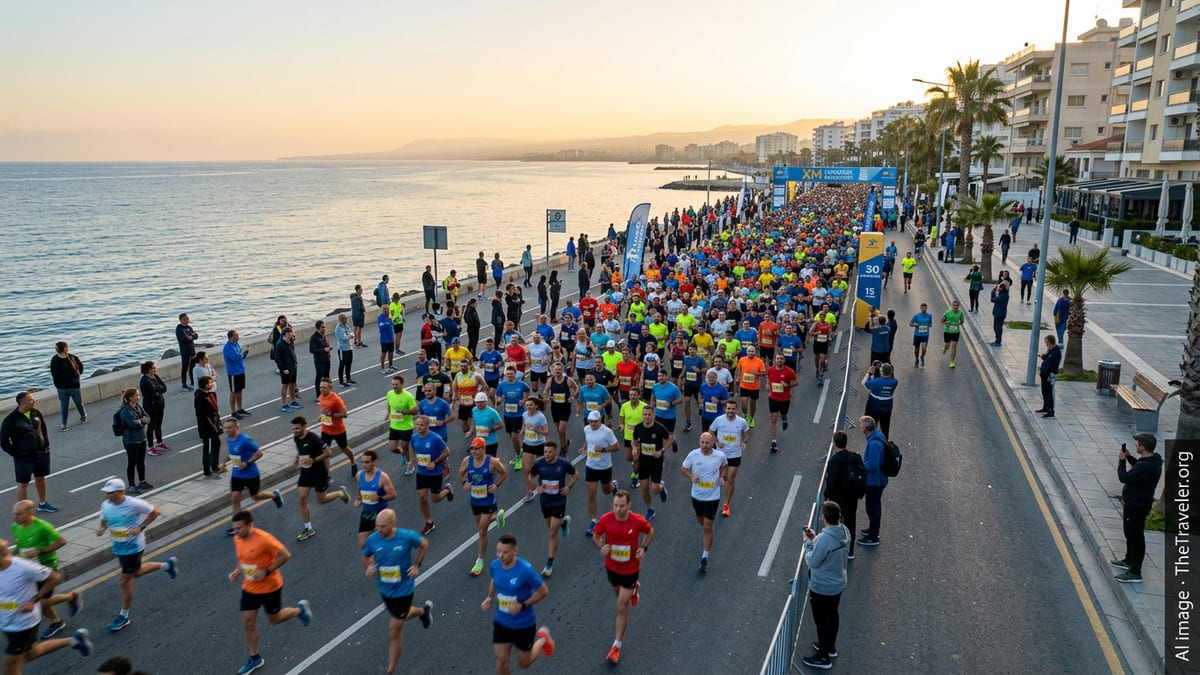
Record Participation Strengthens Cyprus’ Sports Tourism Ambitions
Recent editions of the Limassol Marathon have posted record participation, underlining how mass running events are reshaping Cyprus’ tourism mix. Publicly available information indicates that more than 17,000 runners took part in the 2024 and 2025 race weekends, with several thousand participants travelling from abroad specifically to compete along Limassol’s seafront. Reports indicate the event has grown from under 100 runners in its early years to one of the largest road races in the Eastern Mediterranean.
The rebranded XM Limassol Marathon, reflecting the title sponsorship of global broker XM in recent seasons, is leveraging this momentum to position Limassol as a dedicated running and fitness destination. Organisers promote a programme that includes a full marathon, half marathon and shorter distance races, creating opportunities for elite athletes, club runners and leisure visitors alike. The broad field helps fill flights and hotel rooms, while also bringing families and accompanying visitors who extend stays beyond race day.
Cyprus tourism data in recent years shows arrivals surpassing pre-2019 levels, and tourism officials have repeatedly highlighted sports tourism as a resilient, higher-value segment. Marathon weekends contribute to this strategy by drawing visitors outside peak summer months, supporting airlines, accommodation providers and local businesses at times when traditional beach tourism can be quieter.
In parallel, other major running events such as the Radisson Blu Larnaka International Marathon and the TUI Cyprus Marathon in Paphos are reporting their own participation records. This wider race calendar strengthens Cyprus’ overall visibility in the global running community and reinforces the XM Limassol Marathon’s role as a flagship event within a growing national sports tourism ecosystem.
Showcasing Limassol’s Coastal Scenery and Urban Regeneration
The marathon route along Limassol’s waterfront gives international visitors a curated introduction to the city’s changing urban landscape. Public information about the course highlights long stretches on the coastal road, with views over the Mediterranean, palm-lined promenades and modern public spaces. Runners pass landmarks such as the upgraded seafront park, sections near Limassol Marina and resort-lined avenues that illustrate the city’s development as a contemporary tourism and business hub.
For many visiting athletes, the race is not only a sporting challenge but also a first encounter with Cyprus’ natural assets. The combination of sea views, mild spring weather and relatively flat terrain positions Limassol as an appealing alternative to more crowded European marathon destinations. Tourism promotion materials increasingly use imagery from the marathon to communicate a lifestyle narrative of outdoor fitness, coastal living and accessible nature.
Urban regeneration projects along the Limassol seafront have also made the city more event-friendly. Expanded pedestrian zones, upgraded pavements and landscaped public spaces provide room for start and finish areas, spectator zones and accompanying activities. Reports on local planning emphasise that such infrastructure is intended for everyday use by residents but becomes a high-impact stage set when thousands of runners arrive each March.
The visibility generated by the XM Limassol Marathon extends inland as well. International participants often combine the race with excursions to the Troodos Mountains, wine villages and archaeological sites, deepening the link between sports tourism and cultural or nature-based experiences across Cyprus.
World-Class Infrastructure Underpins Event Growth
The growth of the XM Limassol Marathon has been supported by steady investment in sporting and transport infrastructure across the city and wider region. Limassol now hosts modern venues such as the Alphamega Stadium and the renovated Spyros Kyprianou Athletic Center, while the Tsirio Athletic Center continues to stage high-profile track and field meetings. Together with the rejuvenated seafront, these facilities position Limassol as a credible host for large-scale international sport events.
Road upgrades along the coastal corridor and improved connectivity to the island’s two international airports make it easier for visiting runners to access the city. Airline schedules in recent seasons have reflected growing demand for spring travel to Cyprus, and travel industry reports suggest that sports tourism, including marathons and cycling events, is helping to smooth seasonality in arrivals.
Within the marathon itself, organisers emphasise professional standards in timing, course management and medical support, aligning the event with other established European races. Corporate partners from sectors such as energy, financial services and hospitality have supported dedicated races, hydration stations and fan zones, further enhancing the participant experience and underscoring the event’s integration into the local business community.
Limassol’s role as a regional business and shipping hub also supports the race’s corporate appeal. Thousands of employees from local and international companies based in the city reportedly take part in associated corporate and charity runs, turning the marathon weekend into a large-scale team-building and networking opportunity that blends sport and commerce.
Economic Ripple Effects for Local Businesses and Communities
Studies of similar mass participation events suggest significant economic benefits for host cities, and available analysis of the Limassol Marathon points to comparable patterns in Cyprus. Visiting runners spend on accommodation, dining, transport and entertainment, often staying several nights and travelling with companions. Local media coverage notes that hotels along the Limassol coast approach full occupancy over marathon weekends, while restaurants, cafes and bars report increased trade.
Beyond direct visitor spending, the XM Limassol Marathon generates revenue streams for local suppliers, from event logistics and security to printing, merchandising and technical services. Community groups and volunteers participate in organising activities, while charitable partnerships attached to the various races channel funds and awareness to social and environmental causes. This broader impact reinforces the marathon’s positioning as both an economic and community asset.
Limassol’s expanding calendar of sports and cultural events, including international athletics meetings, cycling activities and festivals, benefits from the visibility and organisational expertise built around the marathon. Destination marketing messages increasingly bundle these experiences together, presenting Cyprus as a year-round venue for active travel, rather than solely a summer beach destination.
Local commentators often highlight the role of the XM Limassol Marathon in strengthening city identity and civic pride. The sight of thousands of runners on the seafront, supported by residents lining the route, has become an annual reference point for Limassol’s transformation into a more outward-looking, event-ready city that welcomes visitors through sport.
Sustainability and Long-Term Positioning in Global Sports Tourism
As sports tourism grows worldwide, questions around sustainability and community impact are becoming more prominent, and Limassol is no exception. Publicly available presentations from Cyprus-based sustainability organisations describe waste-reduction initiatives and awareness campaigns embedded in recent marathon editions, including targeted projects around plastic use and recycling. These efforts aim to ensure that the environmental footprint of the event remains manageable as participation numbers climb.
Climate considerations are also shaping planning decisions. Spring scheduling helps avoid the hottest months, reducing health risks for runners and volunteers and aligning with medical guidance on endurance events in warm climates. Organisers increasingly promote public transport, car sharing and walking to access key points on the course, seeking to limit congestion and emissions on race weekend.
At a strategic level, the XM Limassol Marathon is part of Cyprus’ wider effort to attract higher-spending, experience-oriented visitors who engage with local culture and nature in more meaningful ways. By linking running with coastal scenery, historic sites and local gastronomy, tourism planners aim to differentiate Cyprus from competing Mediterranean destinations.
With continued investment in infrastructure, careful environmental management and sustained promotion in key source markets, analysts suggest that the XM Limassol Marathon is well placed to remain a cornerstone of Cyprus’ sports tourism portfolio. Its ability to showcase the island’s natural beauty, modern facilities and hospitable atmosphere in a single, high-energy weekend is proving to be a powerful combination for future growth.