

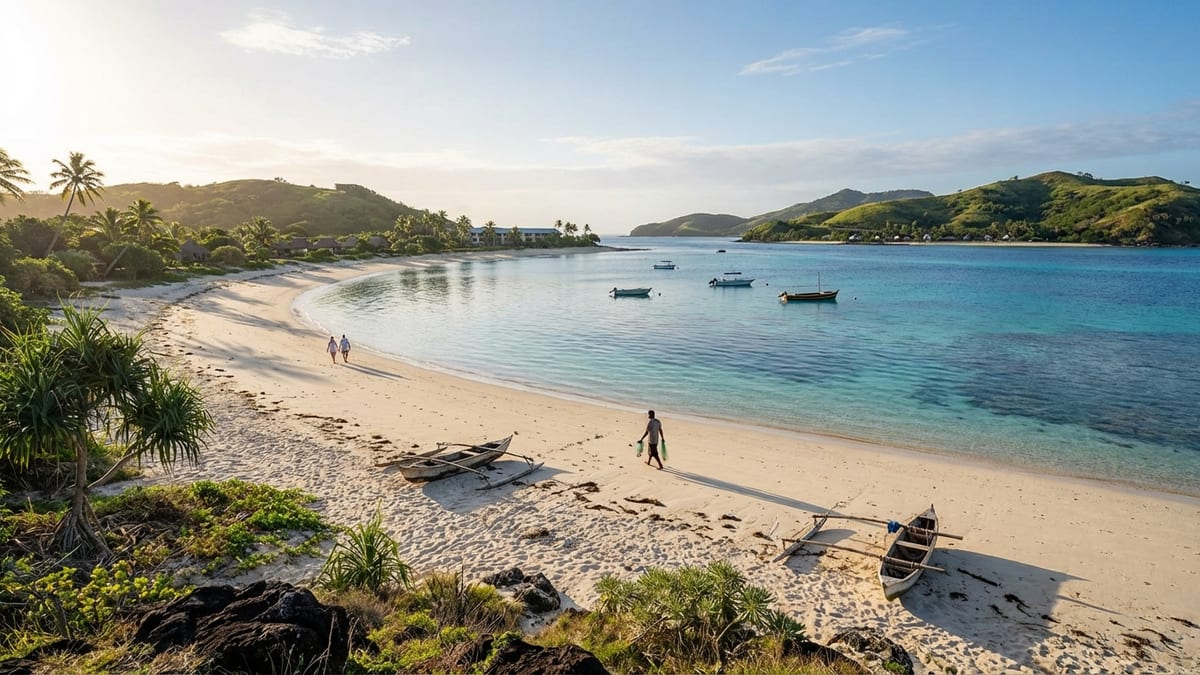
The Yasawa Islands stretch like a string of green pearls across Fiji’s western horizon, a low-rise alternative to the larger and busier Mamanuca group. For travelers chasing flawless beaches, world-class snorkeling and genuinely quiet stays, Yasawa is where the pace drops, the stars sharpen and the only traffic noise is from passing outrigger canoes.
Not every island in the chain offers the same experience, however. Some are better for manta encounters, others for wide sweeps of soft sand or adult-only retreats. This guide looks at the standout Yasawa islands and what each does best for beaches, snorkeling and serene escapes.
Understanding the Yasawa Islands
The Yasawa group runs roughly north to south off the western side of Fiji’s main island, Viti Levu. Most visitors arrive by high-speed catamaran from Port Denarau, or by seaplane straight to their resort’s beachfront. There is no large-town hub, no shopping strips and very limited roads. Resorts are typically small, often locally owned, and clustered on a few key islands that have the best anchorages and beaches.
Conditions are generally dry and sunny compared with other parts of Fiji. The calmest seas are typically from mid-year through early spring in the Southern Hemisphere, with the peak manta ray season in the middle of this window. While there is no bad time to experience Yasawa’s beaches, snorkel visibility and how remote you feel can vary by island and even by specific bay.
For travelers focused on beaches, snorkeling and quiet stays, the key decision is less about “which resort” and more about “which island and which part of it.” The islands that follow are those that consistently stand out to marine biologists, underwater photographers and Fiji tourism specialists for exceptional sand, coral and peaceful ambience.
Best Yasawa Islands for Classic White-Sand Beaches
When people picture Yasawa, they often imagine a wide arc of pale sand, intensely blue water and the depthless hush that falls once the ferry’s wake has faded. Not every island in the chain delivers that picture-perfect sweep, but a handful have beaches that are regularly singled out by travel writers and tourism authorities as among the best in Fiji. These islands combine soft sand, swimmable lagoons and sheltered bays that stay tranquil even when the wind picks up offshore.
Nacula Island: Wide Bays and Blue Lagoon Views
Nacula, one of the largest and most northerly islands in the group, anchors the famed Blue Lagoon area. Long arcs of white sand front turquoise water, with reefs set just far enough offshore that the shallows stay clear and calm for wading and swimming. Several small resorts sit on separate bays, so even at popular properties, the beach seldom feels crowded.
The island’s size means there is space to wander. At low tide you can walk the length of some bays, meandering between coconut palms and the waterline, with only the occasional fishing skiff breaking the stillness. Inland, low hills rise above the shoreline, and short walks to viewpoints reward early risers with sunrise panoramas over the lagoon and outer islands.
While Nacula is well known, it has retained a village-centered rhythm. Resorts work closely with nearby settlements, and you are more likely to hear church singing on a Sunday than nightlife soundtracks. That local presence keeps beach vendors to a minimum and ensures that the shoreline remains dominated by fishing families rather than day-trippers.
Nanuya Lailai: Intimate Sand and Film-Set Scenery
Nanuya Lailai sits just across a narrow channel from the island that served as the filming location for “The Blue Lagoon.” The west side of the island offers one of Yasawa’s most photographed beaches, a sheltered curve where palms lean over clear shallows that deepen quickly into bright blue. From the sand you look across to uninhabited hills, reinforcing the sense of remove.
Because Nanuya Lailai is smaller than Nacula, its beaches feel more intimate. Walking paths cut through thick tropical vegetation from bay to bay, and there are short climbs to hilltop viewpoints where you can see the entire Blue Lagoon area at once. Despite the cinematic scenery, there are only a handful of small accommodations and guesthouses, which keeps the island notably quiet after the day boats leave.
The western orientation means memorable sunsets are an everyday occurrence. As the light softens, the beach empties to just a few guests and village dogs trotting along the tide line. It is a classic location for couples who want soft sand underfoot but prefer to avoid the formality of larger resorts.
Yasawa Island (Northern Coast): Deserted-Feeling Strands
Farther north, the island officially named Yasawa is much less visited than the Blue Lagoon area. A single high-end resort, occupying a large stretch of coastline and a series of small bays, has rights to a string of beaches that can be accessed on foot or by boat. Because there is no other tourism infrastructure on the island, those beaches often feel deserted.
The sand here is soft and pale, merging into clear water that often shows astonishing shades of cobalt and teal on sunny days. Many of the coves are protected by fringing reefs that keep the wave chop outside. It is a coast for aimless beachcombing, picnics under overhanging trees and the kind of solitary swims where you can float on your back and hear nothing but birds and distant surf.
Given the limited development, Yasawa Island particularly suits travelers who are willing to commit to one property for their entire stay and who place a premium on seclusion and long, empty beaches over easy island-hopping.
Top Yasawa Islands for Snorkeling and Marine Life
The Yasawa Islands sit close to deep ocean trenches and nutrient-rich channels, which feed vibrant coral gardens and attract manta rays, reef sharks and dense clouds of reef fish. While snorkeling is possible virtually everywhere, a few islands stand out for consistently good visibility, healthy coral and access to signature experiences such as manta encounters and cave lagoons.
Drawaqa Island and Naviti Channel: Manta Ray Passage
Near the northern part of the chain, a narrow channel between Drawaqa Island and Naviti Island is known locally as Manta Ray Passage. From roughly May to October, plankton-rich currents funnel through the channel and attract reef mantas on an almost daily basis when tides and conditions align. Resorts on Drawaqa and nearby islands keep staff posted on manta sightings so they can launch boats quickly when the animals arrive.
Snorkeling here is guided and controlled to protect the mantas and keep people safe from the currents. Swimmers slip into the water from boats and drift above a seabed of hard coral, watching as mantas loop and feed below. The depth usually ranges from a few meters to the upper teens, so the outlines of the rays remain clear even from the surface. Between manta visits, the channel itself is still rich with fish, offering a dynamic drift-snorkel environment for confident swimmers.
Outside of the passage, fringing reefs around Drawaqa offer calmer snorkeling right from the beach, with bommies packed with anemones, surgeonfish and parrotfish. These house reefs make the island a strong choice for visitors who want a mix of big-moment wildlife experiences and easy daily snorkel sessions without boat rides.
Nacula and the Blue Lagoon Reefs
The Blue Lagoon area around Nacula and neighboring islets is widely cited by snorkeling specialists as one of Fiji’s best combinations of easy access and high-quality coral. Clear, shallow lagoons are dotted with coral heads where clownfish peep from anemones, giant clams glow with electric blues and purples, and butterflyfish flit between branching coral structures.
Most resorts on Nacula organize daily snorkel boat trips out to outer reef patches, as well as guided swims directly off the beach. The inner lagoon’s shelter makes it suitable for beginners and families, while more advanced snorkelers can request trips to patch reefs on the lagoon edge where currents are a little stronger and pelagic species are more common.
One of the advantages of Nacula is variety. Within a short boat ride guests can explore different reef types, from sandy shallows rich in juvenile fish to dropoffs where the color of the water deepens abruptly and schools of trevally or barracuda may cruise past. That diversity helps keep longer stays interesting for travelers who plan to snorkel every day.
Yasawa Island and Moyia Reef for Shark Encounters
Along the shores of Yasawa Island lies Moyia Reef, a site highlighted by underwater photographers and diving publications as one of the most reliable places in the region to snorkel with reef sharks. Here, white-tip and black-tip reef sharks glide over coral gardens, especially during population peaks in the early months of the year. These species are not considered aggressive toward humans, and encounters typically consist of the sharks circling calmly at a respectful distance.
Trips to Moyia Reef are usually organized by resorts on nearby islands that have the boats and local knowledge to judge conditions. Depths are manageable for snorkelers, and visibility often extends more than twenty meters on calm days. Even without sharks, the reef itself is rich, with staghorn and plate corals, clouds of anthias and the occasional turtle resting under ledges.
This kind of wildlife-focused snorkel trip is best for guests comfortable in open water and prepared to follow guide instructions precisely. For travelers who dream of seeing sharks in a natural setting instead of an aquarium, Yasawa Island and its surrounding reefs offer that opportunity in a controlled, conservation-minded way.
Sawa-i-Lau Caves: Snorkeling in a Limestone Lagoon
On a small island near the northern Yasawas, Sawa-i-Lau Caves offer a different kind of aquatic experience. The main cave chamber is a tall limestone dome open to the sky, with a pool of clear sea water inside. Visitors swim into the main pool and, with guides, can explore inner chambers accessed either via narrow openings or short underwater passages.
While the caves are not a classic reef-snorkeling spot, the experience of floating in turquoise light under limestone arches is one of the iconic excursions in the region. Many resorts in the Blue Lagoon area organize half-day trips that combine a visit to the caves with snorkeling stops on nearby reefs and picnics on small beaches.
The caves particularly suit travelers who want to add variety to a snorkeling-focused itinerary. They are also a good option on days when winds make outer reefs choppy but conditions remain calm in the enclosed lagoon around the cave island.
Quiet Stays and Adults-Only Retreats in the Yasawas
One of the Yasawa Islands’ greatest strengths is the absence of large-scale development. Even family-friendly resorts tend to be compact, with a limited number of bures or villas, so noise levels rarely reach the volume of big international chains. For couples and solo travelers seeking even more seclusion, several adults-only or adults-focused properties are scattered through the group on islands that naturally lend themselves to quiet stays.
Viwa Island: Small-Scale Seclusion
On the far western edge of the Yasawas, Viwa Island hosts a single adults-only resort that occupies a peaceful bay. With only a small collection of beachfront bures, the property feels more like a private retreat than a conventional hotel. Without competing developments nearby, nights here are strikingly still, broken mainly by the sound of surf on the outer reef and occasional village music drifting across the water.
The beach in front of the resort is broad and gently shelving, ideal for morning swims. Offshore, reefs offer convenient snorkeling by small boat, with coral heads rising from sandy bottoms and good chances of seeing turtles. Because guest numbers are capped at a low level, excursions are never crowded, which reinforces the sense of space and quiet.
Reaching Viwa usually involves a seaplane hop from the mainland, which adds to the feeling of isolation. That extra step tends to filter out casual visitors and attract travelers ready to commit to a quieter rhythm built around reading on the verandah, unhurried meals and unstructured time on the sand.
Navutu Stars on Yaqeta: Boutique Calm
On Yaqeta Island, a small boutique resort aimed at adults prioritizes privacy and low-key elegance. With just a handful of villas spaced along a sheltered bay, it offers one of the more tranquil settings in the central Yasawas. The shoreline combines soft sand with rocky outcrops that shield the beach from swells, creating a natural sound barrier and a series of private-feeling nooks.
Much of the activity here is optional. Guests can join boat trips to snorkel outer reefs or visit nearby villages, but equally many choose to stay close to the resort and let the day unfold around tide changes and the angle of the sun on the water. Even at capacity, the ratio of sun loungers to guests favors those who prefer not to claim a spot early.
For travelers who appreciate comfort but want to avoid the formality of fully all-inclusive luxury, this kind of mid-size boutique property can be an ideal compromise. The combination of a naturally quiet island, spaced-out villas and an adults-oriented atmosphere delivers a sense of hushed retreat without feeling remote in a logistical sense.
Coconut Beach on Tavewa Area: Intimate Adult Escape
In the broader Blue Lagoon region, a small adults-only resort facing a classic palm-fringed beach offers a tranquil counterpoint to some of the more activity-driven properties on neighboring islands. With only a limited number of bures tucked among coconut palms, it aims squarely at couples and honeymooners who want to gaze out at the lagoon without the background noise of large groups or children’s clubs.
The beach here looks out over the same luminous water that made the area famous, but the resort’s size keeps the shoreline peaceful. Kayaks and paddleboards are available, yet the dominant sound is still usually the wind in the trees rather than engines or music. At night, low lighting around the property ensures that the Milky Way remains visible above the silhouette of the nearby islands.
Because the resort sits within easy boat reach of Nacula and Nanuya Lailai, guests can still join snorkel trips and cave excursions but return each afternoon to a notably quiet base. It is well suited to travelers who like the idea of exploring by day and retreating to a calm, almost village-like setting by evening.
Waya Island: New Adults-Only Boutique Option
Closer to the southern end of the chain, Waya Island has recently emerged as an option for adults seeking peaceful stays without venturing all the way to the northern Yasawas. A boutique resort here keeps guest numbers intentionally low and emphasizes personal service over large-scale facilities. The island itself is rugged, with steep green peaks rising behind sheltered bays, which creates a sense of dramatic backdrop to otherwise gentle shorelines.
The main beach in front of the resort offers good swimming, and reefs nearby support snorkel trips by small boat. Hiking trails into the hills provide a quieter alternative to water activities and reward walkers with far-reaching views back toward the mainland. As with many Yasawa properties, evenings are quiet, focused on lingering dinners and occasional cultural performances rather than organized nightlife.
Waya’s relative proximity to the mainland makes it a practical choice for shorter stays or travelers who prefer a shorter transfer after a long-haul flight, while still wanting the low-key, adults-centric atmosphere that has become a signature of several Yasawa resorts.
Choosing the Right Yasawa Island for Your Travel Style
With so many variations on the theme of beach, reef and quiet, it helps to match your priorities to the strengths of specific islands. Distances within the Yasawas are not huge, but transfers between islands still take time and coordination, especially if you are relying on scheduled ferry services rather than charter boats or seaplanes. Thinking through what matters most will help you decide whether to settle on one island or build an itinerary that hops between a couple of contrasting locations.
Best for Beach Walkers and Lagoon Lovers
If your ideal day involves long walks on the sand and frequent swims in calm water, the Blue Lagoon region and Yasawa Island’s northern coast stand out. Nacula and Nanuya Lailai both offer multiple bays where the beach is broad enough for strolls at any tide, and the water close to shore stays sheltered by outer reefs. Many accommodations here are right on the sand, so you can step from your bure to the water in a few paces.
Yasawa Island, with its series of small coves, is better for those who prefer a sense of discovery. Instead of one endless beach, you have several smaller ones to explore, some reached only by short boat ride or bush track. That layout particularly suits travelers who enjoy the feeling that each day’s swim or picnic can take place somewhere slightly different.
Best for Snorkel-Obsessed Travelers
For travelers who are choosing Yasawa primarily for its underwater world, the combination of Drawaqa’s manta passage and the coral gardens around Nacula makes a strong pairing. Staying on or near Drawaqa between May and October maximizes your chances of ethical manta encounters, while a stint on Nacula or nearby islands gives you easy daily access to the Blue Lagoon reefs and trips to Sawa-i-Lau Caves.
Those keen on shark encounters and slightly more dramatic reef topography might look instead to Yasawa Island and Moyia Reef, balancing time in the water with long, quiet hours on its remote beaches. Whichever base you choose, checking with your resort about typical visibility, current strength and wildlife seasonality at the time of year you plan to visit can help fine-tune expectations.
Best for Couples and Honeymooners
Couples who value privacy and adults-only spaces are particularly well served by the cluster of small, adult-focused resorts on Viwa, Waya and select islands in the Blue Lagoon area. These properties combine natural quiet with policies that ensure pools, dining spaces and beaches remain calm throughout the day. Many offer private dining options on the beach, in-villa spa treatments and curated excursions capped at small group sizes.
If you are choosing between them, consider how remote you want to feel. Viwa and Yasawa Island deliver a sense of being at the far edge of the archipelago, while Waya balances seclusion with a shorter transfer time. In the Blue Lagoon region, intimate properties offer the best of both worlds: access to renowned reefs and caves plus a quiet place to retreat each evening.
Best for Low-Key Adventure and Village Culture
Travelers interested in combining snorkeling and beaches with village visits, hill walks and cultural exchanges may find that islands with multiple small resorts and established villages, such as Nacula and Yaqeta, offer the richest mix. Here, it is easy to spend one day snorkeling outer reefs and the next attending a church service, joining a weaving demonstration or hiking to a ridge-top viewpoint with a local guide.
These islands tend to feel a touch busier than one-resort islands, simply because there are more boats on the water and more movement along the beaches. However, the scale remains small compared with Fiji’s more developed destinations, and the trade-off is a deeper sense of connection to daily life in the Yasawas.
Planning Logistics for a Quiet Yasawa Escape
Selecting the right island is only one part of creating a serene Yasawa holiday. Transit choices, timing and packing all play a role in how relaxed your stay ultimately feels. Given the archipelago’s relatively remote location by Fiji standards, a bit of advance planning helps avoid rushed transfers and maximizes time on the sand and in the water.
Getting There: Ferry vs Seaplane
Most visitors reach the Yasawas by high-speed catamaran departing from the Port Denarau marina on Viti Levu. The ferry makes multiple stops, and total travel time to the northern islands can be several hours, though the ride doubles as a scenic cruise past smaller islets and reef systems. Resorts farther south may be reached in a shorter window, which makes them attractive to travelers with limited days in Fiji.
For a quieter, faster arrival, some guests choose seaplane transfers from the Nadi area directly to their resort. This reduces travel time dramatically and delivers striking aerial views of the islands and reefs below. However, seaplane schedules can be affected by weather and daylight hours, and they usually need to be coordinated closely with your international flight times.
Whichever option you choose, building in a buffer night on the mainland before or after your island stay can help reduce stress, particularly if you are connecting to long-haul flights. This buffer also gives you flexibility if sea or weather conditions delay departures.
When to Go for the Best Balance of Sun and Serenity
The Yasawas lie in one of Fiji’s drier regions, but conditions still vary seasonally. The cooler, drier months from about May to October typically bring calmer seas, lower humidity and excellent snorkel visibility. This period also aligns with the main manta season around Drawaqa, making it the preferred window for many nature-focused travelers.
The warmer months outside this window can offer slightly lusher vegetation and fewer visitors, but there is a higher chance of rain and occasional rougher seas. For travelers whose top priority is quiet rather than specific wildlife encounters, visiting just outside peak season can sometimes strike the best balance: enough scheduled services to keep transfers running smoothly, but fewer people overall at popular spots.
Public holidays and local school breaks can increase occupancy at family-friendly resorts. If your goal is a quiet stay, asking your chosen property about typical crowd patterns and avoiding those periods may be worthwhile, particularly in the more accessible southern Yasawas.
Packing for Comfort, Reef Safety and Quiet Evenings
Given the limited shopping options once you leave the mainland, it pays to pack carefully. For beach and snorkel-focused trips, the following items can make a significant difference:
- Reef-safe sunscreen to reduce environmental impact on coral
- A long-sleeve rash guard or light wetsuit top for sun protection and warmth during long snorkel sessions
- Well-fitted mask and snorkel if you prefer your own equipment
- Lightweight reef shoes or sandals for rocky entries and village visits
- A small dry bag for boat trips and cave excursions
- Compact headlamp or flashlight for nighttime walks on unlit paths
Evenings in the Yasawas tend to be low-key. Most resorts have bars and communal areas, but organized entertainment is modest, especially at adult-focused properties. Bringing a good book, downloaded films or a travel journal can help you lean into the slower pace without feeling under-stimulated once the sun sets.
The Takeaway
From the sandal-soft arcs of Nacula and Nanuya Lailai to the remote coves of Yasawa Island and the manta-filled currents off Drawaqa, the Yasawa Islands reward travelers willing to trade big-brand infrastructure for natural beauty and quiet. Each island offers a slightly different balance of beach, reef and remoteness, but they all share the essentials that define this remote pocket of Fiji: clear lagoons, small-scale resorts and a sense that the modern world is much farther away than the flight time suggests.
If you are drawn to unhurried days bookended by sunrise swims and stars over calm water, the Yasawas deliver that experience with fewer distractions than most South Pacific destinations. Choose your island based on whether you are most excited by long beach walks, manta encounters, shark reefs or simply the chance to hear nothing louder than waves at night, and the archipelago will do the rest.
FAQ
Q1. Which Yasawa island is best overall for first-time visitors?
For a first-time trip that balances beaches, snorkeling and accessible quiet, Nacula in the Blue Lagoon area is often the strongest choice. It offers wide, beautiful beaches, varied reefs suitable for different experience levels and a mix of small resorts that remain peaceful without feeling isolated.
Q2. Is Drawaqa Island worth visiting if I am not traveling during manta season?
Yes. While the manta encounters between about May and October are a major highlight, Drawaqa’s surrounding reefs remain excellent outside that window, with healthy coral, abundant reef fish and good water clarity. You simply will not have the same likelihood of seeing mantas in the passage.
Q3. How quiet are the adult-only resorts in the Yasawas compared with family-friendly options?
Adult-only resorts such as those on Viwa, Waya and select Blue Lagoon islands are generally quieter throughout the day, especially around pools and dining areas. Family-friendly properties can still be calm, but school holidays and peak seasons may bring more background activity and noise around shared spaces.
Q4. Can I easily visit multiple Yasawa islands on one trip?
Yes, but “easily” depends on your tolerance for travel days. The scheduled ferry connects many islands, and some resorts offer inter-island transfers by small boat or seaplane. Island-hopping works best if you cluster your choices within the same general area, such as combining Nacula with Nanuya Lailai and nearby small islands.
Q5. Are the Yasawa Islands suitable for beginner snorkelers?
The Yasawas are very suitable for beginners, particularly around sheltered lagoons in the Blue Lagoon region where entries are from sandy beaches and currents are mild. Resorts routinely provide buoyancy aids and guided trips, and staff are used to helping first-time snorkelers feel confident in the water.
Q6. What is the best time of year to visit for calm seas and good visibility?
The cooler, drier months from roughly May to October generally provide the calmest seas and clearest underwater visibility. This period coincides with the main manta season at Manta Ray Passage and is popular with snorkel-focused travelers, so advance bookings are recommended.
Q7. How remote will I feel on Yasawa Island compared with the Blue Lagoon area?
On Yasawa Island, where there is typically only one resort and no nearby tourism clusters, you are likely to feel markedly more remote. Beaches can be empty for hours at a time, and boat traffic is minimal. The Blue Lagoon area has more small resorts and day boats, so while it is still peaceful, there is more visible human activity on the water.
Q8. Do I need to bring my own snorkeling gear?
Most resorts provide basic snorkeling equipment, often included in the stay or available for a modest rental fee. However, frequent snorkelers may prefer to bring their own mask and snorkel for comfort and fit, especially if they plan to spend many hours in the water each day.
Q9. Are there medical facilities in the Yasawa Islands?
Medical facilities in the Yasawas are limited to small clinics and basic services, usually located in larger villages. For serious issues, evacuation to Nadi or another larger center on Viti Levu is required. Travelers with existing medical conditions should carry necessary medications and consider comprehensive travel insurance that covers medical evacuation.
Q10. How far in advance should I book an adults-only or boutique resort?
Because many adults-only and boutique properties in the Yasawas have a small number of rooms, they can fill months ahead during peak travel periods and popular wedding or honeymoon seasons. Booking three to six months in advance is sensible for high season, while shoulder-season stays may allow a bit more flexibility, depending on the specific island and resort.