

More news on this day
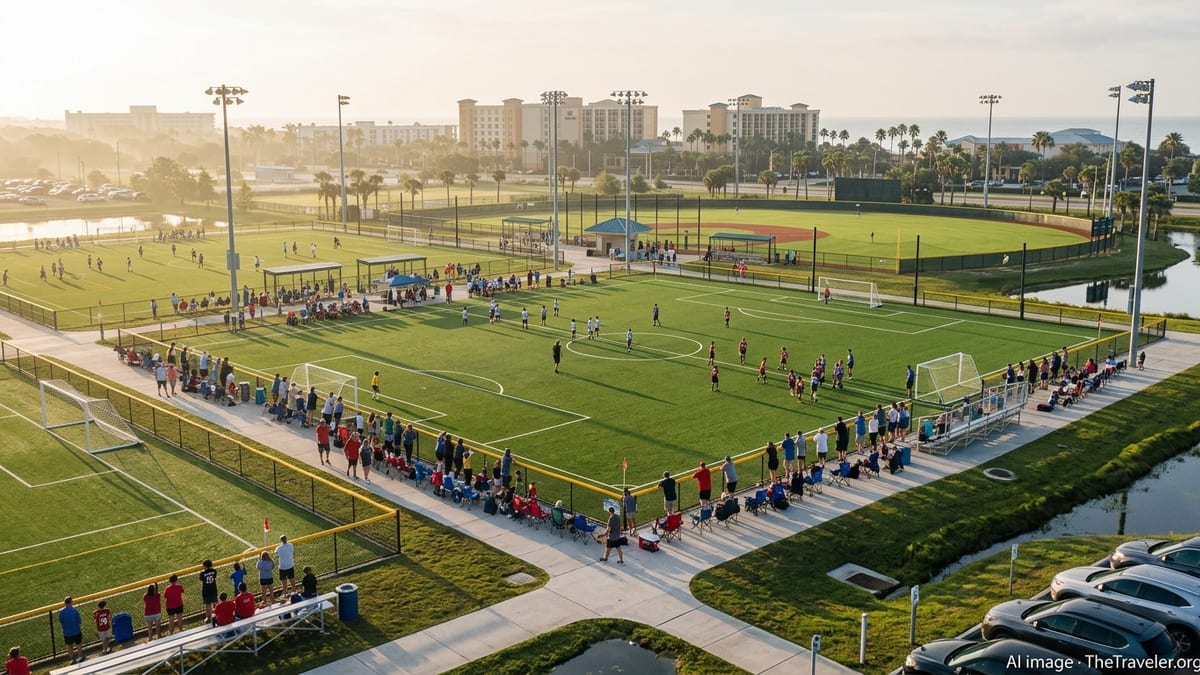
From Clearwater’s beachside diamonds to multipurpose fields in Pinellas Park, youth and amateur sports tournaments are rapidly becoming one of Pinellas County’s most powerful tourism engines, drawing families year-round and reshaping how the Gulf Coast destination markets itself beyond the sand and sunsets.
Get the latest news straight to your inbox!
Sports Tourism Becomes a Core Pillar of the Visitor Economy
Pinellas County, home to the St. Pete–Clearwater tourism brand, has long relied on its beaches as the primary draw. Recent reports indicate that sports is now a central part of that mix, with amateur and youth tournaments helping to diversify visitor demand and flatten traditional seasonal peaks. Tourism development materials show that more than 14.9 million visitors generated over 10 billion dollars in total economic impact in the destination in a recent fiscal year, and sports events are increasingly highlighted as a key contributor within that broader figure.
Visit St. Pete–Clearwater and the county’s sports commission have positioned the region as a “play and stay” hub, marketing the combination of year-round warm weather, coastal amenities and an expanding inventory of fields, diamonds and courts. Publicly available information from the tourism agency notes that tournament weekends now fill hotel blocks far beyond the beach, bringing business to inland communities that historically saw fewer overnight guests.
Tourism development tax revenues, generated primarily by overnight visitors, are being partially reinvested into sports-related infrastructure, including renovations and expansions of facilities. County documents explaining the use of these funds reference sports fields alongside marinas and cultural institutions, underscoring how ballfields and multipurpose complexes are now viewed as visitor infrastructure rather than purely local recreation assets.
Local economic summaries emphasize that this shift is not replacing traditional beach tourism but supplementing it. Families that come for tournaments often extend their stay to visit attractions in St. Petersburg and Clearwater, adding museum admissions, restaurant visits and retail spending to the initial sports-driven trip.
Youth Tournaments Drive Hotel Nights and New Investment
Sports tourism reports for Pinellas County show a clear rise in the scale and frequency of amateur events. A county accomplishments report for 2024 notes that 132 sports events were booked in a recent fiscal year, with a direct economic impact cited in the tens of millions of dollars. Separate tourism board updates for 2025 highlight more than 92 million dollars in direct economic impact attributed to sporting events, signaling that the sector has moved from niche to material contributor in a short period.
Many of these events are youth-focused tournaments in baseball, softball, soccer and volleyball. Tourism and economic development coverage indicates that these competitions can generate thousands of room nights in a single weekend, as teams arrive with parents, siblings and extended family. Industry analyses point out that youth sports visitors tend to stay multiple nights and travel in groups, creating reliable demand for hotels, vacation rentals and family-friendly dining.
Destination planners have responded by prioritizing multi-field complexes that can host large brackets simultaneously. County and tourism documents describe a trend toward clusters of synthetic turf baseball and softball diamonds alongside multipurpose fields, designed to appeal to national tournament organizers seeking predictable playing conditions despite Florida’s frequent showers.
The emphasis on youth sports also reflects wider national trends. Trade publications on sports tourism economics note that youth and amateur events have become some of the most resilient segments of the travel market, often continuing to grow even when discretionary leisure travel softens. Pinellas County’s current strategy appears to align with this pattern, using youth tournaments to anchor shoulder seasons and mitigate risk from weather or broader economic shifts.
Major Complex Plans Signal Next Phase of Sports Growth
The most visible symbol of Pinellas County’s sports tourism ambitions is the proposal to transform the former Toytown landfill site into a large-scale tournament complex. Coverage in regional business media describes a plan submitted by a Clearwater-based developer to build around 20 synthetic turf baseball and softball fields, along with 17 multipurpose fields, at a cost estimated between 150 million and 200 million dollars.
Reporting on the proposal suggests that project backers forecast up to 350 million dollars in direct economic impact within five years of opening, tied largely to youth and amateur tournaments capable of drawing teams from across the United States. The concept positions Toytown as a national-caliber hub where multi-day events could run nearly year-round, supported by nearby hotels and restaurants throughout Pinellas County.
While the complex is still moving through planning and evaluation stages, its scale reflects a broader shift in how local leaders view sports infrastructure. Instead of modest neighborhood fields, the region is contemplating destination-level facilities purpose-built for travel teams. Publicly available documents and meeting agendas indicate that tourism development tax revenues and public-private partnerships are being explored as potential funding tools, consistent with how other Florida counties have built major sports parks.
If realized, a Toytown complex would complement existing venues scattered across the county, from Youth Park in Pinellas Park to waterfront sites used for volleyball and regattas. Observers of the regional market note that the combined effect could allow Pinellas to bid on larger, more prestigious youth championships that require dozens of contiguous fields and extensive supporting services.
Balancing Beach Identity With a Year-Round Sports Brand
For decades, Pinellas County’s visitor identity has been anchored in white-sand beaches at Clearwater, St. Pete Beach and Fort De Soto. Recent marketing materials and visitor profile reports show that sports is now featured alongside these icons, but in a way that seeks to complement rather than replace the coastal brand. Campaigns highlight the idea of families watching a tournament game in the morning and heading to the Gulf for sunset in the evening.
Public tourism data indicates that this strategy is influencing when and why visitors arrive. Surveys compiled for Visit St. Pete–Clearwater’s visitor profile study show a modest but noticeable share of travelers citing sports and special events among their primary trip motivators. Industry commentary suggests that as more youth teams experience the county for tournaments, word-of-mouth recommendations help attract repeat leisure visits unconnected to future events.
At the same time, the growing emphasis on sports tourism raises familiar questions about congestion, affordability and land use in a county that is already one of Florida’s most densely populated. Commentary in local media and community forums reflects a mix of enthusiasm for new visitor spending and concern about traffic around large complexes, as well as pressure on hotel supply and short-term rentals in peak periods.
Planning documents for tourism tax spending acknowledge these tensions by framing sports investments as part of a broader strategy that also funds beach renourishment, transportation improvements and cultural facilities. The goal, according to these public materials, is to keep Pinellas competitive as a destination while managing the impacts that come from attracting more visitors for more reasons, including sports.
The Next Play: How Youth Sports Could Shape Pinellas Tourism
Looking ahead, sports tourism appears likely to remain a key consideration in Pinellas County’s economic and land-use decisions. The continued growth in tournament bookings, coupled with the prospect of a major youth complex at Toytown, suggests that the county is positioning itself among Florida’s leading destinations for youth and amateur events.
Regional tourism reports point out that other Gulf Coast and central Florida counties are also investing heavily in sports infrastructure, creating a competitive landscape for attracting marquee tournaments. Pinellas County’s differentiator is its combination of fields and beaches, urban cultural districts in St. Petersburg, and established visitor services in Clearwater and surrounding communities.
Industry observers note that the success of this strategy will hinge on maintaining the quality of local facilities, coordinating event calendars with lodging capacity and continuing to measure economic outcomes from tournaments. Publicly available economic impact summaries from recent fiscal years show that officials are tracking metrics such as room nights, visitor spending and tax collections associated with sports events, metrics that will likely guide future funding decisions.
As youth and amateur teams continue arriving with uniforms, equipment bags and beach gear in tow, Pinellas County is increasingly defined not only as a place to relax by the Gulf, but as a destination where sports and tourism intersect on a growing scale.