

Zakynthos has long lured travelers with images of sheer limestone cliffs, translucent turquoise water and the sunken hull of the island’s famous shipwreck. Yet for many visitors, it is the boat trips themselves, winding along the rugged coast to the Blue Caves and Navagio (Shipwreck Beach), that become the highlight of a Greek island holiday.
Planning one of these cruises is straightforward if you know where to depart, what each route actually includes, and how to secure a spot during the busy summer season. This guide explains what to expect on Zakynthos boat trips to the Blue Caves, how to choose between shared and private cruises, and the practical details of booking from 2026 onward.
Understanding the Blue Caves and Navagio Coastline
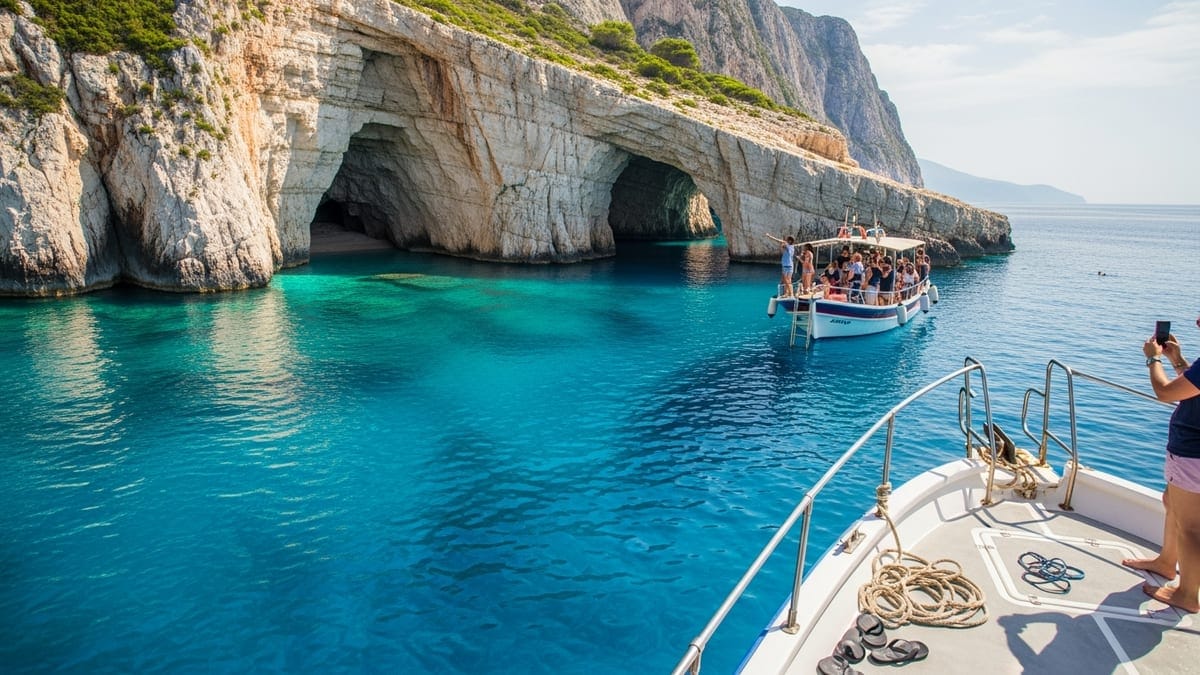
The Blue Caves lie along the northern coastline of Zakynthos, carved into the cliffs between Cape Skinari and Agios Nikolaos. Their name comes from the intense blue color of the water inside, where sunlight bounces off the white rock and refracts in the sea to create an almost neon glow. Boat skippers steer right into the arches and caverns when conditions allow, which is why most travelers experience them by sea rather than from any viewpoint on land.
Navagio, often called Shipwreck Beach, sits further west in a dramatic amphitheater of cliffs on the island’s northwest coast. The rusting wreck of the MV Panagiotis has rested here since the 1980s and is now one of the most photographed sights in Greece. The beach itself is only accessible by boat, so every visit begins with a cruise. Many operators combine the Blue Caves and Navagio in a single itinerary, especially from ports on the north and northwest of the island.
Because the coast is sheltered in some places and exposed in others, conditions can change quickly. This affects whether boats can enter the caves, how close they can approach the beach, and how long you can safely stay. Reputable operators keep a close watch on wind and swell forecasts and may adjust routes or timings on the day. Travelers should expect flexible itineraries rather than rigid, minute-by-minute schedules.
Where Boat Trips Depart: Main Ports and What They Offer
Most Blue Caves and Navagio tours depart from three main areas: Agios Nikolaos in the northeast, Porto Vromi on the northwest coast, and Zakynthos Town or nearby resort harbors in the east and south. Each departure point offers a different style of experience and travel time on the water.
Agios Nikolaos, on the island’s northeast tip, is the classic jumping-off point for the Blue Caves. Here you will find both short one-hour trips that focus purely on the caves and longer cruises that continue on to Navagio. Local outfits run boats that typically carry between about 25 and 50 passengers on shared tours, with sun-protected seating and open deck space. Trips to the Blue Caves alone are often advertised from around 10 euros per person for an hour-long circuit with a brief swimming stop when conditions are favorable, based on 2026 listings from regional booking platforms.
Porto Vromi, reached via winding mountain roads from villages like Maries and Anafonitria, is the closest organized port to Navagio. Operators here emphasize that proximity as a selling point, with three-hour cruises that combine a stop at Shipwreck Beach, time at the island’s largest nearby sea caves and two or three swimming spots such as Sfogio, White Beach or Porto Stenitis. Boats tend to depart every 40 to 60 minutes from April to October, giving a degree of flexibility for independent travelers who arrive by car. Shared tours often carry up to about 40 or 45 passengers, while private options are also available.
From Zakynthos Town and major resorts like Laganas, Tsilivi and Alykanas, larger day cruises and coach-boat combinations operate in season. These usually involve a bus transfer to Agios Nikolaos or Porto Vromi, followed by a cruise, before returning in the late afternoon. While they add travel time compared with driving directly to a local port, they are convenient for visitors without a rental car and can be booked through hotel reception desks and travel agencies in the resorts.
Types of Zakynthos Boat Trips and What to Expect On Board
The most common way to see the Blue Caves and Navagio is on a shared group cruise. These trips run several times a day, particularly in July and August, and usually last between one hour for a short Blue Caves outing and three to five hours for combined itineraries. Group boats range from traditional wooden caiques to modern motorboats, and some have glass-bottom sections to reveal the underwater landscape without the need for snorkeling gear. Onboard facilities vary, but shaded seating and ladders for swimming are standard on reputable tours. Toilets are not guaranteed on smaller boats, so travelers who need this amenity should confirm in advance.
Private and semi-private tours offer a more flexible and intimate experience. From Agios Nikolaos, small boats with skippers can be chartered for 90-minute Blue Caves cruises, full half-day explorations or custom itineraries around the northern coastline. Prices are higher than shared tours, but they buy you crowd-free swimming stops, more time inside the caves when conditions permit, and the chance to adjust the schedule around your interests. Some companies advertise that no license is needed to rent certain small motorboats for self-drive outings from ports like Porto Vromi, though strict safety instructions and route limits apply.
Specialized tours add extra features such as snorkeling equipment, snacks or on-board music. Glass-bottom boats, in particular, are popular for families. These cruises, often departing from Agios Nikolaos, allow passengers to view reefs and marine life beneath the hull while still visiting the Blue Caves and Shipwreck Beach. They typically run as half-day excursions, combining sightseeing time with one or more swim stops in clear, shallow waters appropriate for less confident swimmers.
On all types of boats, expect a casual and relaxed atmosphere. Captains routinely provide short commentaries pointing out landmarks like Poseidon’s Profile, a rock formation that resembles a human face, or guide the bow into tight openings in the cliffs. Music is common on return legs once the main sightseeing is done. Dress code is informal, but non-slip footwear and swimwear under light clothing work best, since boarding is often via floating docks or directly from pebble beaches.
Typical Itineraries, Durations and Prices
Short Blue Caves-only tours from Agios Nikolaos usually last about one hour. The boat leaves the port, heads north along the coast, visits several of the best-known caves, allows around 10 to 20 minutes for swimming near one of the sheltered spots when possible, and returns. Entry-level prices for these shared trips are often advertised from roughly 10 euros per adult, with discounts for children and occasional seasonal promotions.
Combined Blue Caves and Navagio cruises are the most popular option for first-time visitors. From Agios Nikolaos, two-and-a-half to three-hour tours typically sail first to Shipwreck Beach, where passengers may have around 40 to 60 minutes ashore depending on crowd levels and sea conditions, then call in at the Blue Caves on the return leg for photos and a short swim. Similar three-hour trips from Porto Vromi travel a shorter distance over water due to that port’s proximity to Navagio, allowing more time for additional stops at secluded inlets like Porto Stenitis or hidden coves reachable only by small boats.
Full-day cruises and bespoke private charters extend the experience further. These may link Navagio and the northern caves with the island’s western or southern highlights, such as Porto Limnionas, the Keri Caves or Turtle Island in Laganas Bay. Durations run from five to eight hours, with multiple swim breaks and scenic cruising through areas of towering cliffs and open sea. Prices vary significantly depending on boat size, exclusivity and season, but travelers can expect to pay a premium for full-day private hire during peak months.
Booking platforms, local operators and resort-based agencies publish live prices that can change from year to year. Early in the season, some companies offer online discount codes or reduced rates to encourage bookings, while late July and August departures may sell out at full price. Travelers planning to visit in June through September should use current season information rather than relying on older guidebook figures.
Seasonality, Weather and Safety Considerations
Zakynthos boat trips to the Blue Caves and Navagio generally operate from April through late October, with the busiest period between mid-June and early September. Shoulder months like May and late September can offer a good balance of milder temperatures and fewer crowds, though the sea may feel cooler, particularly at the start and end of the season. Many Porto Vromi operators advertise daily departures from early morning until early evening during these months, reducing frequency outside peak season and offering trips on request between November and March when demand drops and weather becomes more variable.
Weather is a crucial factor. Calm seas and gentle winds make for smooth sailing and safe cave entries, while strong northwesterly winds or heavy swell can force captains to shorten or modify itineraries. On some days, it may not be possible to land at Navagio Beach at all if waves are breaking heavily onto the shore, in which case boats might offer an extended viewing stop from offshore instead. Reputable operators are transparent about such changes and prioritize safety over rigid adherence to advertised plans.
Travelers should be prepared for very limited shade on Shipwreck Beach and many of the smaller coves. Sun exposure reflects off the white cliffs and pale pebbles, making sunburn a real risk even on breezy days. Lightweight clothing, broad-spectrum sunscreen, hats and adequate drinking water are essential. Some operators specifically advise guests to bring water and note that there are no kiosks or facilities on Navagio itself, only limited options back at the port or nearby villages.
In terms of safety onboard, established companies in Zakynthos emphasize compliance with Greek maritime regulations, regular boat inspections and experienced skippers who know the coast well. Lifejackets are carried on all licensed vessels, and most group tours include a short safety briefing before departure. Parents should note that boards or ladders used for swimming stops can be steep, and younger children may need assistance going in and out of the water. Anyone prone to seasickness might prefer shorter itineraries from ports closest to the attractions to cut down travel time on open water.
How to Book: Online, On the Ground and Through Resorts
Most Zakynthos boat trip operators work with major international booking platforms as well as taking direct reservations through their own channels. Booking online in advance is particularly useful if you are traveling in July or August or if you want a specific type of experience such as a glass-bottom boat, a small-group vessel or a private charter. Online descriptions typically spell out the duration, what is included, meeting points, cancellation policies and any transfer options from resorts.
Booking on the island remains a strong alternative, especially for travelers who want the flexibility to choose a day with the best forecast. In Agios Nikolaos and Porto Vromi, kiosks and ticket offices line the small harbors, with boards displaying departure times and prices. During the core season, shared tours often depart every 40 to 60 minutes from morning through late afternoon, meaning independent visitors can simply arrive, compare offerings and choose the next boat with available places. Payment is usually taken in cash or by card at the port.
Resort-based travel agencies and hotel front desks can arrange boat trips that bundle coach transfers from areas like Laganas, Kalamaki or Tsilivi. These packages suit visitors who do not want to drive the sometimes narrow, winding roads of the interior. The trade-off is less spontaneity and slightly longer overall travel times. These agents often work with a small selection of trusted local operators, which can be reassuring for first-time visitors.
Regardless of how you book, confirm key details such as the exact meeting point, check-in time before departure, what happens in the event of bad weather and whether the itinerary includes a landing at Shipwreck Beach or only a viewing from the water. Reading recent reviews can help you distinguish between companies that communicate clearly and those that oversell what is realistically possible on a shared tour in peak season.
Practical Tips for a Smooth Day on the Water
Travelers planning a Blue Caves and Navagio excursion should treat it as a semi-wild coastal outing rather than a beach-club day. Facilities at the ports are basic, and once you leave harbor there are no shops or shade structures at most stops. Pack water, snacks, sunscreen, a hat and a light cover-up to protect against both sun and wind. Many travelers also find it useful to bring a small dry bag for phones, wallets and cameras, as splashes are almost inevitable, especially near cave entrances or when the boat anchors in open water.
Footwear should be simple and secure. Flip-flops or sandals that can handle getting wet are practical for boarding and for the coarse sand or pebbles at Shipwreck Beach. For those with sensitive feet, lightweight water shoes can make walking on the shore more comfortable. Towels are essential, both for drying off after swims and for sitting on pebbly surfaces. If you plan to snorkel, check if the operator provides equipment; otherwise, pack your own mask for better underwater visibility.
Photography is a major part of these trips, and conditions can be bright and high-contrast. A phone with a good camera is usually sufficient, but consider a strap or waterproof case in case of splashes. Early morning or late afternoon departures often deliver softer light on the cliffs and fewer crowds at the shipwreck, though specific times vary with the time of year. For aerial views of Navagio, separate overland excursions to the cliff-top viewpoints are required, as boat trips focus on sea-level experiences.
Lastly, allow some buffer time around your tour in case of schedule shifts due to weather or port congestion. It is unwise to book an evening flight or tight onward transfer on the same day as your boat trip. A more relaxed approach fits the island’s rhythm and ensures that a sudden change of sea conditions does not become a source of stress.
The Takeaway
Boat trips to the Blue Caves and Navagio are central to the Zakynthos experience, turning postcard images into vivid memories of blue light shimmering against limestone, the echo of waves in narrow sea tunnels and the sight of the island’s iconic shipwreck framed by towering cliffs. Whether you join a one-hour excursion from Agios Nikolaos, a three-hour circuit from Porto Vromi or a bespoke private cruise that links multiple coves, the key is to match your expectations and comfort level with the style of tour you choose.
Booking in advance for peak months, staying flexible about itineraries and preparing properly for sun and sea will help you make the most of your time on the water. With a bit of planning and an eye on current-season information, Zakynthos’ boat trips deliver exactly what they promise: a front-row seat to one of the most photogenic coastlines in the Ionian Sea.
FAQ
Q1. Do I need to book my Zakynthos boat trip in advance?
For July and August, advance booking is strongly recommended, especially for popular morning or small-group departures and for any private charters. In shoulder months like May, June, September and early October, you can often book one or two days ahead or even on the same morning at the port, but availability for specific time slots is never guaranteed.
Q2. How long does a typical Blue Caves and Navagio tour last?
Short Blue Caves-only cruises from Agios Nikolaos usually last about one hour. Combined Blue Caves and Shipwreck Beach tours are commonly scheduled for around two and a half to three hours, particularly from Agios Nikolaos and Porto Vromi. Full-day itineraries that add other coastal highlights can run from five to eight hours.
Q3. What should I bring with me on the boat?
Essential items include swimwear, a towel, sunscreen, a hat, sunglasses, water and possibly light snacks. Non-slip sandals or water shoes are useful on pebble beaches, and a small dry bag helps protect phones and cameras from spray. If you plan to snorkel, check in advance whether the operator supplies masks and snorkels or bring your own.
Q4. Are the boat trips suitable for children and older travelers?
Most shared cruises welcome families and older travelers, but conditions can involve strong sun, steps or ladders into the water and occasionally choppy seas. Shorter itineraries with shaded seating are generally more comfortable for young children and anyone with limited mobility. It is wise to choose a boat with a canopy and to confirm in advance whether there are toilets on board if that is important for your group.
Q5. Can I always land on Shipwreck Beach during the tour?
No. Access to Navagio depends on sea and wind conditions and any temporary safety restrictions in force. On some days, boats may be allowed only to approach closely and stop offshore for photos, without landing passengers. Reputable operators will explain the situation before departure and may adjust the itinerary to include extra swimming stops elsewhere if a beach landing is not possible.
Q6. Is it possible to visit just the Blue Caves without going to Navagio?
Yes. From Agios Nikolaos you will find dedicated Blue Caves excursions that last around an hour and skip Shipwreck Beach altogether. These are a good choice if you have limited time, are prone to seasickness, or have already visited Navagio on another day and simply want to experience the caves and their unique colors up close.
Q7. Are self-drive boat rentals available to see the caves and shipwreck?
Several operators on Zakynthos offer small motorboats for rent without a license, particularly around Porto Vromi and some other harbors. These usually come with route guidance and safety briefings and may limit how far you can travel. While self-drive offers independence, it is best suited to travelers with some boating confidence; otherwise, a skippered private tour provides a similar sense of freedom with local expertise included.
Q8. What time of day is best for a boat trip to the Blue Caves and Navagio?
Early morning trips often encounter calmer seas, cooler temperatures and fewer crowds, particularly in peak season. Light conditions for photography can be excellent in the first half of the day, with the sun illuminating the cliffs and water from an angle. Late afternoon departures can also be beautiful and less hot, though schedules depend on the operator and the time of year.
Q9. How much do boat trips cost in?
Entry-level shared Blue Caves tours from Agios Nikolaos have been advertised from around 10 euros per person for one-hour outings in the season. Combined Blue Caves and Navagio cruises typically cost more, depending on duration and inclusions, while private and full-day charters are significantly higher. Prices vary by operator, boat type and month, so travelers should check current-season rates rather than relying on older printed figures.
Q10. What happens if the weather is bad on the day of my booking?
If sea conditions are unsafe or significantly uncomfortable, reputable operators may cancel or reschedule trips. Many online and local bookings now include free or flexible cancellation up to a specified time before departure, and full refunds are usually offered if the operator cancels due to weather. Always review the cancellation policy at the time of booking and keep an eye on local forecasts the day before your trip.