

More news on this day
Zambia is ramping up efforts to attract more international visitors as preparations gather pace for the 2026 edition of the Zambia Travel Expo, with the trade show promoted as a flagship platform to expand tourism arrivals and spending across the country.
Get the latest news straight to your inbox!
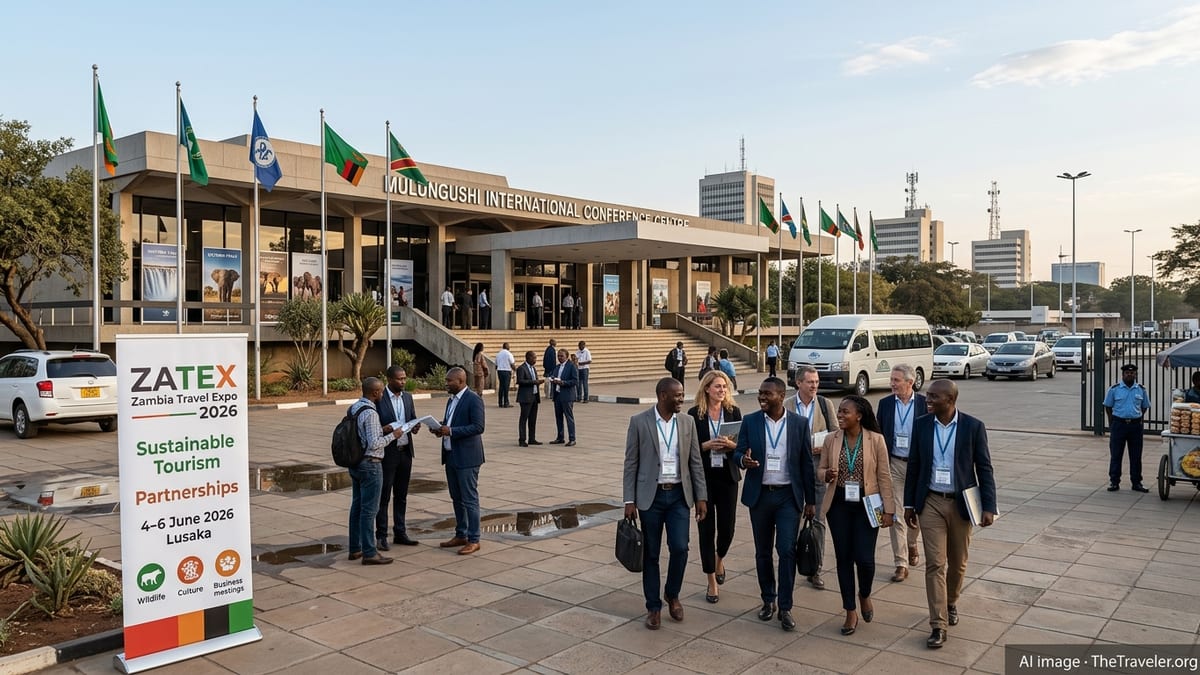
Trade Expo Positioned at Heart of Zambia’s Tourism Push
Publicly available information shows that the Zambia Travel Expo, widely known as ZATEX, is being framed as a central pillar in the country’s tourism strategy for 2026. The event is scheduled to take place from 4 to 6 June 2026 at the Mulungushi International Conference Centre in Lusaka, reinforcing the capital’s role as a regional hub for meetings, incentives, conferences and exhibitions.
Organisers describe ZATEX as the leading tourism event in Zambia, bringing together local operators, regional partners and international travel buyers under one roof. The three day format is designed to give hosted buyers structured time with suppliers, alongside education sessions and networking, with the wider goal of stimulating long term contracts that translate into higher visitor numbers.
According to published coverage, the 2026 expo is being promoted under the theme of building authentic and sustainable tourism through partnerships. That message aligns with Zambia’s broader ambition to protect its natural assets, strengthen community participation and secure investment that can support jobs in both urban and rural destinations.
The decision to maintain Lusaka as host city also supports efforts to spread the benefits of tourism beyond iconic areas such as Livingstone and South Luangwa. Travel trade delegates typically combine the show with pre or post tours to national parks, waterfalls and cultural sites, helping to showcase a wider portfolio of experiences to the global market.
Focus on Sustainability, Partnerships and Market Diversification
Information published on ZATEX platforms highlights sustainability and partnership building as core priorities for the 2026 edition. The event messaging emphasises responsible use of natural resources, promotion of conservation areas and collaboration with communities living near key attractions, reflecting an industry wide shift toward lower impact travel.
The expo is also positioned as a vehicle to diversify Zambia’s tourism source markets. Traditionally strong demand from regional neighbours is being complemented by an intensified push into long haul markets such as Europe, North America and parts of Asia. By inviting hosted buyers from a broad geographic spread, planners aim to reduce reliance on a narrow set of countries and build resilience against future shocks.
Partnerships with airlines, hotel groups and destination management companies are expected to feature prominently in discussions at ZATEX 2026. Publicly available material suggests that route connectivity, product packaging and pricing strategies will be key themes as suppliers seek to convert increased interest into firm bookings across the peak safari and adventure seasons.
The emphasis on authentic experiences is also notable. Reports indicate that the expo intends to shine a stronger light on cultural tourism, community lodges and lesser known regions. This approach is seen as a way to disperse visitors more evenly, ease pressure on flagship sites and share tourism revenue with a wider range of stakeholders.
Competitive Regional Landscape Drives Tourism Investments
Zambia’s decision to spotlight ZATEX 2026 comes amid a crowded African calendar of trade shows and sector expos that are all vying for international attention. Information from regional event listings shows that Lusaka will host several major exhibitions in 2026 across hospitality, logistics, agriculture and energy, underscoring the city’s growing role as a business gateway for Southern and Central Africa.
Within this competitive environment, tourism authorities see ZATEX as a way to differentiate the country’s offer while complementing other trade and investment events. The expo format allows Zambia to present its wildlife, adventure and cultural attractions directly to travel professionals who control itineraries and group bookings, rather than relying solely on consumer marketing.
Analysts note that regional rivals such as Botswana, Namibia, South Africa and Kenya are also investing heavily in trade fairs and international roadshows. Published coverage indicates that Zambia is responding by refining its messaging around safety, unspoilt wilderness and value for money, themes that are likely to surface repeatedly in business meetings at the 2026 show.
The clustering of major events in Lusaka during 2026 may generate synergies for inbound travel. Some exhibitors and buyers expected for logistics, agribusiness or manufacturing shows are also potential investors in hotels, transport and tourism infrastructure, creating cross sector opportunities that ZATEX participants can tap into.
Opportunities for Local Operators and Emerging Destinations
For Zambian tourism businesses, ZATEX 2026 is being framed as a rare opportunity to meet a concentrated pool of international buyers on home soil. Small and medium sized enterprises, including safari operators, guesthouses and experience providers, can use the platform to secure representation in foreign markets that would otherwise be costly to reach.
Publicly available information shows that participation is open to a wide range of stakeholders, from national parks and conservation organisations to city hotels, airlines and tour companies. This inclusive approach is intended to present a comprehensive image of Zambia as a destination, enabling buyers to assemble multi stop itineraries that combine wildlife, culture and urban experiences.
The 2026 edition is also expected to highlight emerging destinations beyond traditional tourism hotspots. Regions with waterfalls, hiking routes and cultural festivals are being packaged more actively, and the expo offers them visibility among product developers looking for fresh options. If successfully converted into itineraries, this could help spread tourism earnings to communities that currently see limited visitor traffic.
Training and capacity building are typically woven into the ZATEX programme, and early information suggests that sessions on digital marketing, product development and service standards will remain in focus. These elements support the longer term goal of raising the overall competitiveness of Zambia’s tourism offer, so that promotional pushes translate into repeat visitation.
Visitor Numbers and Long Term Impact in the Spotlight
While final targets for 2026 have not yet been widely published, tourism planners are openly aligning ZATEX with ambitions to grow both arrivals and visitor spending in the years ahead. The expo is expected to feed directly into contract negotiations for safaris, adventure trips and business events scheduled beyond 2026, giving it significance that extends well past the three days of meetings and exhibitions.
Industry observers point out that trade shows of this kind tend to have a delayed but measurable impact on travel flows, as new itineraries are launched and promoted over subsequent booking cycles. By hosting ZATEX on its own territory, Zambia can shape narratives around safety, environmental stewardship and community engagement, all of which are increasingly influential factors for international travellers.
Reports also indicate that authorities are working to align infrastructure improvements and policy updates with the momentum generated by ZATEX and other 2026 events. Areas such as transport connectivity, digital systems and visitor services are being highlighted as critical to ensuring that any surge in demand can be handled smoothly.
As preparations progress, ZATEX 2026 is being watched as a litmus test for how effectively Zambia can convert a flagship trade expo into sustained tourism growth. The outcome will be closely followed by operators, investors and regional competitors who see the country as an emerging force in the African travel landscape.