

More news on this day
Zambia is sharpening its tourism strategy with a drive to reach three million international arrivals in the near term and build a one billion US dollar tourism industry by 2031, with the Zambia Travel Expo 2026 positioned as a major catalyst for visitor growth, investment and new jobs.
Get the latest news straight to your inbox!
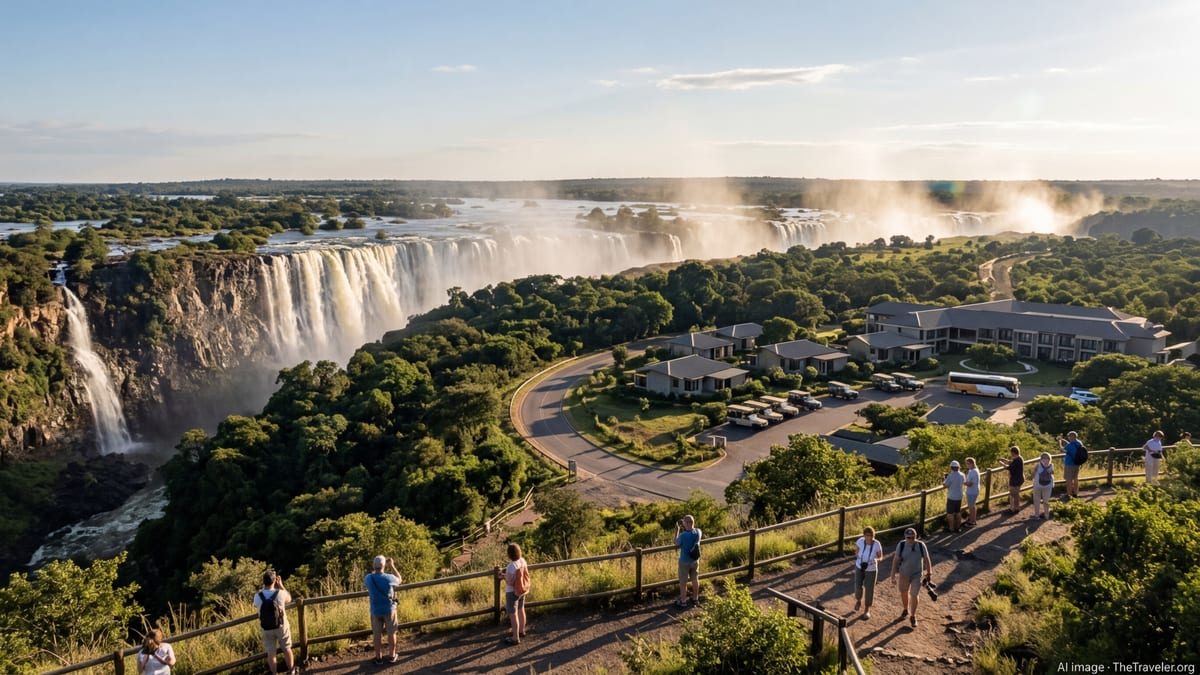
Ambitious Visitor and Revenue Targets for a Rebounding Sector
Publicly available information shows that Zambia has rapidly rebuilt its tourism base in the first half of the decade, with international arrivals rising from around 1.1 million in 2022 to roughly 2.2 million by 2024. Recent commentary from regional business and tourism outlets indicates that the country is targeting three million international visitors within the next few years, framed as a stepping stone toward a tourism economy able to generate about one billion US dollars annually by 2031.
The three‑million arrivals goal, highlighted in specialist Africa business media in 2025, is being presented as both a benchmark of post‑pandemic recovery and a signal to investors that tourism is moving to the center of Zambia’s growth agenda. The target builds on a series of marketing campaigns and aviation route expansions that have opened more direct access from key source markets in Europe, North America, the Middle East and within Africa.
Alongside the volume target, policy documents linked to the Zambia Tourism Master Plan and recent budget analyses point to a longer‑term revenue ambition of at least one billion US dollars from tourism by the early 2030s. Analysts note that this would require sustained double‑digit growth in visitor spending, deeper product diversification beyond traditional safari and Victoria Falls tourism, and continued efforts to lengthen average stays.
Economic outlook briefings published in early 2026 describe tourism as one of the country’s fastest‑growing sectors, supported by macroeconomic reforms and increased public investment. In this context, the three‑million visitor aspiration is being cast not only as a tourism milestone, but also as a contribution to broader goals for export diversification, foreign exchange earnings and rural development.
ZATEX 2026: Showcase Event for Destination Marketing and Deals
The Zambia Travel Expo, branded as ZATEX, has emerged as the country’s flagship tourism marketplace and is scheduled to take place in Lusaka from 4 to 6 June 2026. Event documentation for the 2026 edition describes it as a trade‑focused platform bringing together international tour operators, destination management companies, airlines, online travel intermediaries and local product owners from across Zambia’s national parks, cultural circuits and urban conference venues.
The official 2026 event overview notes that ZATEX aims to strengthen both international and domestic tourism by facilitating meetings, familiarization trips and targeted business‑to‑business sessions. Organizers position the expo as an opportunity to convert rising global interest in Zambia into concrete contracts for accommodation, transport and packaged itineraries, particularly around Livingstone, the Kafue and Lower Zambezi ecosystems, and emerging northern tourism corridors.
Recent tourism performance reports indicate that Zambia’s recovery has been supported by improved air connectivity, including additional regional links and greater seat capacity into Lusaka and Livingstone. ZATEX 2026 is being framed as a way to consolidate these gains by aligning airlines, airports and ground operators in a coordinated pitch to high‑value markets, especially those seeking nature, adventure and conference travel in less crowded destinations.
Industry commentary around previous editions of ZATEX suggests that the expo has increasingly attracted attention from investors looking at eco‑lodges, mid‑range hotels and activity providers. The 2026 event is expected to expand this focus with dedicated sessions on sustainable tourism investment, conservation finance and community‑based tourism enterprises, themes that align closely with Zambia’s broader tourism master planning.
Investment, Jobs and Community Benefits in the Tourism Value Chain
Budget documents and sectoral analyses for 2025 and 2026 show a steady increase in public resources allocated to tourism, including funding for destination marketing, wildlife protection and infrastructure around key attractions. One widely cited economic outlook for 2026 notes that tourism is among the sectors flagged for strong growth, supported by a 1.5 billion kwacha allocation toward infrastructure, conservation and promotion.
Tourism workforce estimates compiled by travel and tourism bodies suggest that the sector directly and indirectly employs several hundred thousand Zambians, with projections indicating that sustained growth in arrivals could push this figure well above half a million jobs by the mid‑2030s. These positions span hotels, lodges, restaurants, transport, guiding services, events, crafts and related supply chains, many of them in rural or peri‑urban areas where formal employment options are limited.
Analysts argue that meeting a three‑million arrivals benchmark would significantly expand this employment base, particularly if visitor growth is anchored in higher‑spending segments such as photographic safaris, meetings and incentives, and special‑interest tourism. Policy discussions increasingly emphasize the need to ensure that communities living around national parks and heritage sites see tangible benefits from tourism growth, including revenue‑sharing, local procurement and support for community‑run enterprises.
Reports on Zambia’s tourism strategy also highlight the sector’s role in driving inclusive development. By combining hospitality investments with improvements in access roads, airstrips, power supply and digital connectivity, tourism projects can support broader service improvements for host communities. The government’s stated aim of reaching one billion dollars in tourism receipts by 2031 is frequently linked to objectives around poverty reduction and the creation of sustainable livelihood opportunities.
Policy Reforms, Connectivity and Market Diversification
Zambia’s tourism push is unfolding alongside a broader reform agenda aimed at improving the business environment and attracting investment. International financial institutions and regional economic publications have pointed to successful debt restructuring, moderating inflation and stronger growth prospects as factors that improve the outlook for long‑term tourism projects, from new lodges to conference facilities.
On the regulatory side, changes to visa policies have played an important role in making travel to Zambia easier for key markets. Information from regional news services and official gazettes shows that visa requirements have been relaxed or waived for dozens of countries over recent years, a move explicitly designed to stimulate tourist arrivals and business travel. In early 2026, new visa‑free travel arrangements with selected African partners were also publicized as part of efforts to deepen intra‑African tourism.
Market diversification is another pillar of the strategy. While traditional source markets in southern Africa and Europe remain central, Zambia has intensified promotional activity in North America, India, China and the Gulf states. National and regional tourism publications report that targeted campaigns, trade roadshows and partnerships with international media have helped reposition the country as a year‑round destination, rather than a purely seasonal add‑on to neighboring itineraries.
Aviation connectivity is gradually adjusting to these priorities. Sector reports describe an expansion of regional routes serving Lusaka and Livingstone, as well as growing interest from long‑haul carriers in code‑sharing and interline arrangements that shorten travel times from distant markets. These developments are seen as critical to sustaining the visitor numbers required to reach the three‑million arrivals mark while also increasing average spend per trip.
Positioning Zambia in a Competitive African Tourism Landscape
Africa’s tourism recovery has accelerated since 2022, with the continent welcoming tens of millions of international visitors in 2024 according to global tourism rankings. Within this context, Zambia is competing with well‑established destinations in southern and eastern Africa that have strong brands, extensive air links and mature hospitality industries. Analysts note that Zambia’s comparative advantages include relatively low visitor densities in its national parks, a perception of political stability and a growing reputation for conservation‑oriented travel.
Recent coverage in African and international media portrays Zambia as an emerging destination for travelers seeking less crowded wildlife experiences and authentic cultural encounters. The government’s decision to aggressively scale up tourism is therefore widely interpreted as an effort to capitalize on global demand for nature‑based and sustainable tourism offerings, especially as climate and biodiversity concerns rise up the agenda of international travelers.
ZATEX 2026 is expected to play a central role in this positioning effort by offering a curated platform where Zambia can present its tourism narrative directly to buyers and investors. By concentrating media attention, showcasing successful community and conservation projects, and highlighting new product offerings in both established and emerging regions, the expo is designed to reinforce the message that Zambia is ready to handle higher volumes while maintaining quality and environmental standards.
Analysts caution that achieving a three‑million arrivals milestone and building a one‑billion dollar tourism industry by 2031 will depend on continued policy consistency, investment in skills and service standards, and careful management of environmental pressures. Nonetheless, the combination of clear targets, improving macroeconomic conditions and a marquee event such as ZATEX 2026 has prompted growing optimism that Zambia can secure a stronger position on the African tourism map over the coming decade.