

More news on this day
In the shadow of Slovakia’s Mala Fatra mountains, a sweeping rail modernisation centred on the city of Žilina is quietly setting the stage for what transport planners say could be the most significant shift in Central European tourism flows in a generation.
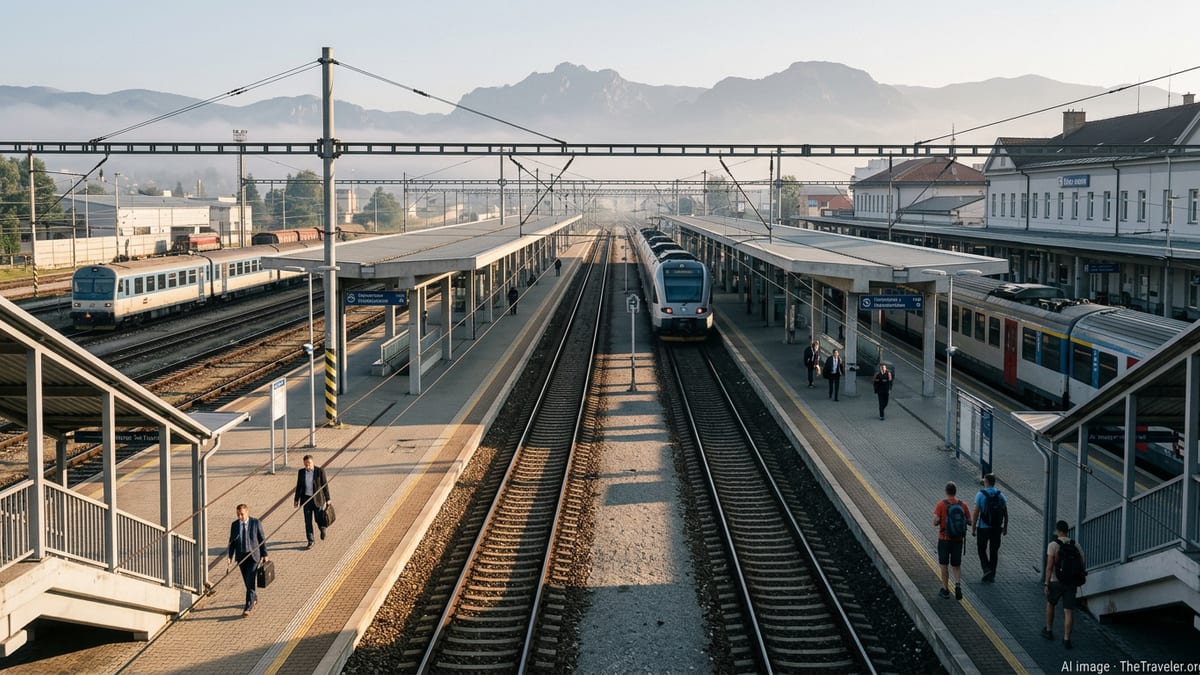
From Industrial Junction to Tourist Gateway
Žilina has long been known to rail professionals as a workhorse junction, knitting together lines from Bratislava, Košice, Prague and the Polish border. Today, it sits on key branches of the Rhine Danube and pan-European Corridor V axes, which carry both passengers and freight between Western and Eastern Europe. Slovak and European Union planners increasingly view this crossroads not only as a logistics hub but as a strategic entry point to some of the region’s most underexplored landscapes.
Over the past decade, Slovakia has channelled substantial EU Cohesion Fund and European Investment Bank money into the corridor running through Žilina, including upgrades on the line toward Púchov near the Czech border and toward the Polish frontier. At the same time, national operator ZSSK has begun renewing rolling stock, signing contracts for new Stadler electric units dedicated to the busy Bratislava Žilina axis. These parallel infrastructure and fleet investments are designed to push speeds up to 160 km/h on major stretches, cutting journey times and making rail a more compelling option for visitors.
For the tourism industry, the implications are profound. Faster, more frequent trains through Žilina mean that alpine villages, spa towns and national parks in northern Slovakia can be realistically marketed as weekend-break destinations from Vienna, Budapest, Prague and even farther afield. What was once a functional interchange on the way somewhere else is being repositioned as a gateway in its own right.
A Modernised Station Built for Seamless Travel
The most visible symbol of Žilina’s rail revolution is the comprehensive modernisation of the city’s main station and its approaches. Construction works, led by a consortium of Central European engineering firms, include new platforms, improved track layouts, modern signalling, barrier-free access and expanded underpasses. Industry reports describe the scheme as the first project of its kind in Slovakia, intended as a template for future junction upgrades across the country.
For passengers, this translates into simpler transfers between long distance, regional and cross border services. Redesigned platforms and clearer wayfinding aim to reduce connection anxiety, a key factor for international tourists unsure of local languages or operating practices. New lifts, escalators and lighting are also expected to improve perceived safety and accessibility, crucial for attracting older travellers and families with luggage.
Behind the scenes, the station’s integration into the European Rail Traffic Management System, with ETCS signalling along core stretches, should allow denser timetables and higher reliability. As Slovakia prepares its 2025 26 rail timetable, planners are already signalling more coordinated services across the country, with the Bratislava Žilina Košice spine acting as the backbone. This kind of clockface regularity is central to luring visitors who are accustomed to seamless rail experiences in neighbouring Austria or Germany.
Shorter Journeys Across Borders and Into the Mountains
Žilina’s importance extends well beyond Slovakia’s borders. The junction lies on the north branch of the Rhine Danube core corridor, linking Czechia to Ukraine, and on routes toward Poland’s Silesian and Lesser Poland regions. Upgrades along these axes, including a critical 30 kilometre segment between Žilina and the Polish border, are being financed to improve speeds, capacity and interoperability for both passenger and freight trains.
To the east, tenders and contracts are in motion for sections of the Žilina Košice corridor, including modernisation around Poprad Tatry and Krompachy. These works are intended to bring more of Slovakia’s east west main line up to contemporary standards, complementing earlier EU funded schemes. When completed, they will materially shorten travel times between western cities such as Bratislava or Prague and the High Tatras, one of Central Europe’s most dramatic mountain ranges.
The tourism potential is clear. The northern arc via Žilina already offers one of the most scenic rail journeys in Slovakia, following river valleys and skirting national parks. As tracks are straightened, electrification strengthened and speed limits raised, operators will be able to advertise itineraries that combine comfortable daytime travel with multi stop nature and culture trips. Improved links to Poland and, via Košice, to Ukraine and Hungary, position Žilina as a hinge between several fast evolving tourism markets.
New Trains and Timetables Aimed at Tourists
Hardware alone will not transform Central European tourism, and Slovak rail officials appear acutely aware of this. Alongside infrastructure works, national carrier ZSSK is revamping its timetable and fleet on core corridors. New double deck Stadler KISS electric multiple units, ordered specifically for the Bratislava Žilina route, are designed to handle growing demand with more seats, low floor boarding and modern onboard amenities that appeal to leisure travellers as much as commuters.
Recent timetable updates and the forthcoming 2025 26 schedule emphasise better regional connectivity into major junctions, including additional services in the wider Trenčín Žilina belt. For visitors, that translates into more practical day trips from key tourism bases: morning arrivals that connect to local lines and evening returns that line up with international trains. Industry observers note that Slovakia is moving gradually toward the kind of integrated, nationwide timetable seen in Switzerland, a model often cited by rail tourism advocates.
International services are also part of the strategy. Operators are enhancing Prague Bratislava Budapest trains that intersect with Žilina bound connections, while private and foreign carriers eye open access routes that could further densify cross border offerings. If these plans materialise, tourists could see a near continuous mesh of options, from budget regional expresses to premium intercity services, all intersecting through a modernised Žilina hub.
A Catalyst for Regional Regeneration and New Experiences
The transformation of Žilina’s rail role is closely tied to broader regional development ambitions. The city and surrounding region have pitched themselves in recent years as a cultural and outdoor tourism destination, capitalising on the proximity of the Mala Fatra mountains, traditional villages and emerging creative districts in former railway and industrial spaces. Plans associated with cultural bids and regional strategies envision the station area as a livelier urban node, connecting travellers directly to events, galleries and riverfront promenades.
Improved rail services are expected to spread tourism benefits more evenly across northern Slovakia. Smaller towns along the modernised corridors, once perceived as peripheral, could see new life as bases for hiking, cycling or winter sports, supported by reliable, year round train access. For local communities, this may bring fresh hospitality businesses, from guesthouses and cafes to guiding services, offsetting demographic decline and limited industrial prospects.
In the wider Central European context, observers argue that Žilina’s railway revolution offers a glimpse of how mid sized cities can reposition themselves on the continental travel map. By coupling technically sophisticated infrastructure upgrades with passenger centric design and regional storytelling, Slovakia is betting that tomorrow’s tourists will choose low carbon, rail based journeys across borders. If that wager pays off, the once overlooked junction in northern Slovakia could become a touchstone for a new era of Central European tourism.