

More news on this day
Zimbabwe is rapidly transforming from an underrated safari outpost into one of Africa’s most dynamic travel hotspots, with fresh data on arrivals, investment and infrastructure pointing to a breakout year in 2026 that is reshaping the continent’s tourism map.
Record Tourist Arrivals Signal a New Continental Powerhouse
After several years of steady recovery, Zimbabwe’s tourism sector has entered a phase of accelerated growth that industry analysts say is positioning the country ahead of traditional African favorites such as South Africa, Tanzania, Ghana, Namibia, Mozambique and Morocco. Official figures compiled by the Zimbabwe Tourism Authority and national statistics agency ZimStat show more than 1.6 million international tourist arrivals in 2024, generating around 1.2 billion US dollars in receipts and close to 200 million US dollars in new tourism investments, with 2025 numbers tracking even higher on the back of strong regional and long-haul demand.
Quarterly reporting through 2024 and 2025 reveals a clear upward trajectory. International arrivals in the first half of 2024 climbed by more than a quarter compared with the same period a year earlier, while visitor numbers in the third quarter of 2025 rose by over 10 percent year on year. Holiday tourism has led the rebound, with dedicated leisure visitors expanding in double digits, but business travel and shopping tourism have also surged, underscoring Zimbabwe’s role as an emerging commercial hub for southern Africa.
Tourism officials say what makes Zimbabwe’s rise standout in 2026 is not just the headline growth, but its resilience and diversification. Unlike some competing destinations that depend heavily on a single source market or a narrow product offering, Zimbabwe’s arrivals are spread across neighboring African states, regional economic partners and high-spend markets such as the United States and Europe, reducing vulnerability to external shocks and currency swings.
This performance is being closely watched by regional peers because it coincides with a broader continental rebound. The United Nations World Tourism Organization estimates that Africa welcomed around 75 million international visitors in 2024, but Zimbabwe’s double-digit growth and aggressive investment pipeline have set it apart as one of the standout gainers heading into the 2026 season.
Victoria Falls and Beyond: A Diversifying Destination Portfolio
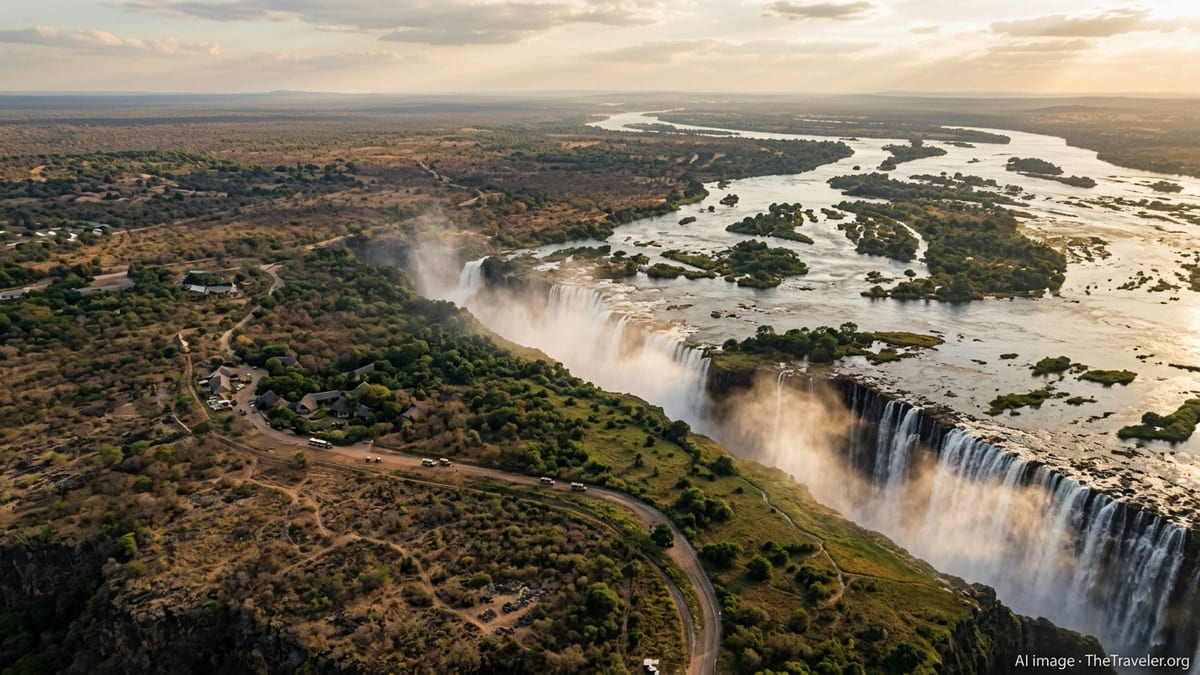
For many travelers, Zimbabwe remains synonymous with Victoria Falls, the thundering curtain of water shared with neighboring Zambia that has long ranked among the world’s most iconic natural attractions. Visitor flows through the resort town and adjacent national parks have surged in the past two years, buoyed by improved air access, a new wave of lodge refurbishments and the introduction of 24-hour operations at the Victoria Falls border post, which is expected to ease regional self-drive itineraries and cross-border tour circuits.
But 2026 is shaping up to be the year in which Zimbabwe’s tourism story finally stretches decisively beyond the falls. Investment and marketing efforts are increasingly highlighting Hwange National Park’s large elephant herds, the Zambezi River’s upstream wilderness around Zambezi National Park, and the cultural and historical draw of cities such as Bulawayo and the Great Zimbabwe ruins near Masvingo. Domestic and regional road-trippers are pairing Victoria Falls with circuit routes that take in Matobo Hills, Lake Kariba and lesser-known reserves that offer lower crowding and competitive pricing compared with flagship parks elsewhere in the region.
Industry players say this diversification is critical to Zimbabwe’s new status as a leading African hotspot because it extends average length of stay and spreads tourism income more widely across provinces. New mid-market lodges, boutique guesthouses and community-owned camps are opening along key corridors, giving visitors options beyond ultra-luxury safaris and large resorts and supporting inclusive local economic development.
Travel advisers note that while infrastructure gaps remain, particularly on some secondary roads feeding major attractions, the overall product offering in 2026 is deeper than at any point in the past decade. From adventure activities on the Zambezi to township tours, gastronomy experiences and cultural festivals, Zimbabwe is increasingly able to compete directly with established safari circuits in South Africa, Tanzania and Namibia.
Policy Reforms, Air Links and a New Regional Visa Architecture
Behind the surge in visitor numbers lies a deliberate effort by authorities to make it easier and more attractive to visit the country. Over the past three years, Zimbabwe has rolled out a series of reforms aimed at simplifying entry procedures, incentivizing investment and improving connectivity. These include expanded visa-on-arrival access for a growing list of markets, digitalization of border processes and targeted tax incentives for tourism infrastructure projects.
One of the most closely watched developments is a new Schengen-style unified visa arrangement for parts of southern Africa, involving Zimbabwe and regional partners such as Angola, Botswana, Namibia and Zambia. The system, which is being phased in ahead of the peak 2026 season, is designed to allow travelers to move freely between participating countries on a single document, mirroring Europe’s cross-border model and encouraging multi-country itineraries that anchor around Zimbabwe’s gateways.
At the same time, air connectivity has improved markedly. International carriers have expanded frequencies into Harare and Victoria Falls, while regional airlines have added links from Johannesburg, Lusaka, Windhoek and other hubs. Zimbabwean officials credit these new and restored routes with unlocking fresh demand from both regional leisure travelers and long-haul tourists connecting via Gulf and East African hubs. The upgrades are complemented by continued investment in airports and border posts, which authorities say is reducing bottlenecks that previously undermined visitor experience.
Observers also point to a more coordinated marketing push, with the Zimbabwe Tourism Authority working alongside private operators to showcase the country at major international trade fairs and through digital campaigns. The combination of easier access, smoother borders and more visible branding is widely seen as a key factor behind Zimbabwe’s ability to outpace rival African destinations in early 2026 growth projections.
Tourism as a Catalyst for Economic Prosperity
The tourism boom is having a pronounced impact on Zimbabwe’s broader economy. According to recent budget and treasury reports, tourism has reasserted itself as one of the country’s top foreign currency earners, with receipts climbing in parallel with visitor arrivals. The sector’s contribution to gross domestic product has grown steadily since 2022, aided by higher occupancy rates, increasing average spend per visitor and a wave of new capital projects in accommodation, transport and leisure services.
Job creation has been particularly significant. New and expanding operators in hospitality, guiding, aviation support and creative industries have absorbed thousands of workers, many of them youth and women in rural communities near major parks and attractions. Ancillary sectors such as agriculture, construction, handicrafts and retail are also benefiting as hotels source more produce locally and tour companies contract small enterprises for everything from vehicle hire to cultural performances.
Government officials argue that tourism’s growth is helping to stabilise the macroeconomic environment by diversifying export earnings and broadening the tax base. Recent policy documents highlight tourism investment of nearly 200 million US dollars in 2024 alone, with additional projects in the pipeline for 2025 and 2026, including eco-lodges, conference centers and mixed-use waterfront developments around Lake Kariba and the Zambezi corridor.
Analysts caution, however, that sustaining this momentum will require continued attention to infrastructure, regulatory predictability and environmental management. Zimbabwe’s natural assets remain its greatest draw, and there is growing scrutiny from conservation groups and local communities to ensure that rapid tourism expansion does not erode the very ecosystems and cultural landscapes that underpin its competitive advantage.
Rising Above Regional Rivals in the Race for 2026
As continental travel demand rebounds, destinations across Africa are locked in an intense competition for visitors, investment and air capacity. South Africa continues to lead the continent in absolute arrival numbers, and countries such as Tanzania, Morocco, Ghana, Namibia and Mozambique are all investing heavily to grow their share. Yet sector specialists note that Zimbabwe’s growth rates, product diversification and policy innovation have given it an outsized profile heading into 2026.
What differentiates Zimbabwe, they argue, is the convergence of several favorable trends at once: a sharp rebound from pandemic lows, accelerated infrastructure spending, more agile visa and marketing strategies, and a portfolio of attractions that can support both high-end and value-conscious travelers. This has enabled the country to capture demand from neighboring markets, long-haul leisure segments and niche categories such as adventure tourism, birding and cultural heritage travel that might previously have defaulted to rival destinations.
Regional data also suggest that Zimbabwe’s citizens are themselves driving travel patterns across southern Africa, emerging as the single largest source market for South Africa and contributing to cross-border flows that underpin multi-destination itineraries. This interplay between outbound and inbound travel is reinforcing Zimbabwe’s role as a hub in the regional tourism ecosystem at the very moment when international visitors are discovering the country in greater numbers.
With airlines, investors and tour operators all signaling confidence in continued growth, expectations are high that 2026 will consolidate Zimbabwe’s status as one of Africa’s leading travel hotspots. The challenge for policymakers and industry leaders will be to convert this breakout moment into a long-term, sustainable success story that benefits communities as much as it delights the growing tide of visitors.