

More news on this day
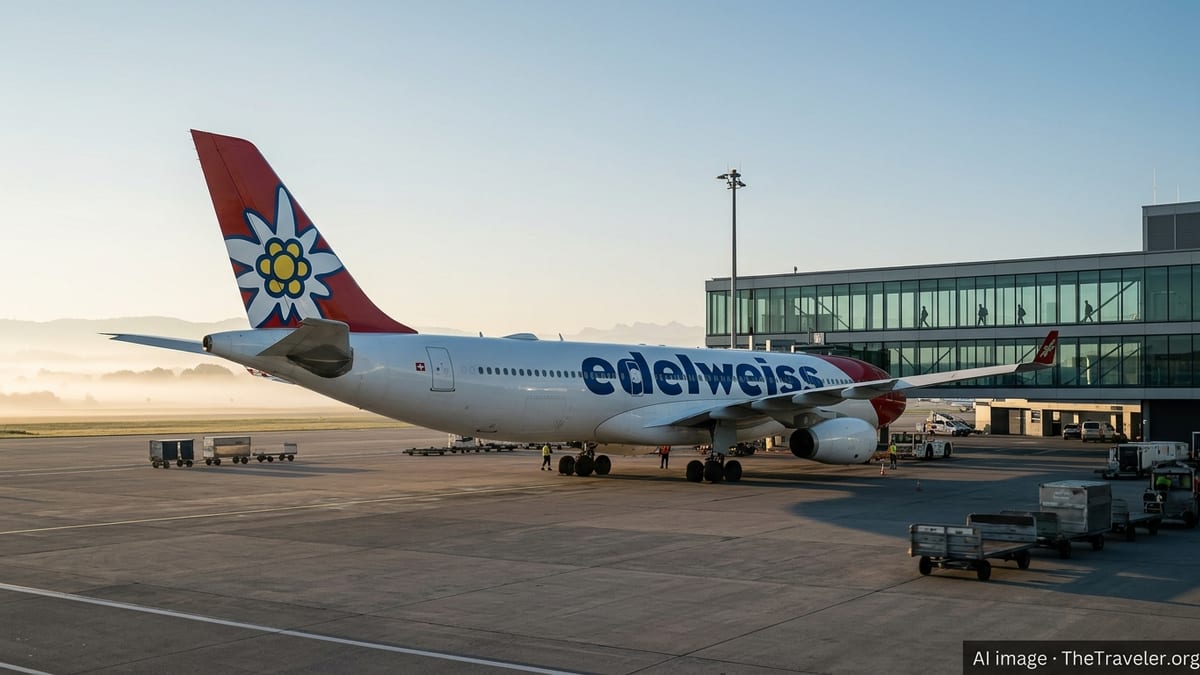
Zurich Airport is poised to become one of Europe’s most convenient gateways to southern Africa, with leisure carrier Edelweiss preparing to launch a new nonstop route to Windhoek that promises faster, smoother access to Namibia’s desert landscapes and wildlife hotspots.
Get the latest news straight to your inbox!
New Nonstop Link Between Zurich and Namibia’s Capital
Publicly available schedules and airline statements show that Edelweiss, Switzerland’s leading leisure airline, will introduce seasonal nonstop flights between Zurich Airport and Windhoek’s Hosea Kutako International Airport from 1 June 2026. The new link will operate twice weekly during the European summer, positioning Zurich as a direct jumping-off point for one of Africa’s most sought-after adventure destinations.
Industry reports indicate that Edelweiss plans to run the service on Mondays and Fridays, offering a flight time of around 9 hours 30 minutes. The route is described in aviation and tourism coverage as a game changer for Namibia’s connectivity with Europe, significantly reducing travel times compared with existing one-stop options via hubs such as Addis Ababa or Johannesburg.
Data compiled by route-tracking and tourism bodies highlights that Switzerland has rapidly grown into one of Windhoek’s strongest European origin markets, with two-way passenger volumes rising in 2024 and 2025. The new Zurich–Windhoek nonstop is expected to build on this demand, catering to both leisure travelers heading for safaris and self-drive holidays, and business visitors drawn by Namibia’s energy and logistics sectors.
While the route is scheduled as a seasonal summer service, industry commentary suggests that sustained demand could encourage further expansion in subsequent years. For now, the twice-weekly operation marks a major step forward for Namibia’s international access during peak safari season.
A Strategic Boost for Namibia’s Tourism Economy
Tourism and aviation analysts note that direct long-haul connectivity has long been a bottleneck for Namibia, despite its reputation for dramatic scenery, low crowding and stable conditions. The Zurich–Windhoek link is being framed in regional media and sector briefings as a catalyst for growth, expected to stimulate visitor numbers from across Europe by simplifying access and reducing connection-related uncertainty.
According to coverage from Namibia’s airports and tourism stakeholders, the route is part of a broader push to strengthen Air Connect Namibia, a public-private initiative focused on improving the country’s global air links. The new Edelweiss service is forecast to complement existing nonstop flights from European hubs such as Frankfurt and Munich, increasing the total number of direct connections into Windhoek during the main travel season.
Travel trade sources point out that the timing of the flights, aligned with Europe’s summer holidays and southern Africa’s prime game-viewing period, will help tour operators package Namibia more competitively alongside neighboring destinations. By routing travelers directly through Zurich, itineraries combining Namibia with Switzerland’s alpine tourism or with other Edelweiss long-haul destinations become easier to construct.
Local businesses are also expected to benefit from the enhanced connectivity. Reports from business chambers and investment bodies suggest that quicker access to Windhoek could support growing interest in Namibia’s renewable energy projects, port corridors and conference tourism, all of which rely on reliable long-haul air links.
What the New Route Means for European Travelers
For travelers departing Europe, the introduction of a nonstop Zurich–Windhoek service simplifies both planning and the on-the-ground experience. Zurich Airport’s role as a compact, efficient transfer hub means passengers originating in cities across Europe and North America can often connect with relatively short layovers, relying on coordinated schedules within the wider Lufthansa Group network.
Schedule information published by route databases shows that Edelweiss will be the sole operator of nonstop flights between Zurich and Windhoek, using long-haul aircraft equipped with both economy and business cabins. For many passengers, this removes the need for an additional regional connection within Africa, reducing total journey time and the potential for missed bags or delays.
Travel advisors note that the twice-weekly pattern will reward forward planning, as capacity on key departure dates is likely to be limited during school holidays and peak safari months. However, the route adds important new flexibility for independent travelers who previously relied on longer routings via multiple hubs.
Industry commentators also highlight the appeal for repeat visitors who know Namibia’s roads and parks and are seeking a smoother, more direct way to return. With the Zurich flight operating into Windhoek’s main international gateway, travelers can arrive at night or early morning and set off quickly on self-drive circuits to areas such as Sossusvlei, Etosha or the Skeleton Coast.
Gateway to Desert Dunes, Safaris and Starry Skies
By reducing the distance between central Europe and Namibia to a single overnight flight, the new service effectively turns Zurich into a front door for some of Africa’s most distinctive landscapes. Tourism board materials and specialist tour operators consistently promote Namibia as a destination of sprawling desert, rust-red dunes, Atlantic surf and wide-open skies that lend themselves to both classic safaris and off-the-beaten-path exploration.
From Windhoek, travelers can connect to domestic flights and road networks that reach iconic sites including the towering dunes of Sossusvlei, the wildlife-rich pans of Etosha National Park and the shipwreck-strewn Skeleton Coast. The new Zurich route is expected to feed directly into these circuits, supporting both established lodges and emerging community-based tourism projects focused on conservation and cultural heritage.
Travel media coverage increasingly emphasizes Namibia’s reputation for sustainable tourism, with low-density lodges, dark-sky stargazing and strong community partnerships. Easier access via Zurich could accelerate interest in these experiences, giving Swiss and wider European travelers a convenient starting point for trips that combine wildlife viewing with photography, hiking and cultural visits.
For Zurich-based travelers, the route also broadens long-haul options beyond traditional beach and city breaks, adding a distinctive adventure and nature destination that can be reached without changing planes. For Namibia, it positions the country more prominently on European travel maps at a time when demand for open spaces and nature-focused holidays remains high.
How the Route Fits Into Edelweiss’s Wider Network
The Zurich–Windhoek launch sits within a wider expansion of Edelweiss’s long-haul program for summer 2026. Airline announcements and aviation industry analyses indicate that the carrier is adding capacity across southern Africa, including extended seasons on existing routes such as Cape Town, as it responds to strong leisure demand for the region.
By scheduling Windhoek flights twice a week, Edelweiss can rotate aircraft across its African network while maintaining consistent weekly patterns that are attractive to tour operators. Aviation analysts say this approach allows the airline to test and grow new destinations like Namibia while leveraging Zurich’s role as a premium hub with significant outbound leisure demand.
For Zurich Airport, the new service supports its strategy of broadening long-haul connectivity beyond traditional business-focused routes. Sector reports describe the Windhoek launch as part of a broader diversification that includes North American and Indian Ocean destinations, reinforcing Zurich’s status as a versatile intercontinental gateway.
With the first flight scheduled for June 2026, booking engines and tour brochures are already beginning to feature Zurich–Windhoek combinations for the 2026 and 2027 safari seasons. If demand matches current expectations, the route could quickly become one of the most important new links between Europe and southern Africa’s emerging adventure travel circuits.