

More news on this day
As global travellers look beyond Australia’s headline hotspots, a wave of lesser‑known islands, coasts and wilderness lodges is emerging as the country’s most romantic way to go off the grid in 2026.
Get the latest news straight to your inbox!
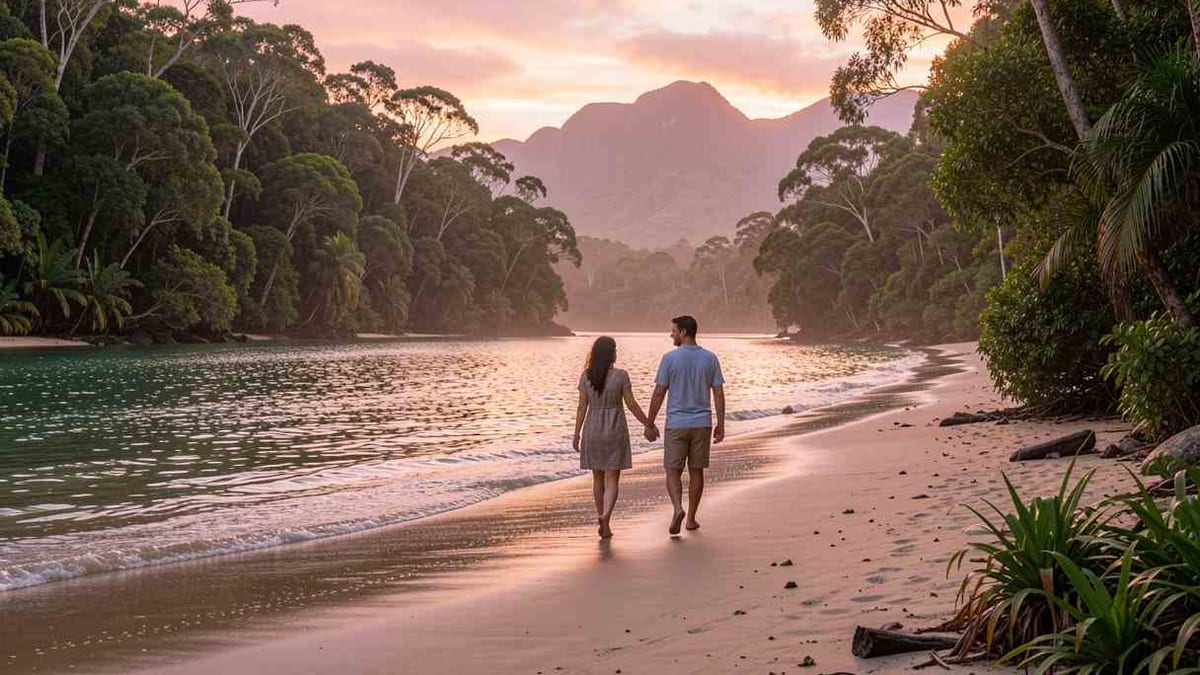
Image by Travel and Tour World – Tourism, Airline, Destination, MICE, Gobal Travel Market, Hotel news that you will find only over here.
Off‑Grid Island Magic On Lord Howe
Lord Howe Island, 600 kilometres off Australia’s east coast, has long been a favourite of in‑the‑know travellers, but fresh attention in 2026 is recasting it as one of the world’s premier off‑grid escapes. A recent analysis by a yacht charter specialist ranked the tiny World Heritage‑listed island among the globe’s best places to disconnect from crowds, highlighting its strict visitor caps and protected lagoon.
For couples, the appeal lies in geography as much as policy. Only a handful of accommodation providers share the crescent of white sand, turquoise shallows and volcanic peaks, giving stays an intimate, small‑community feel. Walking trails cut through kentia palm forests to panoramic lookouts, while coral gardens sit just a short paddle from shore, allowing guests to spend entire days moving between reef, beach and mountain without seeing many others.
Travel industry reports suggest demand is rising sharply as Australians search for destinations that feel far removed from daily life without requiring long‑haul flights. With flights limited and nightly room numbers tightly controlled, travel planners are advising couples to lock in 2026 dates early if they want to experience Lord Howe’s quiet beaches and starlit skies before it tips into broader mainstream awareness.
Local tourism materials are also placing renewed emphasis on conservation messaging, positioning Lord Howe as a model for low‑impact romance travel, where candlelit dinners and beach picnics go hand in hand with reef monitoring and invasive‑species control programs.
Rottnest And Louth: Western And Southern Ocean Hideaways
Off the coast of Perth, Rottnest Island has long been a beloved weekend escape for Western Australians, but it is increasingly being framed internationally as a playful alternative to more formal resort islands. State tourism campaigns spotlight its signature resident, the quokka, and the car‑free network of cycling paths that wind between coves, lighthouses and hidden beaches.
While day trippers are common, new commentary from travel writers is pushing longer shoulder‑season stays for couples looking to combine active days with quiet nights once the last ferries have gone. Evening swims in empty bays, sunset drinks overlooking the lights of Perth and the simple novelty of sharing sandy paths with marsupials rather than traffic are being pitched as reasons to see Rottnest less as a side trip and more as a stand‑alone romantic retreat.
Further south, off South Australia’s Eyre Peninsula, Louth Island is drawing attention as one of the country’s most intriguing new private‑island offerings. The opening of Rumi on Louth in early 2025, highlighted in international hotel round‑ups, brought contemporary villas and a small‑scale eco focus to an island previously known mainly to local boat owners.
Travel features note that with just a small inventory of suites, couples can spend days exploring rocky headlands, sheltered coves and inshore reefs without sharing the shoreline. The combination of South Australia’s wine regions on the mainland and the island’s seclusion is positioning Louth as a rising contender for proposals, elopements and milestone anniversaries in 2026.
Reimagined Wilderness: Kangaroo Island And Southern Ocean Shores
Kangaroo Island, often described in tourism campaigns as Australia’s answer to the Galápagos, has undergone a striking transformation since bushfires devastated large tracts of its landscape in 2019 and 2020. In the years since, a flagship clifftop lodge has been rebuilt and reopened, drawing widespread coverage from outlets including National Geographic for its coastal architecture and renewed focus on native vegetation.
By late 2025, the lodge had reclaimed high rankings in international readers’ choice awards, signalling strong global appetite for the island’s mix of wildlife, windswept beaches and refined dining. For couples, this rebirth has created a powerful narrative of resilience, with itineraries now pairing glossy suites and spa treatments with visits to regenerating forests and conservation sanctuaries.
Travel planners report that 2026 bookings are increasingly centred on multi‑night stays that allow time to drive quiet coastal roads, spot kangaroos and sea lions at dusk and linger over tasting menus showcasing Southern Ocean seafood. The sense of being on the edge of the continent, with nothing but Antarctic swells beyond the horizon, lends the island a cinematic quality that many visitors liken to having an entire coastline to themselves.
Beyond Kangaroo Island, new attention is also turning to lesser‑known pockets of Australia’s southern shores, where boutique retreats and restored farmhouses overlook empty bays. Industry commentary suggests that as traditional sun‑and‑sand destinations become busier, couples are increasingly drawn to the drama of cooler, wilder seascapes for winter and shoulder‑season escapes.
Reefside Romance: Lady Elliot, Lizard And The Tropical Coast
On the southern tip of the Great Barrier Reef, Lady Elliot Island is consolidating its reputation as a low‑key alternative to larger resort hubs. The island’s long‑running eco resort, set on a coral cay reached only by light aircraft, offers simple accommodation steps from the beach and direct access to some of the reef’s most reliable manta ray and turtle encounters.
Recent travel coverage highlights that with visitor numbers limited by flight capacity, the island feels markedly quieter than many mainland gateways. Couples can snorkel straight from shore, watch sunrise over the reef flat and finish the day under dark, unpolluted skies. For many, the focus on marine life and conservation makes the experience feel less like a resort holiday and more like an immersive retreat, a trend likely to strengthen in 2026 as concern about reef health shapes travel choices.
Further north, Lizard Island continues to appeal to travellers seeking a remote, all‑inclusive escape with access to outer reef sites. Travel industry lists of top luxury lodges consistently place it among Australia’s premier hideaways, noting its limited number of suites, private beaches and strong reef research presence. Despite occasional headlines unrelated to tourism, demand for its castaway‑style experience remains robust, with 2026 packages marketed heavily to honeymooners and anniversary travellers.
On the mainland, Queensland’s tropical coast between Cairns and the Whitsundays is also being reframed as a string of romantic stopovers rather than a transit corridor. A new coastal trail project north of Cairns, which began opening in stages in 2025, is integrating low‑impact accommodation nodes with walking and cycling routes. Along the Whitsunday coast and islands, resort reinvestment and the reopening of properties on formerly cyclone‑damaged islands are broadening options for couples who want reef access without large‑ship crowds.
Desert Skies And Coral Shores: Ningaloo And Emerging Retreats
On Western Australia’s Coral Coast, the remote Ningaloo region is gaining renewed traction in 2026 travel forecasts as a more secluded counterpart to the Great Barrier Reef. Reports from specialist tour operators point to growing interest in wilderness lodges hidden in the dunes of Cape Range National Park, where safari‑style tents and cabins sit just metres from fringing coral.
One long‑established eco camp near Ningaloo Reef, recently profiled in points‑and‑miles travel media for its new loyalty partnerships, offers only a small number of tented suites spread along the shoreline. Guests can step directly from deck to sand, snorkel with whale sharks in season, and return to lantern‑lit dinners under some of the clearest night skies in the country, making it a standout for couples seeking both adventure and privacy.
Elsewhere, emerging off‑grid cabins and micro‑lodges are beginning to dot Australia’s alpine and rainforest regions, often with just one or two self‑contained units on vast private properties. Travel magazines covering “immersive nature retreats” for 2026 highlight glass‑walled pods on Tasmanian islands and tucked into mainland forests, where floor‑to‑ceiling windows frame nothing but water, ferns and stars.
Although many of these projects are small in scale, collectively they are reshaping how romance travel is marketed in Australia. Instead of large beachfront resorts, the most talked‑about 2026 openings are those that promise silence, elemental landscapes and long stretches of time with no one else in sight, reaffirming that for many couples, the ultimate luxury is simply being alone together in a secret corner of the continent.