

More news on this day
A targeted tourism investment package worth 2.4 million dollars is helping to reshape Wonthaggi from a former coal town into one of coastal Victoria’s most closely watched emerging destinations, as public projects, creative initiatives and upgraded visitor infrastructure converge to reposition the Bass Coast hub on the global travel map.
Get the latest news straight to your inbox!
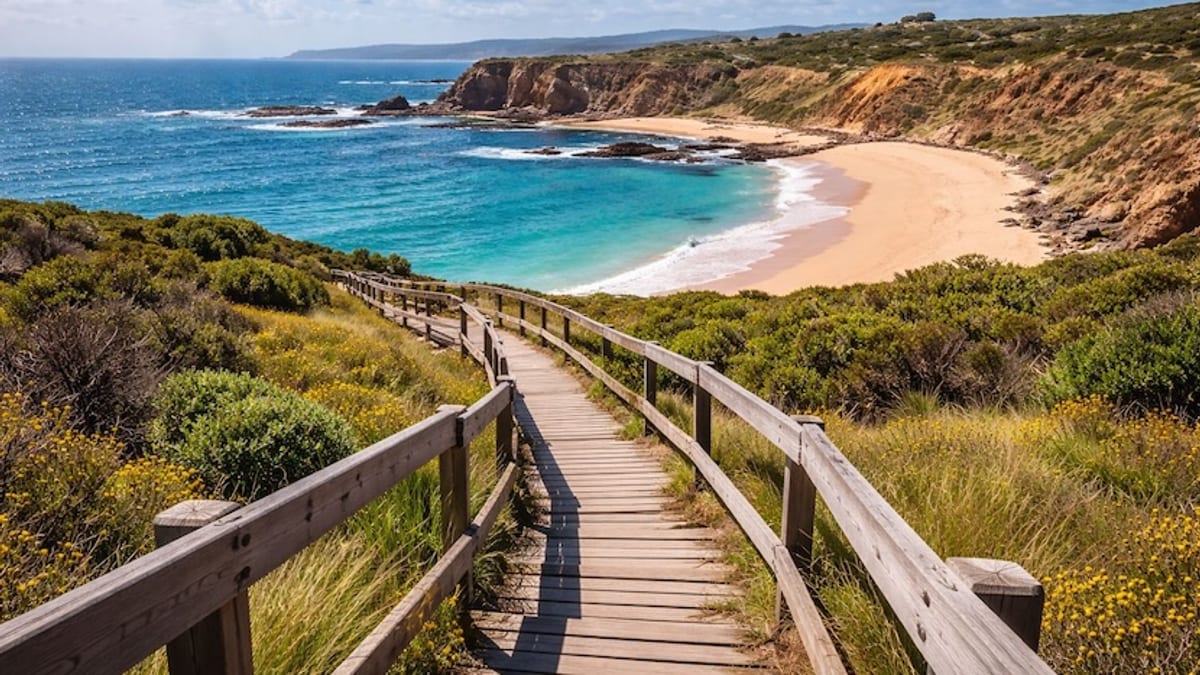
Strategic Funding Supercharges a Former Coal Town
Publicly available information shows that Wonthaggi, long known for its State Coal Mine heritage and role as a service centre for the Bass Coast, is now attracting a new wave of attention as tourism-focused capital is directed into the town and its surrounds. Set about 130 kilometres south east of Melbourne, Wonthaggi has been identified in regional planning documents as a growth centre, with tourism, health and services now complementing its mining history as economic drivers.
The 2.4 million dollar tourism investment, drawn from a combination of state and local funding streams and aligned with broader regional development priorities, is being directed toward projects designed to make it easier for visitors to access the coast, experience local heritage and spend more time in the town centre. While individual allocations vary between transport links, public realm upgrades and cultural infrastructure, the overall objective is to lift Wonthaggi’s profile and visitor capacity without replicating the high-density coastal development seen elsewhere along Victoria’s shoreline.
Regional policy material indicates that tourism already contributes hundreds of millions of dollars each year to the wider Bass Coast and Gippsland visitor economy. Against this backdrop, the 2.4 million dollar package is relatively modest in pure dollar terms, but analysts note that targeted spending on public spaces, active transport and cultural sites can have an outsized effect in smaller centres, particularly when it complements existing natural attractions.
Rail Trail Precinct and Coastal Access Drive New Visitor Flows
Recent upgrades to the Bass Coast Rail Trail’s Wonthaggi precinct provide one of the clearest examples of how tourism-oriented investment is reshaping the town. State and local government coverage describes how works at the former railway station have created a more welcoming arrival point, with improved access to the heritage-listed station museum and new outdoor areas suitable for exhibitions and events. The station, once a purely functional node in a coal supply chain, is now being repositioned as a gateway to both town and trail.
The rail trail itself, promoted as Victoria’s only continuous coastal rail trail, runs from central Wonthaggi toward Anderson, linking visitors to beaches, coastal reserves and neighbouring holiday hotspots. Enhancements to surfaces, signage and entry points are intended to extend the usable season for walkers and cyclists and encourage overnight stays rather than day trips. Industry observers suggest that this type of low-impact, nature-based infrastructure aligns with current demand from domestic and international visitors seeking slower, more immersive regional experiences.
Complementary funding for shared paths and cycling links between Wonthaggi, Inverloch and other Bass Coast destinations is also reshaping how visitors move through the region. Earlier government announcements highlighted multi-million dollar commitments to active transport corridors in the area, aimed at giving tourists car-free options to reach beaches and town centres. As these networks expand, Wonthaggi stands to benefit as a logical base for multi-day cycling, hiking and coastal touring itineraries.
Creative Hubs and Heritage Assets Power a Cultural Rebrand
Beyond bricks-and-mortar infrastructure, a significant portion of the current tourism momentum in Wonthaggi is being driven by creative and cultural initiatives that seek to reinterpret the town’s industrial past. The proposed Wonthaggi Old Tech Creative Hub, detailed in local advocacy material, aims to transform disused industrial buildings into studios, exhibition spaces and digital production facilities. Supporters argue that such a hub would attract artists, makers and creative entrepreneurs, adding a cultural layer to the town’s visitor offering.
At the same time, the State Coal Mine heritage precinct remains a cornerstone of Wonthaggi’s tourism identity. Public information emphasises that the preserved mine workings, surface buildings and interpretive displays provide rare insight into early twentieth-century state-owned coal operations. By coupling this heritage narrative with new creative programming, festivals and events, Wonthaggi is attempting to broaden its appeal beyond history enthusiasts to include contemporary culture seekers and younger travellers.
Tourism commentators note that similar regional towns have successfully leveraged a dual identity that blends industrial heritage with modern arts and food culture. In Wonthaggi’s case, the 2.4 million dollar investment is intersecting with grassroots efforts from local creatives and community groups, creating an ecosystem where galleries, performance spaces and heritage sites can work together to lengthen visitor stays and diversify spending across accommodation, dining and retail.
Population Growth, Health Investment and the Shift to Coastal Liveability
Property industry profiles over the past two years have repeatedly identified Wonthaggi as one of regional Victoria’s fastest-growing coastal-adjacent centres, citing an influx of new residents drawn by comparatively affordable housing, upgraded health facilities and proximity to beaches at Cape Paterson and Inverloch. Reports highlight recent multi-million dollar expansions of the local hospital and education precinct, signalling that long-term community infrastructure is keeping pace with tourism ambitions.
This combination of liveability investment and visitor-focused spending is gradually altering perceptions of Wonthaggi from a pass-through service town to a place where both residents and tourists can base themselves for extended periods. New walking and cycling tracks, improved town-centre streetscapes and upgraded community facilities feed into a narrative of a town repositioning itself as both a lifestyle destination and a gateway to the Bass Coast’s natural attractions.
Analysts observing regional migration trends point out that the line between tourism and permanent relocation is increasingly blurred. Short breaks can lead to sea-change decisions, particularly in locations that offer healthcare, education and employment alongside natural assets. The tourism-focused 2.4 million dollar investment is therefore seen not only as a visitor economy stimulus, but also as a catalyst for broader economic diversification in health, retail, construction and professional services.
From Hidden Gem to Emerging Global Coastal Destination
Within Victoria’s broader tourism strategy, Wonthaggi has long been overshadowed by higher-profile coastal names such as Phillip Island and the Great Ocean Road. However, planning and budget papers point to a deliberate emphasis on spreading visitor demand more evenly across regional areas, especially in locations that can absorb growth without placing undue pressure on fragile dune systems or tightly zoned coastal strips. As the commercial and administrative centre of the Bass Coast, inland from the most sensitive beachfronts, Wonthaggi fits this brief.
Industry observers suggest that as international visitation to Victoria continues to recover, there is growing scope to position Wonthaggi as part of multi-stop itineraries that link Melbourne to Gippsland’s national parks, historic towns and surf beaches. Its role as a transport node, healthcare hub and service centre could make it an attractive base for international visitors seeking value, authenticity and easier access to local communities compared with more saturated resort towns.
Travel marketers are increasingly describing Wonthaggi as a hidden gem, with accessible wilderness, surf beaches a short drive away, and a town centre that is beginning to showcase more cafes, independent retailers and cultural venues. With 2.4 million dollars in targeted tourism and place-making investment now supporting this repositioning, Wonthaggi is emerging as a test case for how smaller regional centres can harness modest but strategic funding to step onto the global stage while retaining a distinctly local character.